






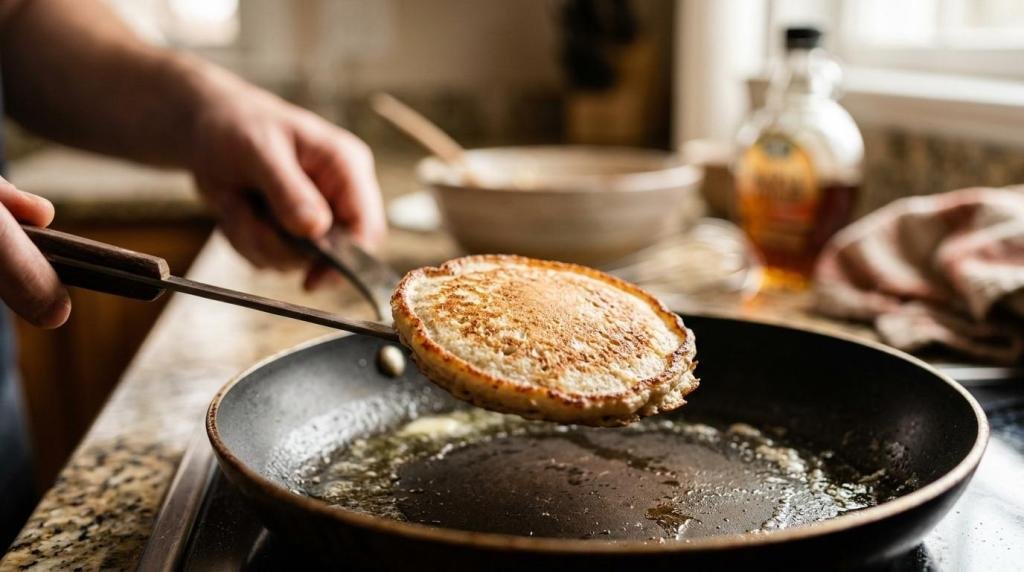
So you want pancakes that feel a little fancy, a little cozy, and absolutely not like cardboard? Excellent choice. Almond flour pancakes are the kind of breakfast that makes you look like you have your life together, even if you are standing in the kitchen wearing one sock and holding coffee like it is life support.
These gluten free pancakes made with almond flour are soft in the middle, lightly nutty, and surprisingly easy to pull off. No weird texture. No sad, dry bites. Just a stack of golden pancakes that taste like breakfast actually tried.
Why These Almond Flour Pancakes Work So Well
Almond flour does a lot of heavy lifting here. It gives the pancakes a rich, tender texture and a subtle sweetness, which means you do not need a mile-long ingredient list to make them taste good. They also cook up with nicely browned edges, which is the pancake equivalent of showing off just a little.
The other reason this recipe works? It is simple. You mix, rest, cook, and eat. That is the whole dramatic plot. Since almond flour has no gluten, the batter stays forgiving. You are not going to accidentally turn breakfast into rubber.
These pancakes are also great for people who want a wheat-free option that still feels satisfying. They are a little more filling than standard pancakes, so a short stack actually does the job. Wild concept, I know.
Ingredients You’ll Need for Almond Flour Pancakes
You do not need anything too fussy here, which is always nice when your brain is only half awake.
- Almond flour: Fine blanched almond flour works best for soft, fluffy pancakes
- Eggs
- Milk: Dairy or unsweetened non-dairy milk both work
- Baking powder
- Maple syrup or honey: Just a little, for a gentle sweetness
- Vanilla extract
- Salt: Tiny amount, big difference
- Butter or oil for the pan
If you want to dress them up a bit, cinnamon is great, and blueberries or chocolate chips are very welcome guests.
Step-by-Step Instructions for Almond Flour Pancakes
This is one of those recipes where confidence helps. Even if you do not feel confident, just fake it until pancake number two.
- Mix the wet ingredients. Crack the eggs into a medium bowl and whisk them well. Add the milk, maple syrup, and vanilla, then whisk again until smooth.
- Add the dry ingredients. Stir in the almond flour, baking powder, and salt. Mix until you have a thick batter with no obvious dry patches.
- Let the batter rest. Give it about 3 to 5 minutes. Almond flour needs a minute to soak up moisture, and this little pause helps the pancakes hold together better.
- Heat the pan. Set a nonstick skillet or griddle over medium-low heat and add a little butter or oil. Do not crank the heat like you are trying to scare the pancakes into cooking faster. They will only burn out of spite.
- Cook small pancakes. Scoop about 2 tablespoons of batter per pancake into the pan. Spread gently if needed. Keep them on the smaller side because gluten free pancakes almond flour are more delicate than regular ones.
- Flip carefully. Cook until the edges look set and the underside is golden, about 2 to 3 minutes. Flip once and cook the second side for another 1 to 2 minutes.
- Repeat and serve. Add more butter or oil to the pan as needed. Stack them up and serve warm with maple syrup, fruit, yogurt, or whatever makes you happy.
Key tip: keep the heat at medium-low. If regular pancakes are easygoing, almond flour pancakes are a little more high-maintenance. Not impossible, just opinionated.
Common Almond Flour Pancake Mistakes to Avoid
A few small mistakes can turn these from lovely to annoying, so let’s skip the nonsense.
- Using almond meal instead of almond flour: Almond meal is coarser and usually made with the skins on, so the texture gets heavier
- Making giant pancakes: Big ones are harder to flip and more likely to fall apart
- Not greasing the pan enough
- Cooking over high heat: Burnt outside, undercooked middle, instant regret
- Skipping the batter rest
- Flipping too early: If the edges still look wet, leave them alone and let them live
If your first pancake looks a little rough, congratulations, you are a real cook now. The first one is often the test pancake. It is basically kitchen tradition at this point.
Almond Flour Pancake Alternatives and Easy Substitutions
There is some wiggle room with this recipe, which is nice if you are missing an ingredient or just feeling stubborn.
| Ingredient to Swap | Best Substitute | What Changes |
|---|---|---|
| Milk | Almond milk, oat milk, or dairy milk | Texture stays similar |
| Maple syrup | Honey or a little coconut sugar | Slight flavor shift |
| Vanilla extract | Almond extract, use less | More intense, nutty flavor |
| Butter for pan | Coconut oil or avocado oil | Still cooks well |
| Eggs | Flax eggs | Softer, more delicate pancakes |
| Baking powder | 1/4 tsp baking soda plus 1/2 tsp lemon juice | Slightly different rise |
If you want a dairy-free version, just use plant milk and oil in the pan. Easy. If you want to add bananas, mash in a few spoonfuls, not a whole banana, unless you are aiming for banana pudding with pancake vibes.
For extra protein, some people like adding a spoonful of protein powder. That can work, but do not get reckless with it. Too much and the pancakes turn dense fast. IMO, it is better to top them with nut butter and call it a win.
Almond Flour Pancake FAQ
Can I make these almond flour pancakes without eggs?
Yes, though the texture changes. Eggs help hold everything together, so if you swap in flax eggs, expect a softer pancake that needs a gentler flip. Still tasty, just a bit more delicate.
Can I freeze almond flour pancakes?
Absolutely. Let them cool completely, then freeze them in a single layer or stack them with parchment between each pancake. Reheat in a skillet, toaster oven, or microwave when breakfast needs to happen immediately.
Why are my pancakes falling apart?
Usually it is one of three things: the batter needed more rest, the pancakes were too big, or the flip happened too soon. Annoying? Yes. Fixable? Also yes.
Can I use almond meal instead of almond flour?
Technically, yes. Would it be my first choice? Not really. Almond meal gives a rougher texture and heavier pancake, so fine blanched almond flour is the safer bet if you want that soft, fluffy result in your gluten free pancakes with almond flour.
Are almond flour pancakes low carb?
They are usually lower in carbs than standard flour pancakes, but the exact numbers depend on what else you add. If you keep the sweetener light and skip sugary toppings, they stay pretty balanced.
Can I make the batter ahead of time?
You can, but it is best used the same day. If it sits too long, it thickens quite a bit. A splash of milk can bring it back if it starts looking more like paste than batter.
What toppings actually work best here?
Maple syrup is the obvious classic, and yes, it still rules. Fresh berries, sliced bananas, Greek yogurt, peanut butter, almond butter, and a little cinnamon are all excellent. Chocolate chips are also valid, because breakfast can be fun.
Serving Ideas for Almond Flour Pancakes
These pancakes are flexible, which makes them very easy to keep in rotation. Go classic with butter and syrup, or make them feel a little more substantial with fruit and yogurt. If you want a meal prep angle, cook a batch on Sunday and stash them in the fridge for a few quick breakfasts during the week.
A few favorite combos are worth repeating:
- Berries and maple syrup
- Banana and almond butter: Rich, sweet, and filling
- Greek yogurt with cinnamon
- Blueberries and a little honey: Simple and excellent
- Peanut butter and dark chocolate chips
If you like a little texture, add chopped toasted almonds on top. If you like things extra cozy, a dusting of cinnamon makes the whole plate smell like you know exactly what you are doing.
And that is really the charm of these pancakes. They look slightly fancy, taste genuinely good, and do not ask much from you besides a bowl, a whisk, and a tiny bit of patience. Which, for breakfast, feels like a very fair deal.


