





Vegan lunch meal prep turns weekday eating into a repeatable system instead of a daily scramble. Its value is practical and measurable: lower lunch costs, steadier energy, better portion control, and more reliable intake of protein, fiber, and vegetables. The main problem it solves is inconsistency, because even motivated eaters often fall back on takeout or low-satiety lunches when time is tight. The strongest approach combines balanced meal structure, safe storage, and recipes that still taste good on day three.
Why is vegan lunch meal prep so effective for busy weekdays?
Yes. Harvard’s Healthy Eating Plate and USDA leftovers guidance support vegan lunch meal prep as a high-control, low-friction way to eat well during the workweek.
Prepared lunches remove two major failure points: time pressure and decision fatigue. When grains, legumes, vegetables, and sauces are already portioned, lunch stops being a negotiation. That matters because adherence is usually driven less by nutrition knowledge and more by convenience.
A second advantage is cost. A lentil-and-tofu lunch bowl can land around $2 to $3 per serving when built from dry lentils, brown rice, frozen broccoli, and basic seasonings. Compare that with a typical purchased lunch in many U.S. cities, and the savings stack fast over five workdays.
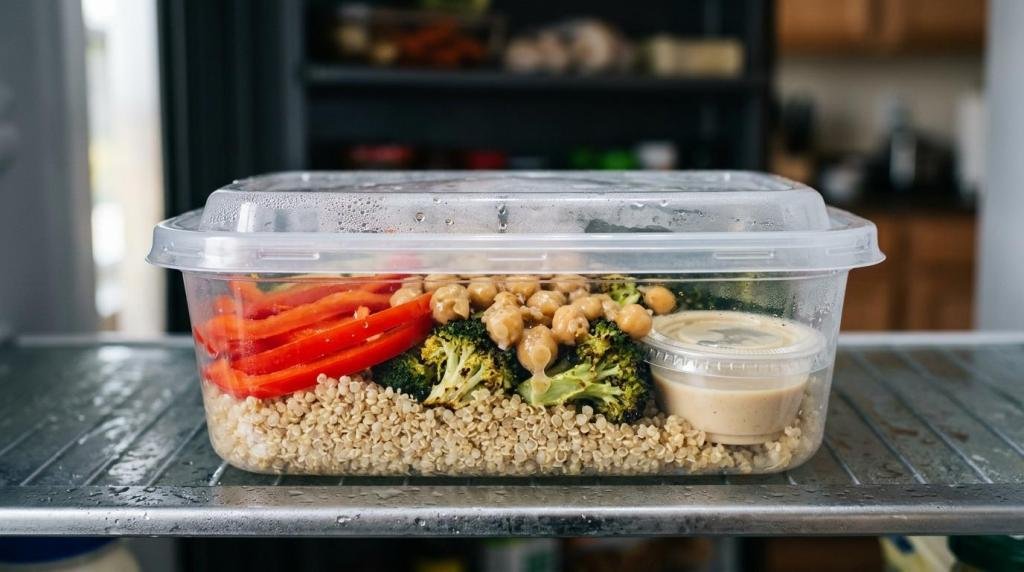
A common misconception is that meal prep means eating the same meal every day. In practice, the smartest vegan lunch prep uses components. One batch of quinoa, chickpeas, roasted broccoli, and tahini dressing can become a bowl on Monday, a wrap on Tuesday, and a salad topper on Wednesday.
How do you build a balanced vegan lunch meal prep container?
Start with a clear template. Harvard and EatRight both point to the same core idea: build lunch around vegetables, whole-food carbohydrates, and protein-rich plant foods.

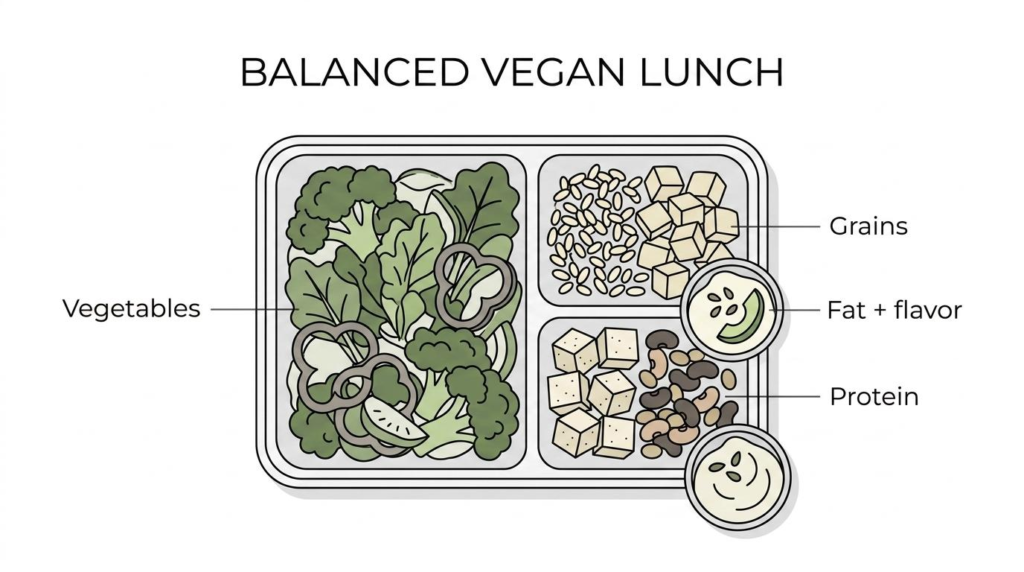
Step 1: Fill roughly half the container with vegetables. Roasted broccoli, cabbage, peppers, zucchini, spinach, and carrots hold up well. If texture matters, use sturdy vegetables as the base and save delicate greens for the day you eat them.
Step 2: Add a quarter of the container as grains or starchy vegetables. Quinoa, brown rice, farro, barley, and sweet potato all work. If your afternoon energy tends to crash, choose whole grains over refined starches.
Step 3: Use the last quarter for protein. Lentils, tofu, tempeh, edamame, black beans, and chickpeas are the most reliable anchors. Pro tip: pair iron-rich foods like lentils or tofu with vitamin C sources like bell pepper, lemon, or broccoli to improve non-heme iron absorption.
Then finish with fat and flavor. A small cup of tahini dressing, pumpkin seeds, avocado, or hummus often makes the difference between a technically balanced lunch and one you actually want to eat.
What are the best vegan lunch meal prep recipe ideas and resources right now?
A few proven starting points stand out. Vegan Meal Prep, Harvard, and USDA provide the clearest mix of recipe guidance, meal structure, and food-safety standards.
If you want a practical short list, these are strong places to start:
- Vegan Meal Prep: Best first stop for simple plant-based lunch frameworks, especially bowls, freezer meals, and beginner-friendly prep ideas. Current standouts include easy healthy meal prep, cheap high protein meal prep, low carb meal prep, and freezer meal guidance.
- Harvard Healthy Eating Plate: Best benchmark for building balanced containers without overcomplicating macros.
- USDA leftovers guidance: Best standard for storage, cooling, and reheating rules that keep prep safe.
- EatRight and Vegan RD: Best for nutrient planning, especially B12, calcium, iron, and protein strategy.
Among recipe formats, three lunch types keep showing up because they solve real weekday problems. Chickpea-quinoa bowls work for balance and flexibility. Lentil-tofu rice bowls work for budget and protein, often reaching about 35 to 40 grams of protein per serving. Tofu and cauliflower rice bowls work for lower-carb goals, with one common build landing near 390 calories, 23 grams of protein, 18 grams of total carbohydrate, and 8 grams of fiber per serving.
How do grain bowls compare with wraps and salads for vegan lunch meal prep?
Grain bowls usually win for durability. Wraps and salads can be excellent, but quinoa bowls and brown rice bowls generally hold texture longer from Monday to Thursday.
Bowls are the easiest format for bulk prep. They tolerate reheating, portioning, and ingredient swaps well. If your lunch needs to survive a commute, bowls are usually the safest choice. They also make nutrition planning simpler because grains, legumes, vegetables, and sauce can be measured separately.
Wraps are faster to eat and feel less repetitive, yet moisture is the trade-off. If the filling is too wet, tortillas soften and tear. The fix is simple: keep sauce separate, use drier fillings, and pack lettuce or cabbage between the wrap and wetter ingredients.
Salads feel light and fresh, but they are not automatically better for meal prep. Common misconception: salads are the easiest make-ahead vegan lunch. Actually, most mixed salads decline faster than component-based bowls. If you want salad-style lunches, prep the roasted vegetables, grains, beans, and dressing ahead, then combine them with greens the same day.
How do you prep five vegan lunches in one 45-minute session?
Yes. Quinoa, chickpeas, and broccoli can become five solid lunches in under an hour if you cook in parallel instead of in sequence.
Step 1: Start the longest-cooking items first. Put quinoa or brown rice on the stove, heat the oven to roast vegetables, and drain chickpeas or press tofu while the oven warms. Parallel work is what turns meal prep from a two-hour project into a manageable session.
Step 2: Build one flavor system. A lemon-tahini dressing can coat chickpeas, finish vegetables, and act as a dip. One sauce across multiple ingredients keeps the ingredient list short and the final lunch cohesive.
Step 3: Portion by use, not by ingredient. Put the reheatable base together, then store dressing, herbs, seeds, and avocado separately. Pro tip: season grains while they are still warm. Rice and quinoa absorb salt, acid, and aromatics better at that point, which helps the lunch taste fuller after chilling.
If time is tighter, use frozen broccoli, canned beans, and a store-bought whole grain. That swaps some cost efficiency for speed, which is often the right trade on busy weeks.
Which proteins keep best in vegan lunch meal prep?
Lentils and tempeh are usually the most stable. Tofu, chickpeas, and edamame also keep well, while softer proteins may need more careful handling.
Lentils are hard to beat because they are inexpensive, fiber-rich, and freezer-friendly. They reheat well and hold seasoning. Brown or green lentils stay firmer than red lentils, so they are better for bowls and wraps.
Tofu is highly versatile, though texture is the trade-off. Roasted extra-firm tofu keeps better than lightly sautéed tofu because surface moisture is lower. If tofu often turns spongy in your prep, press it more thoroughly and roast at higher heat.
Tempeh has a firmer structure and a stronger flavor. That makes it a better fit when you want chew and staying power. Chickpeas are excellent for salads and bowls, though they are less protein-dense per volume than tofu or tempeh. If your lunch needs to hit a higher protein target, combine legumes with soy foods instead of choosing one or the other.
How do you keep vegan lunch meal prep fresh for 3 to 4 days?
USDA guidance is clear. Cool food quickly, refrigerate within 2 hours, keep leftovers 3 to 4 days, and reheat hot foods to 165°F.
Step 1: Use shallow containers. Large, deep containers cool too slowly. Faster cooling helps both safety and texture, especially with rice, beans, and cooked vegetables.
Step 2: Separate moisture from crunch. Dressings, cucumber, herbs, toasted seeds, avocado, and fresh greens should usually stay out of the main container until serving time. This one habit prevents most soggy-lunch complaints.
Step 3: Reheat only what needs reheating. Warm the grains, beans, tofu, or roasted vegetables, then add raw or crunchy items after. Common mistake: microwaving the entire lunch together. That is how crisp cabbage turns limp and tahini sauce breaks.
If you know you will not eat a portion within four days, freeze it immediately instead of hoping it will last.
Can vegan lunch meal prep be high-protein and budget-friendly at the same time?
Absolutely. Lentils, tofu, soy milk, and frozen vegetables are among the most cost-effective nutrition buys in a plant-based kitchen.
The best budget strategy is to build around staples rather than specialty products. Dry lentils, brown rice, oats, canned tomatoes, onions, cabbage, and frozen broccoli have low cost per serving and low waste. Tofu becomes especially economical when it is used as part of a bowl instead of as a full entrée on its own.
Protein is easier to hit than many people think. A lunch with 1 cup lentils, 5 ounces tofu, and 1 cup broccoli can move into the 35 to 40 gram range, depending on exact amounts and preparation. That is enough to make lunch materially more filling for many adults.
A misconception worth fixing: expensive vegan meat alternatives are not required for a satisfying high-protein lunch. They can be useful, but legumes and soy remain the standard for cost, protein density, and prep reliability.
Which vegan lunch meal prep recipes freeze best?
Soups, stews, curries, and chilis freeze best. Chili, chana masala, and minestrone usually outperform wraps, salads, and fully dressed bowls after thawing.
Moist dishes protect texture better in the freezer. Bean chili, lentil soup, dal, curry, and shepherd’s pie all reheat with less quality loss because sauce or broth buffers the ingredients. Grain bowls can freeze, though fresh toppings should be packed separately or added later.
If you want lunch insurance for a chaotic week, freeze single portions instead of one family-size container. That gives you better thaw speed and portion control.
Useful categories to keep in rotation include:
- black bean chili
- lentil soup
- chana masala
- minestrone
- vegetable curry
Pro tip: tofu is often less freezer-friendly than legumes in mixed meals unless you already enjoy its chewier thawed texture.
What mistakes ruin vegan lunch meal prep most often?
The biggest problems are predictable. Soggy greens, bland grains, and unsafe storage usually come from a few fixable habits.
Most failed lunch prep is not a recipe problem. It is a system problem. People combine hot food with raw greens, pour dressing on everything at once, or prep delicate vegetables for five days when the recipe really needed sturdier produce.
Watch for these issues:
- Too much moisture: Dressings, tomatoes, and cucumber belong on the side unless you are eating the lunch that day.
- Not enough seasoning: Rice, lentils, and tofu need salt, acid, and spices before storage, not only at serving.
- Overestimating shelf life: USDA’s 3 to 4 day window matters. If Friday lunch is packed on Sunday, freezing one portion is often smarter.
- Protein without contrast: A bean-heavy lunch still needs crunch, acid, or herbs. Lemon, pickled onions, and pumpkin seeds solve a lot.
- Ignoring nutrient planning: Vegan lunches can be rich in fiber and still miss B12 or calcium. Fortified foods or supplements still matter across the full diet.
The best vegan lunch meal prep is not the fanciest plan. It is the one that stays safe, tastes good midweek, and is easy enough to repeat next Sunday.


