





Vegan lunch ideas for work matter because lunch shapes energy, focus, and food spending more than many people realize. A good vegan lunch solves one stubborn problem: getting enough protein, fiber, and flavor into a meal that survives a commute and still tastes good at noon. When lunch is easy to prep and easy to repeat, takeout drops and nutrition gets more consistent. The strongest options are simple, sturdy, and built for real workdays.
Why do vegan lunch ideas for work matter for energy and productivity?
Yes. A tofu bowl or lentil dal steadies afternoon energy better than a pastry lunch because protein and fiber slow digestion. At work, that usually means fewer crashes, less vending-machine snacking, and more consistent focus.
A practical vegan work lunch is not just about avoiding meat. It is about building a meal that holds you for four to five hours. Many dietitians use a simple benchmark for lunch: roughly 15 to 25 grams of protein, a meaningful fiber source, and enough calories to avoid rebound hunger. For many adults, that lands around 400 to 600 calories, though needs vary with body size and activity.
If lunch is mostly refined carbs, hunger often returns fast. If lunch includes tofu, tempeh, lentils, chickpeas, quinoa, or edamame, satiety tends to last longer. That is the real reason vegan lunch prep works so well for office life.
What makes a vegan lunch filling enough for a full workday?
A filling vegan lunch combines tofu or chickpeas with quinoa or brown rice and at least two cups of vegetables. Most adults do well with a balanced lunch structure, not a random pile of “healthy” ingredients.
The easiest way to judge a vegan lunch is by structure. If it has a protein anchor, a steady carb source, produce, and a flavor element, it usually performs well. A common misconception is that a big salad is automatically satisfying. If the salad lacks protein and dense carbs, it often turns into a snack.
- Protein anchor
- Slow carbs
- High-volume vegetables
- Fat or sauce for staying power
- Acid, herbs, or spices for flavor lift
To make that concrete, think in portions: 4 to 6 ounces of tofu or tempeh, or 3/4 to 1 cup of beans or lentils; 1/2 to 1 cup cooked grains; 2 cups vegetables; then 1 to 2 tablespoons tahini dressing, pumpkin seeds, or avocado.
What are 10 vegan lunch ideas for work that actually hold up in a lunch bag?
The best vegan work lunches are bowls, sturdy salads, wraps, and dal. Tofu, quinoa, chickpeas, and kale travel well, reheat well, and keep texture longer than delicate greens or creamy pasta.
These ideas work because they are built around ingredients that stay stable for three to four days in the fridge, which is the standard window many meal-prep cooks use for best quality.
- Vegan Meal Prep tofu grain bowl with extra-firm tofu, brown rice, broccoli, carrots, and edamame. This format is hard to beat for protein, portability, and reheating, and it can reach about 23 grams of protein per serving.
- Quinoa chickpea veggie bowl with roasted peppers, cabbage, spinach, and lemon-tahini dressing. It works hot or cold and usually keeps well for up to four days.
- Kale chickpea salad with sunflower seeds and a mustard vinaigrette. Kale stays chewy instead of collapsing, which makes it better for work than soft lettuce.
- Rice noodle edamame bowl with shredded carrots, cucumber, herbs, and peanut or sesame sauce packed separately. This is a strong option when you want a lighter lunch that still feels substantial.
- Tofu “egg” salad wrap or sandwich with mustard, turmeric, and kala namak. A lettuce or cucumber layer between bread and filling helps stop sogginess.
- Red lentil dal with spinach and rice or naan on the side. This is one of the easiest batch lunches because it reheats well and can be frozen.
- Hummus veggie wrap with hemp seeds, bell pepper, and shredded cabbage. It is fast, cheap, and useful on weeks when cooking time is limited.
- Tempeh lettuce cups or cabbage cups with tamari, ginger, and carrots. These are high in protein but best assembled near lunch if crunch matters.
- Cauliflower rice tofu bowl with edamame, roasted broccoli, and spicy tahini. This works well for lower-carb goals without dropping protein.
- Bean pasta salad with white beans, cherry tomatoes, olives, and an olive oil vinaigrette. Use sturdy vegetables and avoid creamy dressing if you want better texture by day three.
How do you build a balanced vegan lunch bowl in 3 steps?
Start with one base, add one protein, then finish with produce and sauce. Quinoa and tofu are reliable because they work hot or cold and keep structure for several days.
Step 1 is choosing your base. Pick one: brown rice, quinoa, farro, soba, rice noodles, cauliflower rice, or shredded cabbage. If you want a lunch that feels hearty, grains help. If you want lower carbs or less afternoon heaviness, cabbage and cauliflower rice can work better.
Step 2 is adding a real protein portion. Use tofu, tempeh, edamame, lentils, or chickpeas. This is where many lunches fall short. A few chickpeas sprinkled on top do not count as a protein anchor. If your lunch has under about 15 grams of protein, hunger may show up early.
Step 3 is finishing the bowl with volume and flavor. Add roasted vegetables, raw crunch, herbs, and a sauce. Pro tip: stop at four or five components. More ingredients do not always make a better lunch. They often just create more prep, more moisture, and more texture problems.
How do you meal prep vegan lunches for five workdays in 3 steps?
Batch cooking works when you repeat components, not whole recipes. A sheet pan, rice cooker, and one pot can turn tofu, quinoa, and vegetables into five lunches in about 60 to 75 minutes.
Step 1 is choosing a repeatable template. One grain, one protein, two vegetables, and one sauce is enough for a full week. Quinoa plus tofu plus broccoli and carrots is a classic because each part stores well.
Step 2 is cooking in parallel. Start the grain first. Roast tofu and vegetables on one or two pans while a quick sauce comes together in a blender or bowl. This is how a 75-minute prep session can cover five lunches.
Step 3 is planning around the storage window. Most cooked lunches taste best within three to four days in the fridge. If you prep on Sunday and need food through Friday, then either freeze two portions or make day four and five lunches from sturdier cold components like kale, cabbage, chickpeas, and quinoa. Many people assume all five lunches must be identical. They do not. A single batch of components can become bowls on Monday and Tuesday, wraps on Wednesday, and salad jars on Thursday.
How do you pack vegan lunches so they stay fresh until noon in 3 steps?
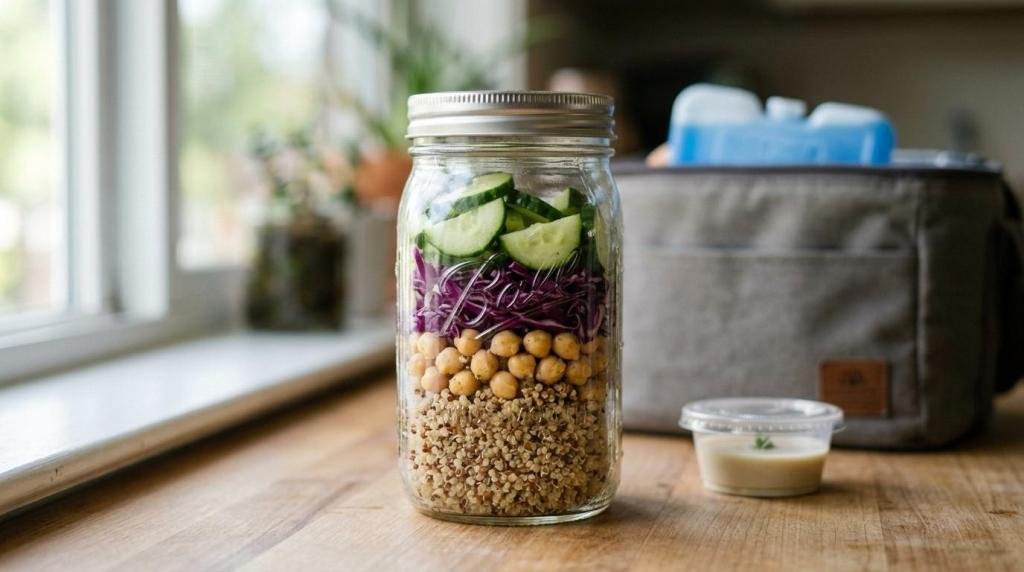
Freshness depends more on moisture control than recipe choice. Mason jars and leakproof containers keep quinoa bowls and wraps far better when sauces, crunchy toppings, and hot food are separated.
Step 1 is cooling food before sealing it. If hot rice or roasted vegetables go straight into a closed container, steam turns into condensation. That water softens tofu, weakens wraps, and dulls roasted textures. A common misconception is that dressing causes all sogginess. Often, trapped steam is the bigger issue.
Step 2 is separating wet from crisp. Pack sauces, seeds, herbs, cucumbers, and avocado apart from the main lunch when possible. In sandwiches and wraps, use lettuce or cabbage as a moisture barrier between bread and filling.
Step 3 is protecting temperature. If your office fridge is unreliable or your commute is long, use an insulated lunch bag with an ice pack. Food-safety guidance is straightforward: perishable lunches should not sit in the temperature danger zone for more than two hours, or one hour in very hot weather.
Are vegan lunch bowls better than wraps for work?
Yes, bowls usually beat wraps for texture and shelf life. Rice bowls and quinoa bowls last three to four days with less sogginess, while wraps win only when you need one-hand eating or zero utensils.
Bowls are more forgiving. They let you pack sauce separately, keep crunchy toppings crisp, and reheat without structural collapse. They also make portion control easier because you can see the protein, grain, and vegetable balance at a glance.
Wraps still have a place. If you have no microwave, no desk space, or only 10 minutes to eat, a wrap can be smarter. The trade-off is storage. A wrap filled too early with tomatoes, cucumbers, or juicy tofu can go limp by midday. If texture matters, build wraps the night before or pack components separately and assemble at work.
Is tofu or chickpeas better for a high-protein vegan lunch?
Tofu is usually the higher-protein choice per calorie, while chickpeas bring more fiber and pantry convenience. Extra-firm tofu and canned chickpeas both work, but they solve different lunch goals.
A typical 150-gram serving of extra-firm tofu provides roughly 17 to 19 grams of protein with relatively modest carbs. One cup of chickpeas provides about 14 to 15 grams of protein and much more fiber, along with more total calories and starch. That makes tofu stronger when you want higher protein without a heavy lunch. Chickpeas are stronger when you want chew, fiber, and easy pantry storage.
The best answer is often both. If you combine tofu with edamame, or chickpeas with quinoa and seeds, protein climbs without much effort. Another misconception is that vegan lunches must rely on a single protein source. Mixed plant proteins often make meal prep easier and tastier.
Which vegan lunch ideas work best for gluten-free, low-carb, or budget-friendly goals?
The same lunch framework works across diets. Tamari, cauliflower rice, lentils, and frozen broccoli let tofu bowls and chickpea salads flex without forcing a whole new plan.
You do not need separate meal systems for every goal. You need smart swaps. If your lunches already follow a bowl or salad template, most changes take one ingredient switch, not a brand-new recipe. The trade-off is simple: when you remove grains, you may need more vegetables, legumes, or soy foods to keep the lunch filling. If you are active in the afternoon, keeping some starch at lunch often feels better than cutting carbs too hard.
- Gluten-free: Use quinoa, rice, rice noodles, corn tortillas, and tamari instead of wheat wraps or soy sauce.
- Low-carb: Swap grains for cauliflower rice, shredded cabbage, or extra broccoli; keep tofu, tempeh, or edamame as the protein base.
- Budget-friendly: Build around lentils, chickpeas, brown rice, cabbage, carrots, and frozen vegetables.
- Higher-protein: Add edamame, extra-firm tofu, tempeh, hemp seeds, or a second legume instead of increasing sauce or grains.
How can you avoid the most common vegan lunch mistakes at work?
Most lunch problems come from weak structure, not from vegan food itself. Delicate lettuce, too little protein, and poor cooling ruin more work lunches than any missing ingredient.
If a vegan lunch keeps failing, the fix is usually mechanical. Better containers, sturdier greens, and a clearer protein target solve a lot. Flavor fatigue matters too. If every lunch tastes the same by Wednesday, then even a well-built meal can lose to takeout.
- Mistaking vegetables for a full lunch: Without enough tofu, tempeh, beans, or lentils, hunger returns fast.
- Packing sauces too early: Tahini, salsa, and vinaigrette can soften grains and greens if they sit for hours.
- Using delicate greens for multiday prep: Spinach and spring mix fade quickly; kale and cabbage hold far better.
- Cooking five identical lunches: Rotate sauces or toppings so one base can feel different across the week.
- Ignoring the three-to-four-day quality window: Freeze later portions or shift to sturdier cold lunches if you prep ahead.


