





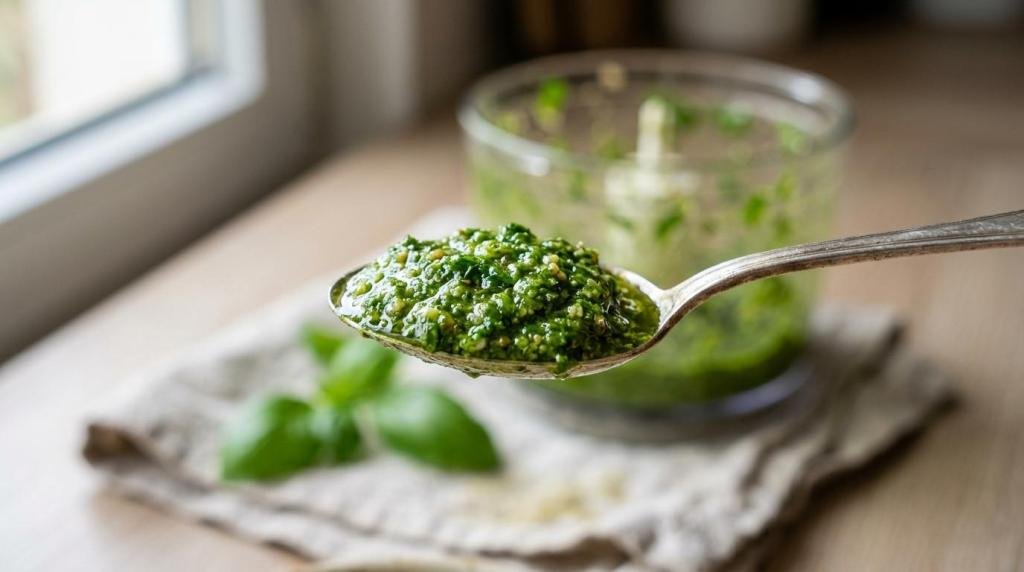
So, you want a sauce that tastes fancy, looks aggressively green, and takes less effort than deciding what to watch tonight? Excellent choice. This dairy-free vegan pesto is fast, bold, and wildly useful. Stir it into pasta, smear it on toast, toss it with roasted veggies, or eat it straight off the spoon while pretending that was the plan all along.
The best part is that you do not need any hard-to-find ingredients or chef energy. You need basil, a blender or food processor, and about 10 minutes of commitment. That’s it. No cheese, no drama, no sad little jar from the back of the fridge.
Why This Dairy-Free Basil Pesto Recipe Is Awesome
This recipe hits that sweet spot between “I made this from scratch” and “I barely had to do anything.” It’s bright, garlicky, rich from olive oil, and cheesy-tasting thanks to nutritional yeast. If classic pesto had a cool, plant-based cousin, this vegan pesto would be the one showing up overdressed and stealing the spotlight.
It’s also flexible, which is code for “you can swap stuff and still get a very good result.” No pine nuts? Use walnuts. No walnuts? Use sunflower seeds. Basil looking a little less than glorious? Add spinach and keep moving. This is a forgiving recipe, which is great news for the rest of us.
And yes, it tastes better than store-bought.
Ingredients You’ll Need for This Dairy-Free Pesto
You only need a short list of ingredients, and none of them are here to make your life difficult.
- 2 cups packed fresh basil
- 1/2 cup walnuts or pine nuts
- 2 to 3 garlic cloves
- 1/4 cup nutritional yeast
- 1/2 cup extra-virgin olive oil
- 2 tablespoons fresh lemon juice
- 1/2 teaspoon fine salt
- 1/4 teaspoon black pepper
- 2 to 4 tablespoons cold water, if needed for blending
A quick note before you start: dry your basil well after washing it. Wet leaves can turn your pesto from luscious sauce to green swamp in record time.
Step-by-Step Instructions for Dairy-Free Basil Pesto
This is one of those recipes where the food processor does most of the work, which, IMO, is exactly how kitchen life should be.
- Add the basil, nuts, garlic, nutritional yeast, salt, and black pepper to a food processor or blender. Pulse a few times until everything looks chopped and a little messy.
- Pour in the lemon juice. Pulse again. You want the mixture broken down, not liquefied into green soup.
- With the machine running, slowly drizzle in the olive oil. This helps the vegan pesto turn creamy instead of heavy and greasy.
- Check the texture. If it looks too thick, add 1 tablespoon of cold water at a time and pulse until it loosens up. A spoonable, spreadable texture is the goal.
- Taste it. Then taste it again, because obviously. Add more salt, lemon juice, or black pepper if it needs a little attitude.
- Use it right away or spoon it into a jar. If you’re storing it, smooth the top and add a thin layer of olive oil to help keep the color fresh.
If you want an even deeper flavor, toast the nuts in a dry skillet for 2 to 3 minutes before blending. Totally optional, but very worth it if you have the extra minute and at least one functioning attention span.
Common Mistakes to Avoid When Making Dairy-Free Pesto
This recipe is easy, but a few tiny mistakes can make it less glorious. Let’s skip those, shall we?
- Using wet basil: Extra water dulls the flavor and makes the sauce thin in a sad, unnecessary way.
- Adding all the oil at once: Slow pouring gives you a better texture. Dumping it all in turns the pesto slick and heavy.
- Overblending the basil: Too much blending can warm the herbs and darken the sauce. Pulse, scrape, pulse, done.
- Forgetting the acid and salt: Basil, garlic, and oil need lemon and salt to really wake up.
- Using old garlic: If your garlic tastes harsh or weirdly bitter, your pesto will too. No one wins.
Also, do not assume bland pesto will somehow fix itself after chilling. It won’t. Taste and adjust while you’re making it.
Alternatives and Substitutions for Dairy-Free Pesto
One of the nicest things about this vegan pesto recipe is how easy it is to tweak. If your fridge is giving “almost empty,” you still have options. The flavor will shift a bit, sure, but not in a bad way.
Here’s a quick cheat sheet for swapping ingredients without wrecking dinner:
| Ingredient | Easy Swap | What Changes |
|---|---|---|
| Basil | Spinach, parsley, arugula, or a mix | Spinach softens the flavor, parsley tastes fresh, arugula adds a peppery kick |
| Pine nuts or walnuts | Cashews, almonds, sunflower seeds, pumpkin seeds | Cashews turn creamy, almonds add firmness, seeds keep it nut-free |
| Nutritional yeast | Vegan parmesan | A little saltier and more classic in flavor |
| Lemon juice | White wine vinegar | Slightly sharper, still bright |
| Olive oil | Avocado oil | Milder taste, less fruity |
| Raw garlic | Roasted garlic | Sweeter, softer, and less punchy |
If you want a nut-free version, sunflower seeds are a great move. If you want a milder vegan pesto for kids or garlic skeptics, use roasted garlic and a bit more spinach. If you want a louder, sharper version, add extra lemon and a pinch of red pepper flakes. Very legal. Very tasty.
FAQ About Dairy-Free Basil Pesto
Can I make this pesto without nuts?
Yes, absolutely. Use sunflower seeds or pumpkin seeds instead. You’ll still get body and richness, and nobody has to miss out on pesto night.
Can I use a blender instead of a food processor?
Yep. A food processor is easier, but a blender works fine if you stop and scrape down the sides a few times. You may need a splash more water or oil to get things moving. Blenders can be dramatic like that.
Why does my pesto taste bitter?
A few usual suspects cause this. Overprocessed basil, old garlic, very strong olive oil, or too little salt can all throw things off. Try adding more lemon juice and a pinch of salt first. That often fixes it fast.
Can I use dried basil?
Honestly, no. Not if you want actual pesto and not a confusing green paste with identity issues. Fresh basil is the whole point here.
How long does dairy-free pesto last in the fridge?
It usually keeps for 4 to 5 days in an airtight container. Press it down, smooth the top, and cover it with a thin film of olive oil to help keep the color bright. Clean spoon every time, please. Let’s not get reckless.
Can I freeze it?
Yes, and you should if you made extra. Freeze it in an ice cube tray, then transfer the cubes to a freezer-safe bag or container. That way you can grab a little or a lot depending on what dinner needs.
Is nutritional yeast really necessary?
Necessary? No. Very helpful? Yes. It gives the pesto that savory, cheesy thing that makes people go, “Wait, this has no cheese?” If you skip it, add a bit more salt and maybe a few extra nuts for body.
Easy Ways to Use Dairy-Free Pesto This Week
Once you’ve made a batch of vegan pesto, you’ve got options. Toss it with hot pasta and a splash of pasta water. Spread it on sandwiches instead of mayo. Spoon it over roasted potatoes, grilled zucchini, or crispy chickpeas. Stir it into white beans for a fast lunch. Put it on pizza. Swirl it into soup. Add it to grain bowls and instantly look like you planned your meals like a grown-up.
This is one of those little recipes that makes everything around it taste more interesting. So grab the basil, blitz a batch, and keep a jar in the fridge. Future you is going to feel very smug about it, and honestly, that’s fair.


