


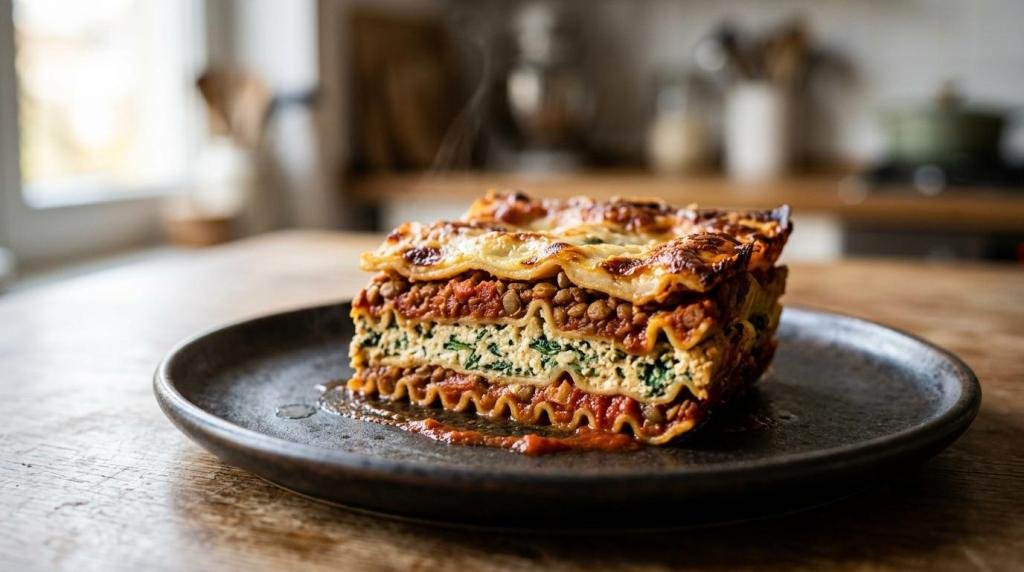

Can vegan lasagna really deliver a creamy texture, satisfying layers, and around 18 to 22 grams of protein per serving without dairy or meat? Yes, and this version makes the case beautifully. With tofu ricotta, lentil tomato sauce, spinach, and tender noodles, vegan lasagna becomes a hearty plant-based dinner that feels rich, sliceable, and absolutely worth repeating.
Introduction to this vegan lasagna recipe
A great vegan lasagna does not try to imitate every detail of the original. It focuses on what people actually want from baked pasta: savory depth, a soft but structured center, browned edges, and enough richness to feel comforting. That is why this recipe uses a layered mix of tofu ricotta, lentils, marinara, herbs, and spinach. The result is a dairy-free lasagna that tastes full and balanced rather than heavy.
It also works especially well for meal prep. The flavors settle as it rests, the slices hold together better the next day, and it freezes well. If you want a plant-based lasagna for Sunday cooking, family dinners, or a make-ahead weeknight plan, this recipe checks every box.
Ingredients for vegan lasagna
The ingredient list is simple, but each layer has a job. The lentils create savory body, the tofu ricotta brings creaminess, the spinach adds freshness, and the sauce keeps everything juicy while the noodles bake to the right texture.
- Lasagna noodles: regular or no-boil; whole wheat works well if you like a firmer bite
- Olive oil: or avocado oil
- Yellow onion: finely diced for a sweeter base
- Garlic: fresh cloves give the sauce more depth
- Cooked lentils: brown or green lentils hold their shape best
- Marinara sauce: choose one with no added dairy or use homemade tomato sauce
- Firm tofu: the base for a ricotta-style filling
- Lemon juice: brightens the tofu ricotta
- Nutritional yeast: adds a cheesy, umami note
- Baby spinach: fresh or thawed frozen spinach, squeezed dry
- Basil, oregano, salt, and black pepper: for classic Italian flavor
- Vegan mozzarella or cashew cream: optional for the top layer
If you like a deeper, more robust pasta sauce, add sliced mushrooms or a spoonful of tomato paste to the pan with the onions. If you want a silkier filling, blend a small handful of soaked cashews into the tofu ricotta.
Equipment for vegan lasagna prep
A 9 x 13-inch baking dish, food processor, large skillet, mixing bowl, and silicone spatula make this vegan lasagna much easier to assemble. Parchment is not needed, but foil is helpful for the first stage of baking so the top does not dry out too soon.
Timing for vegan lasagna
This recipe is designed to keep the process efficient without losing that slow-baked flavor. Using cooked lentils and a ready marinara keeps total time to about 85 minutes, which is often 15 to 20 minutes faster than many fully from-scratch versions.
| Task | Time |
|---|---|
| Prep time | 25 minutes |
| Sauce and filling | 15 minutes |
| Assembly | 10 minutes |
| Bake time | 30 minutes covered, 10 minutes uncovered |
| Rest time | 10 minutes |
| Total time | About 85 minutes |
That short resting period matters as much as the baking time.
Step-by-step vegan lasagna instructions
The method is straightforward, and the texture improves when each layer is seasoned well instead of relying on one heavy topping to carry the dish.
Step 1: Make the lentil tomato sauce
Heat the olive oil in a large skillet over medium heat. Cook the onion for 5 to 6 minutes, until soft and lightly golden. Stir in the garlic and cook for 30 seconds, just until fragrant.
Add the cooked lentils, marinara, oregano, a pinch of salt, and black pepper. Simmer for 8 to 10 minutes so the lentils absorb some of the tomato flavor. If the sauce looks very thick, loosen it with a few tablespoons of water. You want it spoonable, not stiff.
Step 2: Blend the tofu ricotta
In a food processor, combine the tofu, lemon juice, nutritional yeast, basil, a little salt, and black pepper. Pulse until the mixture looks like ricotta, creamy but still slightly textured.
Fold in the spinach after blending. If you use frozen spinach, squeeze out as much moisture as possible first. That one move helps prevent watery vegan lasagna more than any other trick.
Step 3: Prep the noodles for even layers
Cook regular lasagna noodles until just shy of al dente if your package calls for boiling. If you are using no-boil noodles, make sure your sauce is not too thick so the pasta can soften properly in the oven.
Lightly oil the baking dish or spread a thin layer of sauce on the bottom. This keeps the first noodle layer from sticking and helps the edges cook evenly.
Step 4: Layer the vegan lasagna
Start with a thin layer of lentil tomato sauce. Add noodles, then spread on part of the tofu ricotta, then more sauce. Repeat until the ingredients are used, finishing with sauce on top.
If you want that classic baked finish, add a light layer of vegan mozzarella or a few spoonfuls of cashew cream over the top. Do not overdo it. Too much topping can make the surface greasy instead of golden.
Step 5: Bake until bubbly and set
Cover the dish with foil and bake at 375°F for 30 minutes. Then remove the foil and bake 10 more minutes, until the top is lightly browned and the edges are bubbling.
If you like crisp corners, place the dish on the upper rack for the final few minutes. Keep a close eye on it so the top browns rather than dries out.
Step 6: Rest, slice, and serve
Let the vegan lasagna rest for at least 10 minutes before slicing. This gives the layers time to settle and makes neat servings much easier.
For extra freshness, finish with chopped basil, parsley, or a small shower of lemon zest.
Nutritional information for vegan lasagna
The numbers below are estimates for one serving if the pan is cut into 8 pieces. Exact values depend on the marinara, noodles, and optional topping you choose. Even so, this version tends to land in a strong range for plant-based protein and fiber while staying moderate in saturated fat.
| Nutrient | Estimated amount per serving |
|---|---|
| Calories | 380 to 430 |
| Protein | 18 to 22 g |
| Carbohydrates | 38 to 46 g |
| Fiber | 8 to 11 g |
| Fat | 12 to 16 g |
| Saturated fat | 2 to 4 g |
| Sodium | 520 to 760 mg |
| Calcium | 180 to 260 mg |
| Iron | 4 to 6 mg |
That balance is one reason vegan lasagna works so well as a full meal rather than just a side.
Healthier alternatives for vegan lasagna
This recipe is already lighter than many cheese-heavy baked pasta dishes, but it can be tuned to fit different goals. Small swaps change the nutrition profile without taking away comfort or flavor.
- For more protein: add crumbled tempeh to the sauce or use high-protein pasta sheets
- For more vegetables: layer in zucchini ribbons, mushrooms, or roasted eggplant
- For lower sodium: choose a reduced-salt marinara and season the ricotta with herbs, lemon, and garlic
- For a nut-free creamy finish: skip cashew cream and use extra tofu ricotta on the top layer
If you are cooking for gluten-free eaters, use gluten-free lasagna noodles and check the sauce label carefully. If you want a soy-free version, a white-bean ricotta works surprisingly well in place of tofu.
Serving suggestions for vegan lasagna
Vegan lasagna is rich enough to stand alone, though the right side dish makes the plate feel brighter and more complete. Fresh, crisp, and acidic flavors are especially good next to the tomato and herb base.
- Arugula salad with lemon vinaigrette
- Roasted broccoli
- Garlic green beans
- Marinated tomatoes and basil
For a dinner party feel, serve it with sparkling water, a citrusy salad, and warm bread. For meal prep, pair it with simple vegetables and fruit so lunch feels balanced without extra effort.
Common mistakes to avoid with vegan lasagna
Most vegan lasagna problems come down to moisture control and weak seasoning. Fix those two points, and the recipe becomes very dependable.
- Using watery spinach: squeeze thawed spinach well, or the layers can slip apart
- Skipping seasoning in the ricotta: tofu needs lemon, salt, herbs, and nutritional yeast to taste full
- Overloading the sauce: too much liquid can leave the center loose even after baking
- Cutting too early: rest time helps the slices hold their shape
Many home cooks expect the oven to solve everything. It will not. Good vegan lasagna is built before it bakes.
Storing tips for vegan lasagna
This is one of the best make-ahead vegan dinners because the texture stays strong after chilling. Let the lasagna cool fully before storing. Refrigerate slices in airtight containers for up to 4 days.
For freezing, portion individual pieces and wrap them tightly. They keep well for up to 3 months. Reheat covered in a 350°F oven for the best texture, or use the microwave for speed if you are packing lunch. If you plan to assemble ahead, build the lasagna up to 24 hours before baking and keep it chilled until ready to cook.
Quick vegan lasagna recap
This vegan lasagna is hearty, creamy, protein-rich, and easy to prep ahead. Try it for your next dinner, then share how it turned out in the review section or leave a comment on the blog. If you want more plant-based recipes and meal prep ideas, subscribe for new updates.
Vegan lasagna FAQs
Can I make vegan lasagna ahead of time?
Yes. Assemble it up to a day in advance, cover it well, and refrigerate. When ready to bake, let it sit at room temperature for about 20 minutes first if your baking dish allows for that transition safely.
What is the best tofu for vegan lasagna ricotta?
Firm tofu is the most reliable choice. It blends into a creamy filling while keeping enough structure to mimic ricotta. Extra-firm tofu can work too, though it may need a splash of plant milk or more lemon juice.
How do I keep vegan lasagna from being watery?
Use thick sauce, squeeze moisture from spinach, avoid overfilling with vegetables, and let the baked lasagna rest before slicing. Those four habits solve most texture issues.
Can I freeze vegan lasagna after baking?
Absolutely. Cool it fully, cut it into portions, wrap tightly, and freeze. Individual slices reheat especially well, which makes this a smart meal prep recipe.
Do I need vegan cheese on top?
No. The tofu ricotta and tomato sauce already provide plenty of flavor. Vegan mozzarella or cashew cream gives a more classic finish, but the lasagna still works beautifully without it.
What can I use instead of lentils?
Finely chopped mushrooms, crumbled tempeh, or plant-based ground can replace lentils. If you want the closest texture to this recipe, mushrooms and tempeh are both strong options.
