


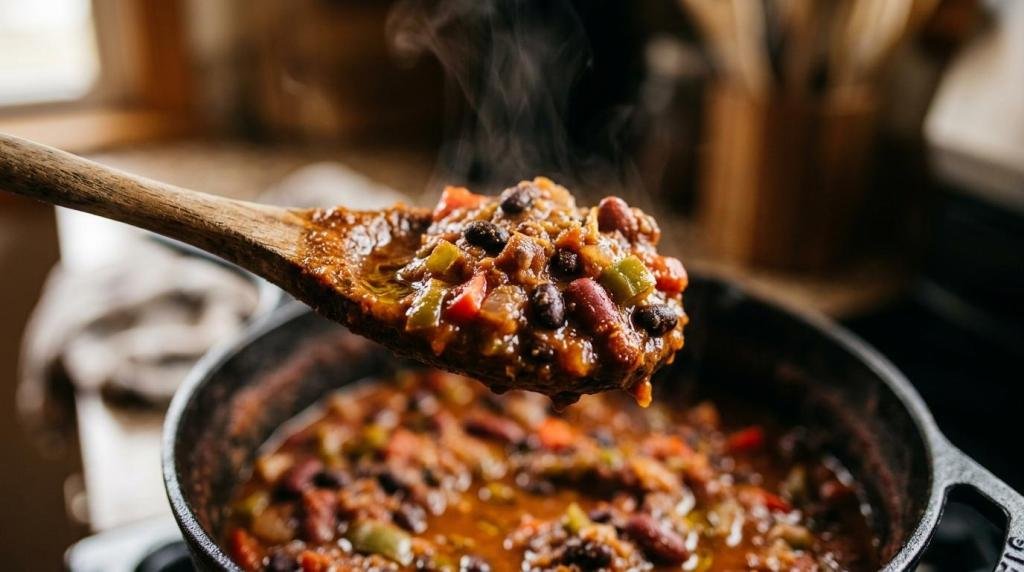

Can a pot of vegan chili really deliver the deep, hearty satisfaction people expect from classic chili while packing double-digit fiber and far less saturated fat than many meat-based versions? Yes, and that is exactly why this recipe deserves a place in your weekly rotation. With beans, tomatoes, peppers, warming spices, and a few smart technique choices, vegan chili becomes a rich one-pot dinner that feels generous, practical, and remarkably meal-prep friendly.
Introduction to this vegan chili recipe
A great vegan chili is not a compromise meal. It is a bold, protein-rich, fiber-forward dish with its own strengths: earthy beans, smoky spice, concentrated tomato flavor, and a texture that can go from brothy to thick and spoon-coating with just a few adjustments. When built well, it offers comfort, value, and excellent reheating quality.
This version uses pantry staples, fresh aromatics, and a layered spice blend to create a balanced plant-based chili. You get familiar chili flavor from chili powder, cumin, smoked paprika, and tomato paste, plus a satisfying body from black beans and kidney beans. It is ideal for weeknights, weekend batch cooking, or a flexible meal-prep base you can turn into bowls, baked potatoes, tacos, or nachos.
Vegan chili ingredients and smart substitutions
The ingredient list is straightforward, but each component has a job. Onion, garlic, and peppers form the savory base. Tomato paste deepens the sauce. Beans add protein and fiber. A little cocoa powder or soy sauce, while optional, can create extra depth without making the chili taste unusual.
- Olive oil
- Yellow onion
- Bell peppers, any color
- Garlic cloves
- Tomato paste: for concentrated savory sweetness and richer color
- Diced tomatoes: canned fire-roasted tomatoes add a subtle smoky edge
- Beans: black beans and kidney beans are a classic pairing, though pinto beans work well too
- Vegetable broth
- Chili powder
- Ground cumin
- Smoked paprika
- Oregano
- Salt and black pepper
- Optional depth boosters: soy sauce, cocoa powder, chipotle in adobo, or a splash of lime juice
- Optional toppings: avocado, cilantro, scallions, dairy-free yogurt, shredded vegan cheese, tortilla strips
If you need substitutions, this recipe is forgiving. Swap black beans for pinto beans, use green lentils for part of the bean mixture, or add corn for sweetness and texture. If tomatoes feel too acidic, a small pinch of sugar or a grated carrot can soften the edge. If you want a meatier bite, diced mushrooms or crumbled tempeh fit naturally into the pot.
Vegan chili timing and prep details
This recipe is efficient by chili standards. Many stovetop chili recipes take 65 to 75 minutes from start to finish. This vegan chili can be ready in about 55 minutes, which is roughly 20% faster while still giving the spices enough time to bloom and the beans enough time to absorb flavor.
| Task | Time |
|---|---|
| Ingredient prep | 15 minutes |
| Sautéing aromatics | 10 minutes |
| Simmering | 25 minutes |
| Final adjustment and serving | 5 minutes |
| Total time | 55 minutes |
If you like a thicker chili, allow an extra 5 to 10 minutes of simmering. If you are cooking for meal prep, making it a day ahead often improves the flavor because the spices settle into the tomato-bean base overnight.
Equipment for vegan chili meal prep
You do not need specialized tools, though the right setup makes the process smoother and less messy.
| Equipment | Why it helps |
|---|---|
| Large Dutch oven or heavy pot | Even heat, better browning, easy simmer control |
| Sharp chef’s knife | Faster prep and cleaner vegetable cuts |
| Wooden spoon or silicone spatula | Good for scraping up flavorful bits from the pot |
| Can opener | Essential for tomatoes and beans |
| Ladle | Cleaner serving, especially for batch prep containers |
| Immersion blender, optional | Thickens the chili quickly by blending a small portion in the pot |
A Dutch oven is the real workhorse here. Its steady heat helps onions soften evenly and prevents tomato paste from catching too quickly. If you only have a stockpot, that works too. Just keep the heat moderate once the tomatoes go in.
How to make vegan chili step by step
Step 1: Build the vegan chili flavor base
Heat the olive oil in a large pot over medium heat. Add the onion and bell peppers with a pinch of salt, then cook until the onion turns translucent and the peppers begin to soften, about 6 to 8 minutes. Stir in the garlic for the final minute.
This first stage matters more than people think. If the onions are still sharp and undercooked, the whole chili can taste flat later. Let them soften properly so the pot starts with sweetness and depth instead of raw bite.
Step 2: Bloom the spices and tomato paste
Add the tomato paste, chili powder, cumin, smoked paprika, oregano, and black pepper. Stir constantly for 1 to 2 minutes, letting the paste darken slightly and the spices become fragrant.
This quick bloom intensifies flavor. Dry spices taste fuller when they hit warm oil, and tomato paste becomes less metallic when cooked briefly before liquid is added.
Step 3: Add tomatoes, beans, and broth
Pour in the diced tomatoes, drained beans, and vegetable broth. If you are using soy sauce, chipotle, or cocoa powder, add them now. Stir well and bring the pot to a gentle boil, then reduce to a steady simmer.
The texture at this point should look a little looser than finished chili. Beans release starch as they simmer, and the tomato base reduces over time.
Step 4: Simmer the vegan chili until rich and balanced
Let the chili simmer uncovered for about 25 minutes, stirring every so often. Taste after 15 minutes and adjust salt, spice, or acidity as needed. If it tastes too bright, keep simmering. If it feels too thick, add a splash of broth.
For a thicker, more integrated texture, mash some of the beans against the side of the pot with a spoon. You can also blend a cup of chili and stir it back in. That gives body without flour or cornstarch.
Step 5: Finish with brightness and texture control
Once the chili tastes rounded and the vegetables are fully tender, finish with lime juice if you like a fresher edge. Add more smoked paprika for warmth, or a pinch of salt if the flavor feels muted.
This is the stage where the dish becomes yours. Some people want a bold, smoky bowl. Others want a tomato-forward chili with gentle heat. Small finishing adjustments make a visible difference.
Step 6: Serve or prep for the week
Ladle the vegan chili into bowls and add toppings right before eating. If you are meal prepping, cool it slightly before portioning into containers.
Leave toppings separate during storage. That keeps avocado fresh, herbs bright, and crunchy garnishes crisp.
Vegan chili nutritional information
Bean-based chili is often a strong choice for anyone looking for filling, budget-friendly meals. A typical serving offers meaningful fiber and solid plant protein, which helps with satiety and makes the recipe suitable for lunch prep as well as dinner. Values vary by brand and portion size, though the estimates below are a useful guide for a six-serving batch.
| Nutrient per serving | Approximate amount |
|---|---|
| Calories | 290 to 340 |
| Protein | 14 to 17 g |
| Carbohydrates | 38 to 44 g |
| Fiber | 11 to 15 g |
| Fat | 7 to 10 g |
| Saturated fat | 1 g or less |
| Sodium | 500 to 750 mg |
| Iron | 20% to 30% DV |
| Potassium | 15% to 20% DV |
If sodium is a concern, choose no-salt-added beans and tomatoes, then season at the end. If protein is your top priority, add lentils, tempeh, or extra beans without changing the basic method.
Healthier vegan chili alternatives and dietary adaptations
This chili is already plant-based, but there is room to fine-tune it depending on your goals. To reduce sodium, use low-sodium broth and rinse canned beans thoroughly. To increase protein, add cooked brown lentils or crumbled tempeh in the simmer stage. To lower acidity, use a small grated carrot or a tiny pinch of baking soda rather than sugar if you want a more savory finish.
If you want more vegetables, stir in zucchini, finely chopped mushrooms, or riced cauliflower. Mushrooms are especially effective because they deepen the umami character and create a more robust bite. For a lower-fat version, sauté the aromatics in a splash of broth instead of oil.
Heat level is easy to adjust. Use mild chili powder for a family-friendly pot, or add chipotle and jalapeño for a smokier, hotter bowl. If you are cooking for mixed preferences, keep the base moderate and let toppings carry the extra spice.
Vegan chili serving suggestions for bowls, sides, and meal prep
Vegan chili is one of the most adaptable meals you can make. It can anchor a simple weeknight dinner or become part of a bigger spread for game day, casual gatherings, or packed lunches. The best serving choice depends on whether you want comfort, crunch, freshness, or extra staying power.
- Over brown rice or quinoa
- With baked sweet potatoes
- For texture contrast: top with tortilla strips, pumpkin seeds, or crushed baked chips
- For cooling balance: add avocado, dairy-free yogurt, or a spoonful of guacamole
- For extra freshness: finish with cilantro, scallions, or lime wedges
If you like interactive meals, set out toppings and let everyone build their own bowl. That small shift makes a basic chili dinner feel more generous and more useful for households with different spice and texture preferences.
Common vegan chili mistakes to avoid
Even simple chili can miss the mark if a few details are skipped. Most problems come down to rushed aromatics, weak seasoning, or texture imbalance.
- Undercooking the onions: raw onion flavor stays sharp and can overpower the pot
- Adding spices too late: blooming them early creates a fuller, warmer taste
- Using too much liquid: a soupy chili tastes diluted unless it simmers long enough to reduce
- Skipping acid balance: a little lime can wake up a heavy bowl, while extra simmering can calm too much tomato sharpness
- Overloading toppings: too many wet toppings can blur the chili’s texture and make the bowl feel muddled
A quick taste near the end solves most issues. If it tastes flat, it often needs salt. If it tastes harsh, it may need more simmer time. If it feels heavy, try acid or fresh herbs before adding more spice.
Storing vegan chili for freshness and meal prep
Vegan chili stores exceptionally well, which is one reason it works so well for batch cooking. After cooking, let it cool for a short period, then portion it into airtight containers. Refrigerated chili usually keeps well for 4 to 5 days. Frozen chili often keeps its quality for about 3 months.
| Storage method | Best practice |
|---|---|
| Refrigerator | Cool slightly, store in airtight containers, use within 4 to 5 days |
| Freezer | Freeze in individual portions, leave a little room for expansion, use within 3 months |
| Reheating | Warm gently on the stove or microwave with a splash of broth if thickened |
Flavor often deepens by day two, so leftovers can taste even better than the first bowl. If you plan to freeze it, avoid adding avocado, herbs, or dairy-free yogurt before storage. Keep toppings separate and add them fresh when serving.
Vegan chili recipe snapshot
This vegan chili brings smoky spice, hearty beans, and rich tomato depth into one practical pot. It is protein-rich, freezer-friendly, and easy to adjust for heat, sodium, or texture. Try it this week, leave a comment or review with your twist, and subscribe for more plant-based meal-prep recipes and tips.
Vegan chili FAQs
Can I make vegan chili in a slow cooker?
Yes. Sauté the onion, peppers, garlic, tomato paste, and spices first if possible, then transfer everything to the slow cooker. Cook on low for 6 to 8 hours or on high for 3 to 4 hours. Finish with lime juice and toppings after cooking.
How can I make vegan chili thicker?
Simmer it uncovered longer, mash some of the beans, or blend a small portion and stir it back in. Tomato paste also helps, though it should be used in moderation so the chili stays balanced.
Is vegan chili high in protein?
It can be. Beans provide a solid protein base, and you can raise the amount by adding lentils, tempeh, or extra beans. A serving often lands in the mid-teens for grams of protein, which is strong for a plant-based one-pot meal.
What beans work best in vegan chili?
Black beans, kidney beans, and pinto beans are all excellent. A mix usually gives the best texture because each bean brings something slightly different, from firmness to creaminess.
Can I make this vegan chili less spicy for kids?
Absolutely. Use a mild chili powder, skip chipotle or jalapeño, and serve hot sauce on the side for adults. You still get rich chili flavor from cumin, tomato paste, oregano, and smoked paprika.
What should I do if my vegan chili tastes too acidic?
Let it simmer longer first. If it still tastes sharp, add a pinch of sugar, a grated carrot, or a very small pinch of baking soda. Those options help soften acidity without dulling the whole dish.
