





Tuna meal prep can turn a rushed weekday lunch into something fast, filling, and genuinely satisfying. A typical can of tuna in water delivers roughly 20 to 26 grams of protein, which helps make a simple prep bowl feel substantial without a long cook time. If you want a practical, high-protein lunch idea with strong staying power, this tuna meal prep plan is a smart place to start.
Why tuna meal prep works for fast, high-protein lunches
Have you ever wondered why so many expensive “healthy lunch” options still leave you hungry by 3 p.m., while a simple tuna meal prep can keep you steady for hours?
Part of the answer is protein density. Tuna offers a lot of protein for relatively few calories, and when you pair it with fiber-rich grains, crunchy vegetables, and a bright dressing, you get a balanced meal that feels fresh instead of repetitive. This matters for anyone trying to batch cook lunches without ending up with soggy, forgettable containers in the fridge.
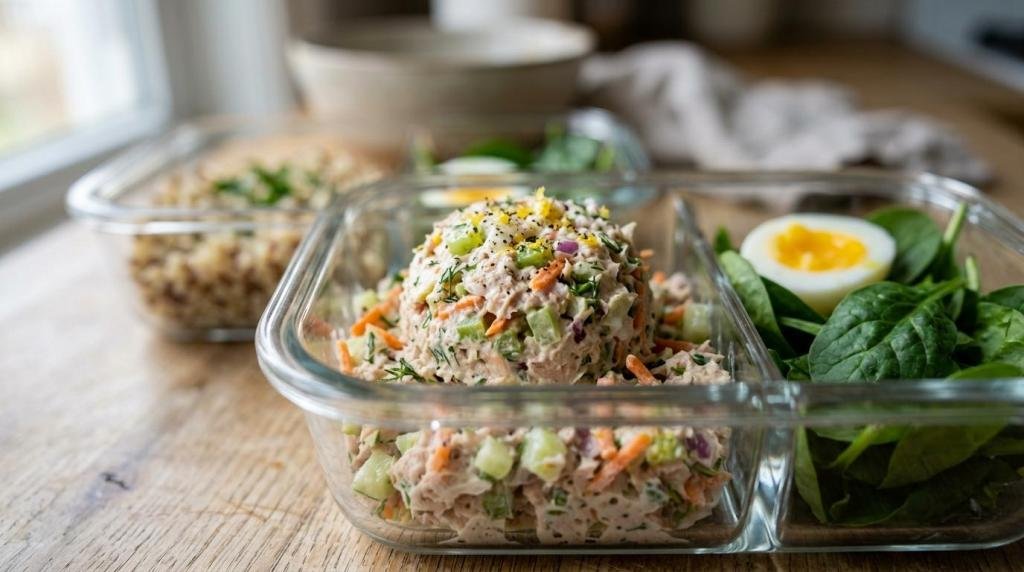
This version leans into Mediterranean-style flavors: lemon, dill, celery, cucumber, red onion, and a creamy binder that keeps the texture pleasant for several days. It is flexible, budget-aware, and easy to scale from three lunches to five.
Tuna meal prep ingredients and substitutions
The goal here is simple: build a tuna rice bowl or tuna salad box that tastes just as appealing on day three as it does on day one. Crisp vegetables, a creamy but light dressing, and sturdy add-ins make the difference.
You can use canned tuna in water for a leaner result, or tuna in olive oil for a richer texture. Brown rice adds chew and fiber, while quinoa works well if you want a slightly lighter grain bowl. A little lemon zest wakes everything up, and fresh herbs keep the flavor from feeling flat.
For a four-serving batch, gather these ingredients:
- 4 cans tuna, drained
- 2 cups cooked brown rice or quinoa
- 1 cup diced cucumber
- 1 cup diced celery
- 1/2 cup finely chopped red onion
- 1/2 cup shredded carrots
- 1/4 cup chopped fresh dill or parsley
- 1/3 cup plain Greek yogurt
- 2 tablespoons mayonnaise
- 2 tablespoons lemon juice
- 1 teaspoon Dijon mustard
- 1 teaspoon lemon zest
- Salt and black pepper
- 4 hard-boiled eggs, optional
- 2 cups baby spinach or mixed greens
If you want easy swaps, replace Greek yogurt with mashed avocado for a softer, richer mix, or use a dairy-free yogurt. If tuna is not your first choice every week, canned salmon works beautifully. For a plant-based variation, mashed chickpeas or baked tofu cubes can step in while keeping the meal prep format intact.
A few tools make this much easier: a rice cooker, a sharp chef’s knife, a medium mixing bowl, a citrus juicer, and leak-resistant meal prep containers with separate compartments.
Tuna meal prep timing and prep plan
This recipe is quick because most of the work is assembly, not active cooking. If your rice is already cooked, you can finish the entire batch in about 20 minutes. Even starting from scratch, it lands well below many weekly lunch prep sessions that involve roasting meat, simmering sauces, and cooling multiple components.
Here is a realistic time breakdown:
| Task | Time |
|---|---|
| Cook brown rice or quinoa | 20 minutes |
| Boil eggs | 10 minutes |
| Chop vegetables and herbs | 10 minutes |
| Mix tuna filling | 5 minutes |
| Portion into containers | 5 minutes |
| Total time | 35 to 40 minutes |
For a high-protein lunch prep, 35 to 40 minutes is efficient. Many multi-component lunch recipes take close to an hour once cooling and packing are included, so this format is a strong choice when time is tight.
Step-by-step tuna meal prep instructions
A good tuna meal prep recipe should feel easy, not fussy. Keep the components cool before sealing the containers, and aim for even chopping so every bite tastes balanced.
Step 1: Cook the grain base for your tuna meal prep
Cook the brown rice or quinoa according to package directions. If you want the best texture for meal prep, spread the cooked grain on a tray or large plate for a few minutes so steam can escape. This keeps the base from turning wet inside the container.
If you are using frozen microwaveable rice for speed, that is completely fine. Just let it cool slightly before portioning.
Step 2: Prepare the eggs and vegetables
Boil the eggs, then cool and peel them. Slice them in halves if you want a composed lunch box look, or chop them for a more salad-like feel.
Dice the cucumber, celery, red onion, and carrots into small, even pieces. The texture here matters. Smaller cuts help the tuna mixture stay cohesive and make each forkful taste bright, crisp, and balanced.
Step 3: Mix the tuna filling
In a medium bowl, combine the drained tuna, Greek yogurt, mayonnaise, lemon juice, Dijon mustard, lemon zest, dill, salt, and black pepper. Stir until the mixture is creamy but not heavy.
Fold in the celery, onion, and carrots. If the mixture looks too thick, add a teaspoon of lemon juice or a spoonful of yogurt. If it seems loose, give it another minute after mixing. Tuna tends to absorb moisture as it sits.
Step 4: Build balanced meal prep containers
Add a layer of brown rice or quinoa to each container. Place baby spinach or mixed greens to one side, then spoon the tuna mixture over the grain or into a separate compartment. Add cucumber if you want it extra crisp, and tuck in the egg halves.
This is also the point to add extras like cherry tomatoes, olives, capers, or a lemon wedge. Those small additions can make a repeated lunch feel much more appealing through the week.
Step 5: Chill the tuna meal prep before storing
Let everything cool fully before sealing the lids. That one step helps reduce condensation, which is one of the biggest reasons meal prep turns soggy.
Once the containers are chilled, the flavors settle in nicely. The lemon, herbs, and tuna blend into a lunch that tastes more intentional than “just canned fish.”
Step 6: Adjust each serving to fit your week
If you are meal prepping for varied appetites, keep some add-ons separate. A larger lunch might include extra rice, avocado, or a side of fruit. A lighter lunch can skip the egg and use a bed of greens instead.
This flexible format is one of the biggest strengths of tuna meal prep. You are building a template, not locking yourself into a single version.
Tuna meal prep nutrition information
Nutrition will vary by brand, portion size, and whether you use mayonnaise, avocado, or extra grains. Still, this gives a solid estimate for one serving when made with tuna in water, brown rice, Greek yogurt, and one egg.
| Nutrient | Approximate amount per serving |
|---|---|
| Calories | 380 to 430 |
| Protein | 30 to 36 g |
| Carbohydrates | 24 to 30 g |
| Fiber | 3 to 5 g |
| Fat | 14 to 18 g |
| Omega-3 fats | Varies by tuna type |
| Sodium | Varies widely by brand |
This profile makes tuna meal prep useful for anyone looking for a high-protein lunch, balanced macros, or a satisfying post-work meal. If sodium matters to you, choose low-sodium canned tuna and season more with lemon, herbs, and black pepper instead of extra salt.
Healthier tuna meal prep alternatives and dietary swaps
A few small changes can shift this recipe toward different nutrition goals without losing flavor. If you want a lighter dressing, use all Greek yogurt and skip the mayo. If you want more healthy fat and a softer texture, mashed avocado is a great swap.
For higher fiber, stir white beans into the tuna mixture or switch the rice for farro, quinoa, or a lentil blend. If you prefer a low-carb lunch, use chopped romaine, shredded cabbage, or cauliflower rice as the base.
If you eat tuna often, rotating in salmon, sardines, chickpeas, or tofu can give your lunch routine more variety. That also helps if you want a wider mix of nutrients and flavors through the week.
Serving suggestions for tuna meal prep lunches
Tuna meal prep does not have to mean the same bowl every day. The base recipe can shift depending on your mood, the season, or what is already in the fridge.
Try these serving ideas to keep the plan interesting:
- Over greens with cherry tomatoes and olives
- Stuffed into whole grain pita
- Scooped onto seeded crackers
- Wrapped in lettuce cups
- Mixed with pasta for a quick tuna pasta salad
A squeeze of lemon right before eating helps revive chilled tuna, and a pinch of flaky salt or cracked pepper can make the lunch taste freshly assembled. If you like a little heat, pack chili flakes or sliced pickled jalapeños separately.
Common tuna meal prep mistakes to avoid
Most tuna meal prep problems come down to texture, moisture, or seasoning. The good news is that each one is easy to fix once you know what to watch.
- Using warm rice: Steam gets trapped in the container and softens the vegetables.
- Skipping acid: Lemon juice or vinegar keeps the flavor from tasting flat.
- Overmixing the tuna: Stir just until combined so the texture stays flaky.
- Adding watery vegetables too early: Tomatoes and extra cucumber can release liquid after a day or two.
- Ignoring sodium levels: Canned tuna, mustard, and mayo can add up quickly, so taste before salting.
- Making too much for too long: Three to four days is usually the sweet spot for best freshness.
Tuna meal prep storage tips and food safety
Store prepared tuna meal prep containers in the refrigerator and aim to eat them within 3 to 4 days. Keep the temperature at or below 40°F, and place containers on an interior shelf rather than the fridge door, where temperatures fluctuate more.
If you want the freshest texture, store greens, cucumber, and any crunchy toppings separately and add them when serving. This works especially well for tuna salad boxes and grain bowls. Hard-boiled eggs also hold better when packed whole or halved rather than chopped into the tuna mixture.
For grab-and-go convenience, label the lids with the prep date. If a container smells off, looks watery in an unusual way, or has been left out too long, do not keep it. Simple food safety habits protect all the effort you put into meal prep.
Make tuna meal prep your next lunch upgrade
This tuna meal prep gives you protein, crunch, bright flavor, and reliable weekday convenience in one simple format. Try it this week, adjust the add-ins to fit your goals, and share your results in the comments or review section. If you want more meal prep ideas, subscribe for fresh updates.
Tuna meal prep FAQs
Can I make tuna meal prep without rice?
Yes. Greens, chopped romaine, cauliflower rice, quinoa, pasta, or white beans all work well. If you want a lighter lunch, a salad-style base is a great fit. If you want longer-lasting fullness, grains or beans are usually the better choice.
What type of tuna is best for meal prep?
Canned tuna in water is a strong default for a lean, clean flavor. Tuna in olive oil tastes richer and can feel more satisfying with minimal dressing. Skipjack or light tuna is often chosen for more frequent meals, while albacore has a firmer texture and milder taste.
How do I keep tuna meal prep from smelling too strong?
Use plenty of lemon, fresh herbs, and crisp vegetables. Storing the tuna in well-sealed containers helps a lot, and so does draining it thoroughly. A Mediterranean flavor profile with dill, parsley, cucumber, and Dijon keeps the aroma fresh and balanced.
Can I freeze tuna meal prep?
The fully assembled containers are not ideal for freezing because yogurt, mayo, cucumber, and greens do not thaw well. You can freeze cooked rice on its own, then build fresh tuna meal prep containers later in the week.
Is tuna meal prep good for high-protein goals?
Absolutely. Depending on the portion, one serving can reach 30 grams of protein or more. Pairing tuna with eggs, Greek yogurt, or beans can raise that number even further while keeping the meal practical for weekday lunches.
What can I use instead of mayonnaise?
Plain Greek yogurt, mashed avocado, hummus, or a mix of olive oil and Dijon all work. Each option changes the texture slightly, so choose based on what you want: tangy, creamy, richer, or lighter.
How can I make this more budget-friendly?
Buy tuna in multi-packs, use seasonal vegetables, and choose rice instead of pricier grains. You can also stretch the tuna mixture with white beans, chickpeas, or extra chopped vegetables while keeping the lunch filling and protein-forward.


