






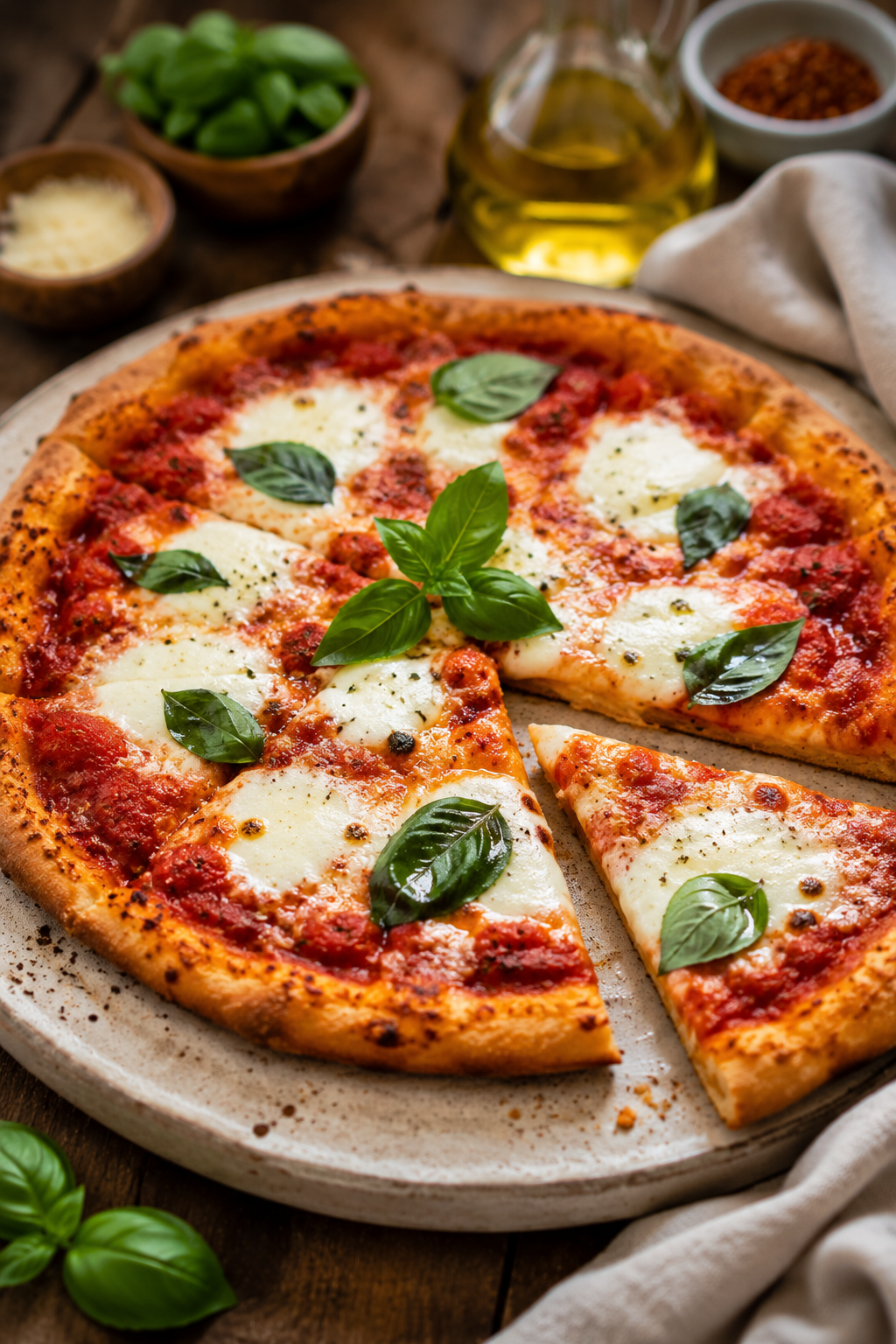
So you want pizza, but the usual dough situation has a habit of turning into a floury identity crisis. Been there. The good news is this version skips the gluten without giving you a sad, cracker-like crust that snaps in half the second you look at it funny.
This dough is chewy, flexible, and pleasantly low-drama. You mix it, let it rise, shape it with slightly damp hands, and suddenly you look like someone who has their life together. At least for dinner.

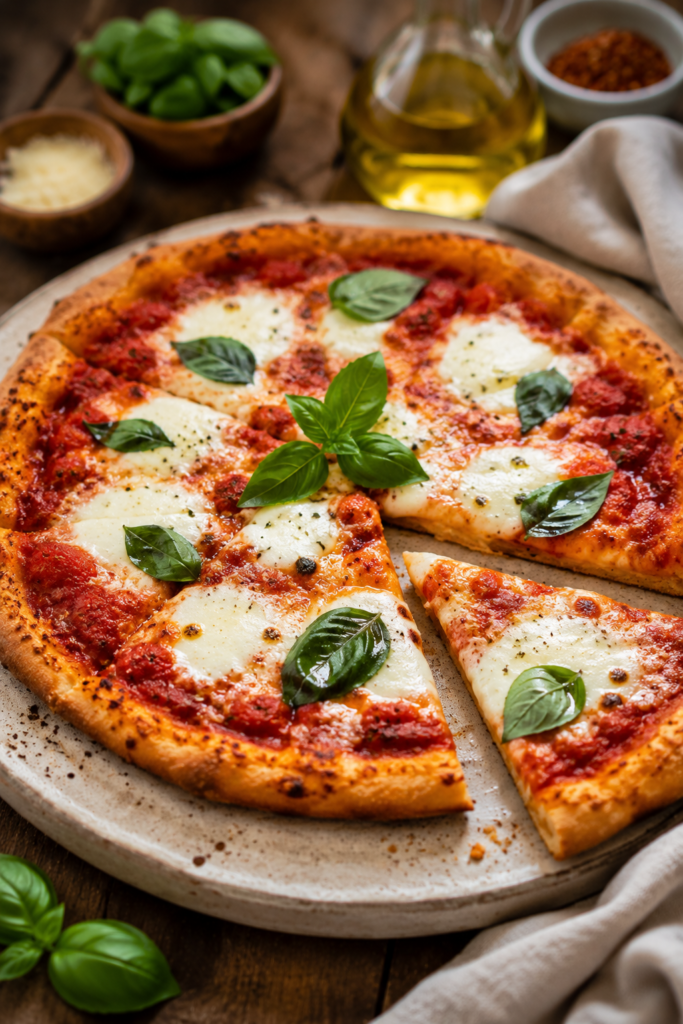
Why This Gluten-Free Crust Recipe Works
A lot of gluten-free doughs fall into one of two camps: wet cement or edible cardboard. This one avoids both, which already makes it a winner.
The trick is using a good gluten-free flour blend plus psyllium husk powder, which gives the dough stretch and structure. That means you can actually shape it like pizza dough instead of spooning a weird batter into a pan and pretending everything is fine.
It is also naturally vegan, which is handy if you like keeping things simple. No eggs, no dairy, no complicated steps, and no need for a stand mixer unless you just enjoy the dramatic kitchen energy.
Even better, this dough works for a classic hand-shaped pizza night or a weeknight “I need carbs and melted toppings immediately” situation. It bakes up crisp on the edges and tender in the middle, which is exactly what pizza should do.
Ingredients for a Great Gluten-Free Pizza Crust
You do not need a long shopping list or a degree in food science. A few smart ingredients do most of the work here.
- Gluten-free all-purpose flour blend
- Psyllium husk powder
- Instant yeast
- Sugar
- Salt
- Warm water
- Olive oil
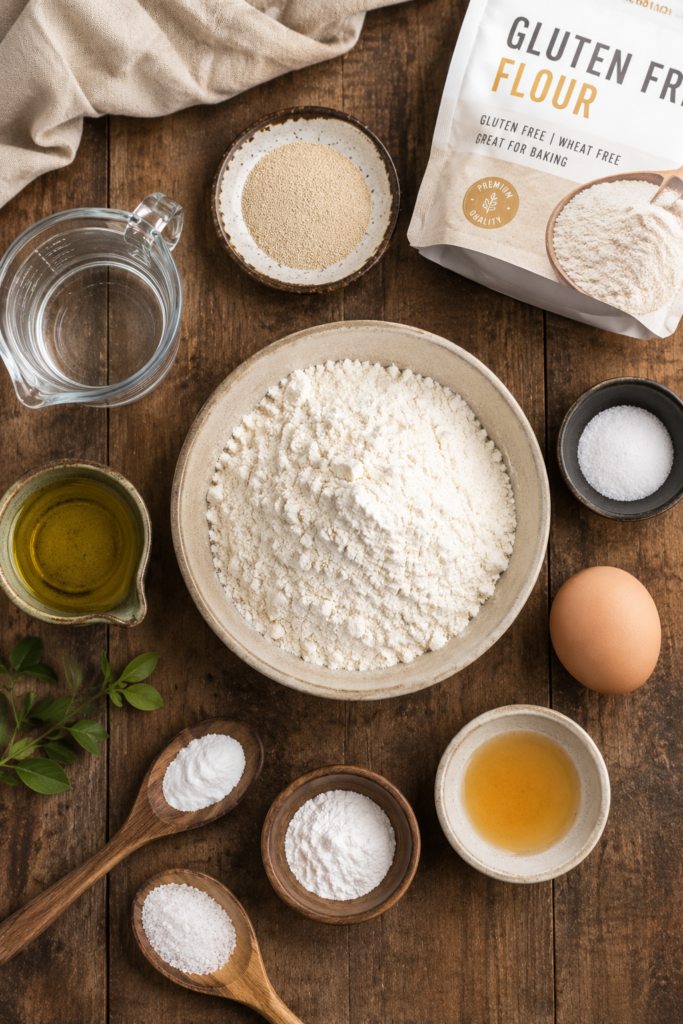
A quick note before you start: use a gluten-free flour blend made for baking, not a single flour like almond or coconut flour. Those are great in the right recipe, but here they will absolutely try to ruin your evening.
If your flour blend does not include xanthan gum, that is usually fine because the psyllium does a lot of the heavy lifting. Still, check the label so you know what you are working with and do not end up blaming the dough for your flour choices.
Step-by-Step Instructions for Homemade Gluten-Free Pizza Dough
This is one of those recipes that feels suspiciously easy. Just follow the steps, trust the process, and resist the urge to keep adding flour every time the dough looks slightly sticky. That stickiness is not a character flaw.
In a large bowl, whisk together the gluten-free flour, psyllium husk powder, instant yeast, sugar, and salt. Mix it well so you do not get random salty pockets or yeast clumps. Nobody wants a surprise bite of sadness.
Pour in the warm water and olive oil. Stir with a spoon or spatula until a shaggy dough forms. Give it a minute, because psyllium thickens as it sits and suddenly the mixture starts acting like real dough.
Mix or knead the dough for 2 to 3 minutes until it looks smoother. You can do this by hand or with a mixer. It should feel soft and slightly tacky, not dry and crumbly.
Cover the bowl and let the dough rise in a warm spot for 45 to 60 minutes. It may not double like traditional wheat dough, and that is fine. You are looking for a noticeable puff, not a dramatic TV makeover.
Preheat your oven to 475°F. If you have a pizza stone or steel, heat that too. A hot surface gives you a better crust and makes you feel smug in the best possible way.
Place the dough on parchment paper and shape it with lightly oiled or damp hands. Press it into a 10 to 12-inch round, keeping the center a bit thinner and the edges a bit thicker. If it sticks, add a tiny bit of oil to your hands instead of dumping in more flour.
Pre-bake the crust for 8 to 10 minutes. Take it out, add sauce and toppings, then bake again for 10 to 15 minutes until the edges are golden and the top looks properly pizza-ish. Let it rest for a couple minutes before slicing, unless patience has left the building.
Best tip: keep toppings reasonable. A mountain of vegetables sounds virtuous until the crust turns soggy and starts folding like a beach chair.
Common Gluten-Free Pizza Dough Mistakes to Avoid
This dough is friendly, but it still has limits. A few common mistakes can turn a good pizza night into a “why is this happening to me” moment.
- Using cold water: yeast likes warmth, not an icy wake-up call.
- Adding too much flour: sticky does not mean broken. Gluten-free dough often starts softer than you expect.
- Skipping the pre-bake: rookie move. Pre-baking helps the crust hold sauce and toppings without going limp.
- Overloading the pizza: yes, every topping is your favorite, but this is pizza, not structural engineering.
- Not letting the dough hydrate: psyllium and flour need a few minutes to absorb water. Give them that time.
One more thing: do not judge the dough by wheat-dough standards. It will not feel exactly the same, and that is okay. Work with slightly wet or oiled hands and it becomes much easier to shape.
Easy Substitutions for Gluten-Free Pizza Dough Ingredients
Maybe you are missing one ingredient, or maybe your pantry is a chaotic little mystery box. Either way, you have options.
| Ingredient | Best substitute | What changes |
|---|---|---|
| Psyllium husk powder | Whole psyllium husk | Works well, but the dough may look speckled and need a bit more mixing |
| Instant yeast | Active dry yeast | Use the same amount, but bloom it in warm water first |
| Olive oil | Avocado oil | Neutral flavor, similar texture |
| Sugar | Maple syrup | Helps feed the yeast, adds a faint sweetness |
| Gluten-free all-purpose blend | Bread-focused gluten-free blend | Often gives a chewier crust |
| Warm water | Warm water plus 1 to 2 tablespoons extra if needed | Some flour blends are thirstier than others |
If you want a crispier crust, roll or press the dough a little thinner and bake it on a preheated stone or steel. If you want it softer and more bready, shape it slightly thicker and keep the toppings lighter.
You can also turn this into mini pizzas if you are feeding picky people, indecisive people, or one person who thinks pineapple is a personality trait.
Gluten-Free Pizza Dough FAQ
A few questions come up every single time, so let’s save you the frantic mid-recipe search.
Can I make the dough ahead of time?
Yes, and honestly it is a smart move. After mixing, cover the dough and refrigerate it for up to 24 hours. Let it sit at room temperature for about 20 to 30 minutes before shaping.
Can I freeze this dough?
Yep. Shape it into a ball, wrap it well, and freeze it for up to a month. Thaw it in the fridge overnight, then let it warm up a bit before pressing it out.
Why is my dough too sticky?
Because gluten-free dough likes to keep things interesting. Usually, a short rest fixes it as the flour and psyllium absorb moisture. If it is still wildly sticky, add only a small sprinkle of flour, not half the bag.
Can I skip psyllium husk powder?
You can, but I would not recommend it if you want a dough that stretches and holds together well. Without it, the texture is usually more fragile and less chewy. Basically, you can do it, but your crust may act dramatic.
Do I need a pizza stone?
Nope. A regular baking sheet works fine, especially with parchment paper. A stone or steel just gives you a hotter surface and better browning.
Can I use this for calzones or flatbread?
Yes, though flatbread is the easier win. Calzones can work if you keep the filling modest and handle the dough gently. Remember, confidence is good, but overstuffing is not.
How do I store leftover baked pizza?
Keep slices in an airtight container in the fridge for up to 3 days. Reheat in a skillet or hot oven if you want the crust to perk back up. The microwave is quick, but it can make the texture a little floppy. Sometimes that is a risk worth taking.
Once you make this once, the whole thing gets a lot less mysterious. Grab your favorite sauce, choose toppings with a little restraint, and make the kind of pizza that disappears faster than your good intentions to “just have one slice.”


