





A good lunch should earn its place in your weekly routine, and vegan wraps with chickpea filling are one of the easiest ways to make that happen.
Vegan Chickpea Wrap Introduction and Why It Works
Can a 25-minute lunch really deliver 12 to 20 grams of protein, 10 to 15 grams of fiber, and enough flavor to compete with a deli wrap? Yes, and that is exactly why vegan wraps chickpea recipes keep showing up in meal-prep plans, lunchboxes, and quick weeknight menus.
Chickpeas, also called garbanzo beans, are naturally rich in plant protein, fiber, folate, and iron. Pair them with a whole-wheat tortilla, crunchy vegetables, and a bright tahini-lemon sauce, and you get a wrap that feels substantial without feeling heavy. Harvard Nutrition Source and USDA FoodData Central both support what home cooks already notice in practice: legumes make meals more satisfying and more nutritionally balanced.
This recipe leans Mediterranean, though the structure is flexible enough for buffalo, curried, or Southwest versions. If you want a high-fiber vegan lunch that packs well and tastes fresh, this is a smart place to start.
Vegan Chickpea Wrap Ingredients List and Substitutions
The best vegan chickpea wrap has a creamy center, crisp edges, and enough acidity to keep each bite lively. The ingredient list below makes 4 wraps and keeps the texture balanced, so the filling stays together instead of spilling out at the first bite.
| Ingredient | Amount | Why it matters | Easy substitution |
|---|---|---|---|
| Chickpeas, drained and rinsed | 2 cups | Main protein and fiber base | Cooked dried chickpeas |
| Tahini | 2 to 3 tbsp | Creaminess and nutty depth | Hummus, sunflower seed butter |
| Lemon juice | 2 tbsp | Brightness and freshness | Lime juice |
| Dijon mustard | 1 tsp | Tang and structure | Whole-grain mustard |
| Garlic, minced | 1 small clove | Savory edge | Garlic powder |
| Ground cumin | 1/2 tsp | Warm, earthy flavor | Curry powder |
| Smoked paprika | 1/2 tsp | Depth and mild smokiness | Sweet paprika |
| Red onion, diced | 1/4 cup | Sharp crunch | Green onion |
| Cucumber, diced | 1/2 cup | Cool contrast | Celery |
| Shredded carrot | 1/2 cup | Sweet crunch and color | Cabbage slaw |
| Chopped parsley or dill | 1/2 cup | Fresh herbal finish | Cilantro |
| Large wraps or tortillas | 4 | Structure | Gluten-free wrap, collard leaves |
| Lettuce or spinach | 2 cups | Moisture barrier and texture | Romaine, shredded cabbage |
| Salt and black pepper | To taste | Rounds out the filling | No-salt seasoning blend |
If you want more staying power, add avocado, hemp hearts, or baked tofu strips. If you want a lighter version, swap part of the tahini for unsweetened soy yogurt. Bell peppers or tomatoes also work well here and bring extra vitamin C, which helps your body absorb plant iron more efficiently.
A few simple tools make prep faster and cleaner, especially if you are making these wraps for multiple lunches.
- Chef’s knife
- Cutting board
- Medium mixing bowl
- Fork or potato masher
- Measuring spoons
- Nonstick skillet for warming wraps
- Meal-prep containers for separate storage
Vegan Chickpea Wrap Timing and Prep Efficiency
Using canned chickpeas, this recipe is fast enough for a weekday lunch and stable enough for meal prep. Compared with starting from dried chickpeas, you save a major block of time while keeping excellent texture.
| Task | Time |
|---|---|
| Drain and rinse chickpeas | 2 minutes |
| Chop vegetables and herbs | 8 minutes |
| Mix filling | 5 minutes |
| Warm wraps and assemble | 8 minutes |
| Total time | 23 to 25 minutes |
If you start with dried chickpeas, the active prep is still moderate, though the total elapsed time rises sharply because of soaking and simmering. For most readers, canned chickpeas are the practical choice, and they make this recipe roughly 30 to 40 minutes faster than a from-scratch bean prep.
Vegan Chickpea Wrap Step-by-Step Instructions
The method is straightforward, but the small details matter. A wrap that stays neat, tastes vivid, and stores well comes down to moisture control, seasoning, and layering.
Step 1: Drain, rinse, and mash the chickpeas
Place the chickpeas in a medium bowl and mash about two-thirds of them with a fork or potato masher. Leave some whole for texture. This partial mash is the sweet spot: creamy enough to hold together, chunky enough to feel like real food.
Step 2: Build the chickpea wrap filling
Add tahini, lemon juice, Dijon mustard, garlic, cumin, smoked paprika, salt, and black pepper. Stir until the mixture looks creamy and cohesive. Fold in the red onion, cucumber, carrot, and herbs. If it feels too thick, add 1 to 2 teaspoons of water or a spoonful of soy yogurt. If it feels wet, add a few more mashed chickpeas.
Taste before moving on. Most bland chickpea wraps are simply under-seasoned. A touch more lemon and salt often fixes the whole bowl.
Step 3: Prep the vegetables for maximum crunch
Wash and dry the greens well. If you are using tomatoes or extra cucumber, pat them dry to prevent a soggy wrap. Thinly sliced cabbage, romaine, or spinach all work well because they hold up better than delicate spring mix.
This is also the step where you can add extras like roasted red peppers, pickles, olives, or sliced avocado.
Step 4: Warm the tortillas before assembly
Heat each wrap in a dry skillet for 10 to 20 seconds per side, or microwave them briefly under a damp paper towel. Warm wraps bend more easily and are less likely to tear. This one move makes a noticeable difference, especially with whole-grain or gluten-free tortillas.
Step 5: Layer and roll the vegan chickpea wrap
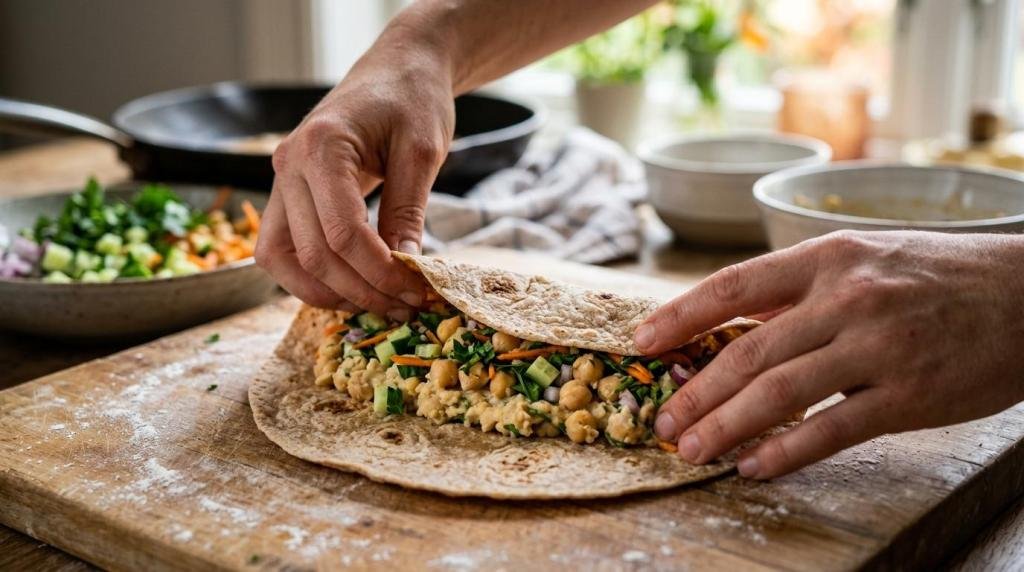
Lay the wrap flat. Add a small layer of greens first, then spoon the chickpea filling across the lower center. Keep the filling in a compact horizontal line rather than spreading it edge to edge. Add any crunchy extras on top.
Fold in the left and right sides, then roll upward tightly from the bottom. Let the wrap rest seam-side down for 30 seconds before slicing. That short pause helps it hold its shape.
Step 6: Serve fresh or prep for later
Serve immediately for the best contrast between creamy filling and crisp vegetables. If you are packing lunch, wrap each one tightly in parchment or foil. For best texture, store wet add-ins and sauce separately when possible.
Vegan Chickpea Wrap Nutritional Information
Nutrition varies with the size of your tortilla and the amount of tahini or avocado you use, though one balanced wrap lands in a very useful range for a main meal. These estimates reflect one large wrap made with whole-wheat tortilla, chickpea filling, greens, and a modest amount of sauce.
| Nutrition per wrap | Approximate amount |
|---|---|
| Calories | 380 to 470 |
| Protein | 12 to 18 g |
| Fiber | 10 to 15 g |
| Carbohydrates | 42 to 55 g |
| Fat | 11 to 17 g |
| Folate | High |
| Iron | Moderate to high |
| Sodium | Varies by wrap and canned beans |
That nutrient profile explains why chickpea salad wraps work so well for lunch. You get slow-digesting carbohydrates, fiber for fullness, and enough protein to keep energy steady through the afternoon.
Healthier Vegan Chickpea Wrap Alternatives
One of the strongest features of this recipe is its adaptability. You can make it lighter, higher in protein, gluten-free, or oil-aware without losing the core appeal. The key is to keep the trio of creaminess, acid, and crunch in balance.
If you are cooking for different preferences in one household, use the same chickpea base and change the wrap, sauce, or add-ins. That approach saves time and keeps everyone at the same table.
- Higher protein: Add baked tofu, edamame, or hemp hearts, and choose a high-protein wrap.
- Gluten-free: Use a certified gluten-free tortilla, a collard leaf, or large romaine leaves.
- Lower fat: Replace part or all of the tahini with unsweetened soy yogurt and add extra herbs.
- Oil-free: Skip rich spreads and use lemon juice, mustard, and a spoonful of white bean puree.
Vegan Chickpea Wrap Serving Suggestions
These wraps fit almost any meal setting. They work as a fast desk lunch, a picnic staple, a light dinner, or a sliced party platter. If you want a more complete plate, add something warm on the side to contrast with the chilled wrap filling.
They are also easy to personalize. Readers who like strong flavor can add hot sauce or pickled onions. If you prefer a fresher profile, stay with cucumber, herbs, and extra lemon.
- Diagonal halves with hummus and carrot sticks
- Lunchbox wrap with fruit salad
- Picnic wrap with baked sweet potato wedges
- Party pinwheels with lemon tahini dip
Common Vegan Chickpea Wrap Mistakes to Avoid
Most wrap failures come from texture issues, not bad ingredients. A few easy adjustments solve almost everything and make your vegan chickpea wrap far more reliable from the first try.
- Soggy filling: Dry the chickpeas well, pat watery vegetables, and use greens as the first layer.
- Flat flavor: Add more lemon, salt, herbs, or a few chopped pickles for sharpness.
- Torn tortilla: Warm the wrap first and avoid overfilling the center.
- Dense texture: Keep the filling to about 3/4 cup per wrap and add crisp vegetables.
- Messy rolling: Arrange ingredients in a tight horizontal strip instead of spreading them widely.
Vegan Chickpea Wrap Storing Tips for Meal Prep
This is a strong meal-prep recipe, though the best approach is component storage rather than fully assembled storage. The filling actually tastes better after a few hours in the refrigerator because the lemon, garlic, and spices have time to settle into the chickpeas.
Food safety guidance recommends keeping refrigerated foods at 40°F or below. For the best eating experience, store the chickpea filling, greens, and wet vegetables separately, then assemble just before eating.
| Item | Refrigerator time | Best practice |
|---|---|---|
| Chickpea filling | 3 to 4 days | Store in an airtight container |
| Tahini or yogurt sauce | 3 to 5 days | Keep in a small sealed jar |
| Washed greens | 2 to 5 days | Dry thoroughly before storing |
| Chopped sturdy vegetables | 2 to 4 days | Keep separate from sauce |
| Fully assembled wrap | Best within 24 hours | Wrap tightly in parchment or foil |
If you do assemble ahead, skip very watery vegetables or pack them separately. A wrap that starts crisp stays appealing much longer.
Quick Vegan Chickpea Wrap Recap and Reader Next Step
These vegan chickpea wraps bring together creamy chickpeas, crisp vegetables, bright lemon, and a flexible whole-grain wrap in about 25 minutes. They store well, adapt easily, and deliver real staying power. Try them this week, leave a review or comment, and subscribe for more plant-based meal-prep recipe updates and ideas soon.
Vegan Chickpea Wrap FAQs
Can I make vegan chickpea wraps the night before?
Yes, though the texture is best if you store the filling and vegetables separately and assemble in the morning. If you need a fully assembled wrap, choose sturdy greens and avoid excess tomato or cucumber.
Are chickpea wraps good for weight management?
They can be. Chickpeas offer fiber and protein, which support fullness. Portion size still matters, especially with large tortillas, avocado, and tahini-heavy sauces. A balanced wrap is usually more satisfying than a low-protein lunch.
What is the best wrap for a chickpea salad filling?
Whole-wheat tortillas are an easy default because they hold up well and add extra fiber. Gluten-free wraps, lavash, collard greens, and romaine leaves also work if you want a different texture or dietary fit.
Can I use hummus instead of tahini in the filling?
Absolutely. Hummus gives the filling a softer, milder profile and makes the recipe even easier. If using hummus, reduce the salt at first, then adjust after tasting.
How do I make these vegan wraps chickpea-friendly for kids?
Keep the seasoning simple, mash the filling a little more smoothly, and use mild crunchy vegetables like shredded carrot or cucumber. Cutting the wrap into pinwheels also makes it easier to serve and eat.


