





Colorful, balanced, and easier than many people expect, vegan sushi brings restaurant-style flavor into a home kitchen without raw fish, complicated sourcing, or special training. When the sushi rice is right and the fillings are cut with care, the result is fresh, satisfying, and highly customizable for weeknights, lunches, and party platters alike.
Introduction to Vegan Sushi
Did you know home vegan sushi often takes 60 to 120 minutes, while many fish-based sushi projects land closer to 75 to 150 minutes because seafood prep and extra food-safety steps add time? That gap surprises a lot of cooks, and it is one reason vegan sushi has become such a smart choice for beginners who still want authentic texture, clean flavor, and beautiful presentation.
The real secret is not a rare ingredient. It is balance.
Short-grain sushi rice, roasted nori sheets, crisp vegetables, creamy avocado, and a savory protein like tofu create the contrast that makes maki rolls feel complete. Add rice vinegar, a touch of sugar and salt, and a little spicy vegan mayo, and the flavor profile feels full, bright, and deeply satisfying.
Vegan Sushi Ingredients List
The ingredient lineup is simple, though each element has a specific job. Sushi rice gives structure, nori adds ocean-like depth, vegetables bring crunch, avocado brings richness, and tofu turns a light roll into a real meal.
Here is a reliable base recipe that makes about 5 rolls, or roughly 30 pieces.
| Ingredient | Amount | Why it matters | Easy substitution |
|---|---|---|---|
| Japanese short-grain rice | 2 cups uncooked | Sticky, glossy rice texture | Calrose rice |
| Water | As directed for rice | Proper rice texture | Use rice cooker measurements |
| Unseasoned rice vinegar | 3 tbsp | Classic sushi tang | Seasoned sushi vinegar |
| Sugar | 1 tbsp | Balances acidity | Maple sugar or organic cane sugar |
| Salt | 1 tsp | Rounds out the rice | Fine sea salt |
| Nori sheets | 5 full sheets | Wrap for maki rolls | Use half sheets for smaller rolls |
| Extra-firm tofu | 8 oz | Protein and savory bite | Tempeh or smoked tofu |
| Soy sauce or tamari | 2 tbsp | Tofu seasoning | Coconut aminos |
| Avocado | 1 large | Creamy texture | Hummus in hand rolls |
| Cucumber | 1 medium | Crunch and freshness | Pickled daikon |
| Carrot | 1 large | Sweetness and color | Bell pepper |
| Vegan mayo | 2 tbsp | Rich finish | Cashew cream |
| Sriracha | 1 tsp | Gentle heat | Wasabi or chili crisp |
| Sesame seeds | 1 tbsp, optional | Nutty finish | Skip or use black sesame |
A few smart swaps can help you tailor the recipe to your pantry and nutrition goals.
- Best rice choice: Japanese short-grain white rice for the easiest rolling
- Higher-fiber option: Half short-grain brown rice, half white sushi rice
- Protein boost: Edamame, tempeh, or baked seitan strips
- Seafood-style flavor: Soy-glazed king oyster mushrooms with crumbled nori
Vegan Sushi Timing and Prep Schedule
For a beginner-friendly version with tofu, avocado, cucumber, and carrot, the total time is usually about 75 minutes. That includes cooking and seasoning the rice, prepping fillings, rolling, and slicing. Compared with more elaborate sushi recipes, that is efficient, especially since most of the time is passive while the rice cooks and cools.
| Task | Time |
|---|---|
| Rice rinsing and cooking | 30 minutes |
| Rice seasoning and cooling | 15 minutes |
| Filling prep | 10 minutes |
| Rolling and slicing | 20 minutes |
| Total | 75 minutes |
If you use pre-baked tofu, a rice cooker, and seasoned sushi vinegar, you can trim the process even more. If you roast sweet potato or use brown rice, expect the timeline to stretch.
Equipment for Easy Vegan Sushi
The right tools remove friction and make the process calmer from start to finish. You do not need a large setup, but a few basics make a real difference in the final shape and texture.
| Tool | Why it helps |
|---|---|
| Bamboo sushi mat | Forms tight, even rolls |
| Rice cooker or heavy pot | Gives reliable rice texture |
| Sharp chef’s knife | Slices cleanly without crushing |
| Large bowl | Helps cool and season rice evenly |
| Rice paddle or spatula | Folds rice gently |
| Small water bowl | Keeps hands from sticking |
| Julienne peeler or mandoline | Creates neat vegetable strips |
A sushi mold can also help if rolling feels awkward at first, though many cooks improve quickly with a standard bamboo mat.
Step-by-Step Vegan Sushi Instructions
###{: #step-1} Step 1: Rinse and Cook the Sushi Rice
Rinse the rice under cool water until the water runs mostly clear. This removes excess starch and helps prevent gummy texture. Cook the rice according to package directions or in a rice cooker.
Well-cooked sushi rice should be tender and sticky, not wet or mushy.
Step 2: Season and Cool the Rice
While the rice cooks, mix the rice vinegar, sugar, and salt until dissolved. Transfer the hot cooked rice to a wide bowl, drizzle the seasoning over it, and fold gently with a rice paddle or spatula.
Do not stir aggressively.
Use slicing motions as you fold, which keeps the grains glossy and intact. Let the rice cool to room temperature before rolling. Warm rice is fine. Hot rice softens the nori too quickly.
Step 3: Prep the Vegan Sushi Fillings
Cut the cucumber and carrot into thin matchsticks. Slice the avocado into long strips. Cut the tofu into slim batons, then pan-sear or bake it briefly with soy sauce or tamari until lightly golden.
This is also the moment to mix your spicy vegan mayo.
Blend vegan mayo with sriracha until smooth. If you like a more classic sushi-bar finish, stir in a tiny dab of wasabi.
Step 4: Set Up the Rolling Station
Place a bamboo mat on your counter. Put a sheet of nori on top, shiny side down. Keep the rice, fillings, and water bowl nearby, and have your knife ready.
A calm setup changes everything.
When each element is within reach, you roll with more confidence and apply steadier pressure, which leads to cleaner maki rolls.
Step 5: Roll the Vegan Sushi
Wet your hands lightly, then spread a thin layer of sushi rice across the nori, leaving about 1 inch clear along the top edge. Arrange tofu, avocado, cucumber, and carrot in a neat line across the lower third.
Lift the mat and roll forward, tucking the fillings inward as you go. Press gently but firmly to shape the roll. Wet the exposed top edge of nori to seal it.
If your first roll is imperfect, keep going. The second and third almost always look better.
Step 6: Slice and Serve
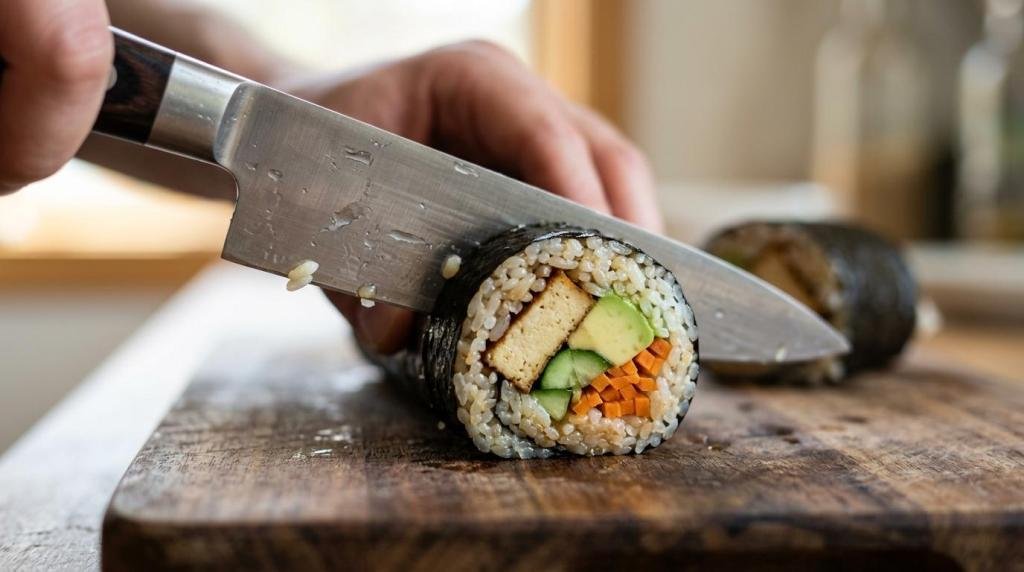
Use a very sharp knife dipped in water. Cut each roll in half, then cut each half into three equal pieces for six pieces per roll. Wipe the blade between cuts if rice builds up.
Top with sesame seeds if you like, and serve with tamari, pickled ginger, and spicy vegan mayo.
Vegan Sushi Nutrition Information
Vegan sushi can be light or filling depending on the mix of rice, vegetables, sauces, and protein. This version lands in a strong middle ground: satisfying enough for dinner, balanced enough for regular meal prep, and far higher in fiber than many seafood-and-mayo-heavy rolls.
Estimated nutrition per serving, based on 4 servings from the full recipe:
| Nutrient | Amount per serving |
|---|---|
| Calories | 430 |
| Carbohydrates | 61 g |
| Protein | 13 g |
| Fat | 14 g |
| Saturated fat | 2 g |
| Fiber | 7 g |
| Sodium | 640 mg |
| Potassium | 480 mg |
These numbers vary by brand, especially for tofu, nori, tamari, and vegan mayo. If your goal is higher protein, the easiest adjustment is adding edamame or using more tofu. If your goal is lower sodium, use reduced-sodium tamari and go lighter on sauces.
Healthier Vegan Sushi Alternatives
Vegan sushi is already a solid option, though a few changes can shift it toward higher fiber, stronger satiety, or lower sodium without losing the pleasure that makes sushi worth making.
- More fiber: Replace half the white rice with short-grain brown rice
- More protein: Add shelled edamame or swap tofu for tempeh
- Less sodium: Use low-sodium tamari and keep dipping sauce on the side
- Less added fat: Use avocado for richness and reduce the mayo
- Whole-food sauce: Try blended silken tofu with lemon, rice vinegar, and a touch of miso
You can also build the same flavors into hand rolls or sushi bowls if you want a faster weeknight format. The texture is less formal, but the flavor stays strong.
Vegan Sushi Serving Suggestions
Presentation matters with sushi because color is part of the experience. A simple roll looks polished when sliced evenly and plated with contrast.
A few serving ideas can turn this from dinner into something memorable.
- Diagonal slices on a white platter
- Black and white sesame seeds
- Pickled ginger on the side
- Edamame and miso soup
- Cucumber salad with rice vinegar
For a fuller spread, pair vegan sushi with seaweed salad, chilled tofu, or a light slaw. For lunchboxes, keep the rolls compact and pack sauces separately so the nori stays pleasant longer.
Common Vegan Sushi Mistakes to Avoid
Most vegan sushi problems come from rice texture, overfilling, or weak rolling pressure. The good news is that each one is easy to fix once you know what to watch for.
| Mistake | What causes it | Better approach |
|---|---|---|
| Mushy rice | Too much water or poor rinsing | Rinse well and measure water carefully |
| Rolls bursting open | Too much filling | Use 2 to 4 fillings, not 6 or 7 |
| Chewy nori | Rice too hot or rolls sitting too long | Cool rice slightly and serve soon |
| Flat flavor | Under-seasoned rice | Taste the rice before rolling |
| Squashed slices | Dull knife | Use a wet, sharp knife |
| Sticky hands | Dry hands | Keep fingertips lightly damp |
One more thing matters more than it seems: cut every filling into similar shapes. Even strips stack better, roll better, and look better once sliced.
Vegan Sushi Storage Tips
Freshly made vegan sushi has the best texture, though smart storage still helps if you are meal prepping components. Prepared rolls should be refrigerated promptly, ideally within 2 hours, and kept cold at 40°F or below.
For the best result, store the parts separately whenever possible.
- Best same-day plan: Cook and season the rice, prep fillings, then roll close to serving time
- Rice storage: Refrigerate cooked rice up to 3 to 4 days, then rewarm slightly before using
- Filling storage: Keep tofu and cut vegetables in separate airtight containers for up to 3 days
- Finished roll storage: Wrap tightly and eat within 24 hours for the best texture
Freezing assembled sushi is rarely worth it. Rice dries out, avocado softens, and nori loses its crisp bite.
Make This Vegan Sushi at Home
This vegan sushi recipe keeps things simple: properly seasoned short-grain rice, crisp vegetables, savory tofu, and tight rolling create restaurant-style texture at home. Try it this week, leave a comment or review with your favorite filling combo, and subscribe for more vegan meal-prep recipes, kitchen tips, and fresh updates.
Vegan Sushi FAQs
Can I make vegan sushi without a bamboo mat?
Yes. Parchment paper or a clean kitchen towel wrapped in plastic can help shape a roll. A bamboo mat is still easier and gives cleaner pressure.
What is the best rice for vegan sushi?
Japanese short-grain rice is the top choice. Calrose works well too. Long-grain rice does not give the same sticky structure and usually leads to loose rolls.
Is vegan sushi healthy?
It can be very balanced, especially when it includes tofu, avocado, and vegetables. The main nutrition variables are white rice, sodium from soy sauce, and how much mayo-based sauce you add.
How do I keep the rice from sticking to my hands?
Dip your fingertips in water before spreading the rice. Your hands should be lightly damp, not dripping wet.
What are the best protein fillings for vegan sushi?
Extra-firm tofu, tempeh, edamame, smoked tofu, and soy-glazed mushrooms all work well. If you want a more seafood-style profile, king oyster mushrooms and nori-seasoned sauces are excellent choices.
Can I prep vegan sushi for lunches?
Yes, though the best plan is to prep rice and fillings ahead, then roll the sushi the night before or the morning of. Keep dipping sauces separate and refrigerate the rolls right away.


