





A strong vegan soup does not need hours of simmering or a long list of specialty ingredients to taste deep, rich, and satisfying. What if a plant-based soup could reach that comforting, slow-cooked flavor in about 45 minutes, which is often faster than traditional soups built on meat stock or dried beans? This recipe shows how.
Introduction
The best vegan soup recipes work because they build flavor in layers. Aromatics create the base, mushrooms and tomato paste add savory depth, lentils and white beans bring body, and lemon wakes everything up at the end. The result is a one-pot meal that feels generous, balanced, and very easy to repeat during a busy week.
This version lands between a brothy vegetable soup and a creamy lentil soup. It is dairy-free, freezer-friendly, high in fiber, and sturdy enough for meal prep. If you want a plant-based soup that can carry lunch on its own or anchor dinner with bread and salad, this is a smart place to start.
Vegan Soup Ingredients List
This vegan soup leans on familiar pantry staples, yet the finished bowl tastes layered and full. Expect earthy lentils, tender vegetables, soft white beans, and a broth that turns silky once part of the soup is blended.
- 2 tablespoons olive oil
- 1 large yellow onion, diced
- 2 carrots, diced
- 2 celery stalks, diced
- 8 ounces cremini mushrooms, sliced
- 4 garlic cloves, minced
- 2 tablespoons tomato paste
- 1 teaspoon dried thyme
- 1 teaspoon smoked paprika
- 3/4 cup brown or green lentils, rinsed
- 1 can white beans, drained and rinsed
- 1 medium Yukon Gold potato, diced
- 6 cups low-sodium vegetable broth
- 3 cups chopped kale
- 2 tablespoons lemon juice
- Salt and black pepper to taste
A few swaps work beautifully here, so you can adapt the recipe to what is already in your kitchen.
- Mushrooms: Use shiitake for stronger umami or leave them out if needed
- Lentils: Green lentils hold shape best, while red lentils make the soup softer and thicker
- White beans: Chickpeas or cannellini beans both fit well
- Kale: Spinach, Swiss chard, or collards are all good options
- Potato: Sweet potato adds a sweeter, earthier finish
- Lemon juice: Red wine vinegar or sherry vinegar can step in at the end
Vegan Soup Timing and Equipment
This recipe is built for weeknights. Prep takes about 15 minutes, cooking takes about 30 minutes, and the total time is roughly 45 minutes. That is a practical advantage over many traditional soups that rely on longer simmering for depth, and it is also quicker than most soups made with dried whole beans.
The time savings come from smart ingredient choices. Lentils cook faster than chickpeas, canned beans skip a long soak-and-simmer cycle, and mushrooms deliver the savory backbone that many cooks expect from stock made with meat or bones.
The right tools make this vegan soup even easier to pull off with confidence.
- Heavy pot or Dutch oven
- Chef’s knife and cutting board
- Wooden spoon
- Measuring spoons and cups
- Immersion blender
If you do not have an immersion blender, a standard blender works too. Just blend carefully in batches and vent the lid slightly so steam can escape.
Step-by-Step Vegan Soup Instructions
A few small choices shape the whole pot. Give the vegetables enough time to soften, let the mushrooms brown, and do not rush the final seasoning.
Step 1: Build the aromatic base for vegan soup
Heat the olive oil in a large pot over medium heat. Add the onion, carrots, and celery with a pinch of salt. Cook for 6 to 8 minutes, stirring now and then, until the vegetables look glossy and softened.
This first layer matters more than most people think. If the onion still tastes sharp, the soup will feel unfinished later.
Step 2: Brown the mushrooms and deepen the broth flavor
Add the sliced mushrooms and cook for 5 to 7 minutes, until they release moisture and start to brown. Stir in the garlic, tomato paste, thyme, and smoked paprika. Cook for 1 to 2 minutes more.
That quick tomato paste step brings sweetness and depth. It is one of the easiest ways to make vegetable broth taste fuller and more rounded.
Step 3: Simmer the lentils, beans, and vegetables
Add the lentils, white beans, potato, and vegetable broth. Increase the heat and bring the pot to a gentle boil, then reduce to a simmer. Cook uncovered for 20 to 25 minutes, or until the lentils and potato are tender.
If your soup looks thick before the lentils are ready, add a splash of water or extra broth. Different brands of lentils absorb liquid at slightly different rates.
Step 4: Add the greens at the right moment
Stir in the chopped kale and cook for 3 to 5 minutes, until wilted and bright. Greens added too early lose their texture and color, while greens added at the end keep the soup lively.
Spinach needs only about 1 minute, so adjust the timing if you use a softer leafy green.
Step 5: Blend part of the vegan soup for a creamy texture
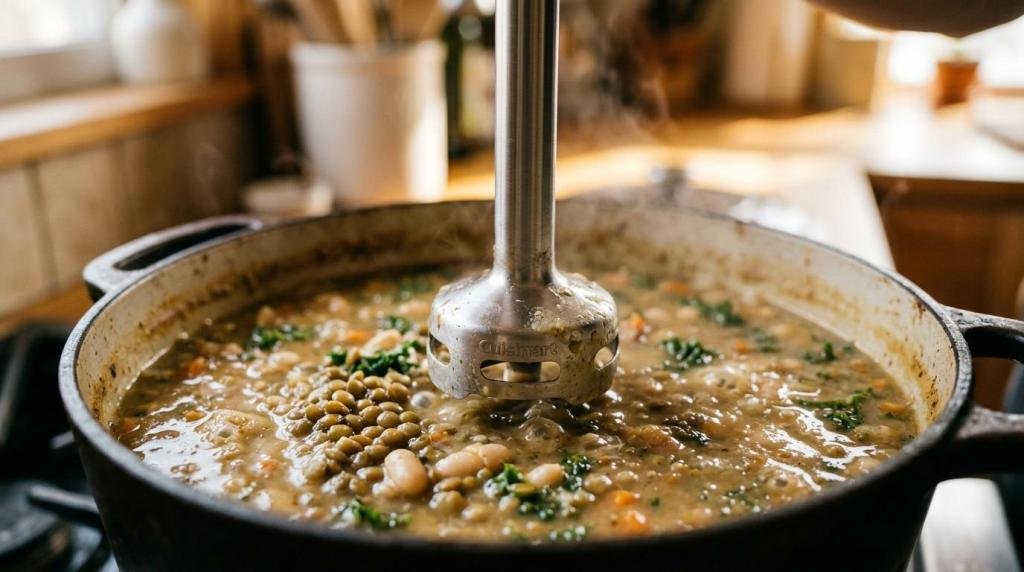
Use an immersion blender to blend a portion of the soup right in the pot. Aim for about one-quarter to one-third of the batch. This keeps the broth creamy without turning the whole pot into puree.
That partial blending trick is especially useful in plant-based soup recipes because it creates body without cream, flour, or a long reduction.
Step 6: Finish with lemon, salt, and black pepper
Turn off the heat and stir in the lemon juice. Taste, then adjust with salt and black pepper until the broth tastes bright, savory, and balanced.
If the soup feels flat, it usually needs one of three things: salt, acid, or another minute of simmering. Taste patiently and make small adjustments.
Vegan Soup Nutritional Information
Bean- and lentil-based soups tend to offer more staying power than vegetable-only purees because they bring both fiber and protein. Using USDA-style ingredient averages, this vegan soup comes out as a filling but moderate-calorie meal.
| Nutrient per serving | Approximate amount | Why it matters |
|---|---|---|
| Calories | 250 to 270 | Satisfying without feeling heavy |
| Protein | 11 to 13 g | Supports fullness and meal balance |
| Fiber | 9 to 11 g | Strong support for satiety and digestion |
| Carbohydrates | 34 to 38 g | Steady energy from legumes and vegetables |
| Fat | 6 to 8 g | Mostly from olive oil |
| Sodium | Varies by broth | Best controlled with low-sodium broth |
These numbers will shift based on your broth brand, bean choice, and portion size. If you want a higher-protein bowl, add tofu cubes or stir in shelled edamame near the end.
Healthier Alternatives for Vegan Soup
This vegan soup already fits many nutrition goals, though a few easy adjustments can make it even more flexible. If you want a lighter broth, cut the oil to 1 tablespoon and use extra mushrooms for richness. If you want a creamier dairy-free soup without coconut flavor, blend in extra white beans.
The recipe also adapts well for special dietary needs. A gluten-free version is already simple if your broth is certified gluten-free. A lower-sodium version works best with no-salt-added beans and broth, then careful seasoning at the end. If you want more iron absorption from the lentils and kale, keep the lemon finish, since vitamin C helps the body use non-heme iron more effectively.
Here are a few smart swaps that keep the flavor strong.
- For more protein: Add tofu cubes, edamame, or an extra half cup of lentils
- For lower sodium: Choose low-sodium broth and rinse canned beans well
- For extra creaminess: Blend more of the soup or add 2 tablespoons tahini
- For more vegetables: Stir in zucchini, cauliflower, or chopped cabbage
- For a spicy vegan soup: Add red pepper flakes or a spoonful of harissa
Vegan Soup Serving Suggestions
Serve this vegan soup in wide bowls with a drizzle of olive oil, fresh parsley, and cracked black pepper for a clean, rustic finish.
It also pairs beautifully with toasted sourdough, a grainy sandwich, or a crisp salad with lemon vinaigrette. For a heartier dinner, spoon it over cooked farro or brown rice and let the grains soak up the broth.
If you are serving a mixed crowd, set out toppings in small bowls. Toasted pumpkin seeds, chili crisp, chopped herbs, and dairy-free yogurt each add contrast without changing the soul of the soup.
Common Vegan Soup Mistakes to Avoid
Even a simple vegan soup can lose depth if a few steps are skipped. Most problems come down to rushed browning, weak seasoning, or texture choices that flatten the bowl.
- Crowding the mushrooms: They steam instead of brown
- Adding all the greens too early: The soup loses color and freshness
- Skipping acid at the end: The broth tastes dull, even when salted
- Over-blending: You lose texture and the soup can feel one-note
- Using only water: Vegetable broth gives a much better base
- Overcooking lentils: The soup turns muddy instead of hearty
A useful rule is to season in stages, then make the final call after the lemon goes in. Brightness changes everything.
Vegan Soup Storing Tips
This is an excellent meal-prep soup. Let it cool slightly, then portion it into shallow containers. For best food-safety practice, refrigerate within 2 hours. It keeps well in the refrigerator for 3 to 4 days.
For longer storage, freeze individual portions for up to 2 to 3 months for the best quality. The soup will thicken in the fridge because the lentils and potatoes continue to absorb liquid, so add a splash of broth or water when reheating.
If you know you are cooking for the freezer, hold back a little on the kale and add fresh greens when reheating. That small move gives the leftovers a fresher taste and a better texture.
Try This Vegan Soup This Week
This vegan soup brings together lentils, white beans, mushrooms, kale, and bright lemon for a one-pot meal that is hearty, freezer-friendly, and weeknight-ready. Make a batch, taste and adjust it your way, then leave a review, share a comment, and subscribe for more plant-based recipes and meal-prep ideas this week.
Vegan Soup FAQs
Can I make this vegan soup in an Instant Pot?
Yes. Use sauté mode for the vegetables, mushrooms, and tomato paste, then pressure cook the lentils, beans, potato, and broth for about 10 minutes with a natural release. Stir in kale and lemon after cooking.
Can I make this vegan soup creamy without blending?
Yes. Use red lentils instead of brown or green lentils, or mash some of the white beans with a fork before adding them. Both options thicken the broth naturally.
Is this vegan soup high in protein?
It is moderate in protein, with roughly 11 to 13 grams per serving. If you want a stronger protein profile, add tofu, edamame, or serve it with whole grain bread and hummus.
Why does my vegan soup taste bland even after I add salt?
It likely needs acid or deeper savory notes. Lemon juice, a spoonful of miso, or a bit more tomato paste can make a much bigger difference than extra salt alone.
Can I use frozen vegetables in this vegan soup?
Absolutely. Frozen carrots, celery blends, kale, or spinach can save prep time. Add frozen greens near the end so they keep their color.
What is the best broth for vegan soup?
A low-sodium vegetable broth is the easiest choice because it gives you more control over seasoning. If you want more depth, choose a broth with mushroom, roasted vegetable, or herb notes.
Can I freeze vegan soup with potatoes?
Yes, though potatoes may soften a bit after thawing. This recipe still reheats well, especially if you warm it gently and add a splash of broth before serving.


