





A great bowl of vegan ramen is not a compromise bowl. It is a smart, layered, deeply savory meal built from mushrooms, kombu, miso, noodles, aromatics, and well-chosen toppings. With the right method, vegan ramen can taste full-bodied and restaurant-worthy while still fitting into a practical weeknight plan.
Vegan ramen introduction and recipe overview
Can a 35-minute vegan ramen really deliver the kind of depth people expect from bowls that often simmer for 6 hours or more?
Yes, and published recipe timing helps explain why. Traditional bone-broth ramen can take most of a day, while many homemade vegan ramen recipes land between 30 and 90 minutes because kombu, dried shiitake, miso, and sesame build umami far faster than bones do. This version aims for a rich middle ground: fast enough for home cooking, layered enough to feel special, and flexible enough for gluten-free, soy-free, or higher-protein changes.
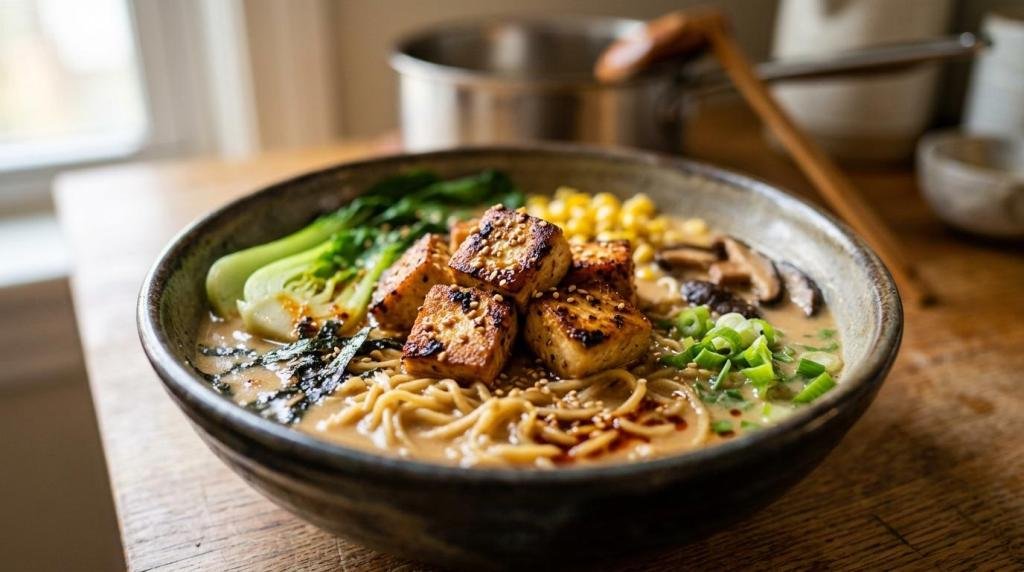
This recipe makes 4 satisfying bowls and uses a Japanese-style plant-based approach with a shiitake-kombu broth, creamy miso tare, egg-free ramen noodles, seared tofu, bok choy, corn, scallions, and nori.
Vegan ramen ingredients list and substitutions
The beauty of vegan ramen is its modular structure. You are building a bowl in parts: broth, tare, noodles, protein, and toppings. That makes substitutions easy without losing the soul of the dish.
- Broth base: 8 cups water, 1 small sheet kombu, 6 dried shiitake mushrooms, 1 small onion halved, 4 garlic cloves smashed, 2-inch piece ginger sliced
- Seasoning paste: 3 tablespoons white or yellow miso, 2 tablespoons tamari or soy sauce, 1 tablespoon tahini or sesame paste, 1 teaspoon rice vinegar, 1 teaspoon chili garlic sauce if you like heat
- Creamy finish: 1 cup unsweetened soy milk or oat milk
- Noodles: 12 ounces egg-free ramen noodles; rice ramen or millet-brown rice noodles work well for gluten-free bowls
- Protein: 14 ounces extra-firm tofu, pressed and cubed; use tempeh, seared mushrooms, or chickpea tofu if preferred
- Vegetables and toppings: 4 baby bok choy, 1 cup corn, 3 scallions, 4 nori sheets cut into strips, sesame seeds, chili oil
- Cooking fat: 1 tablespoon neutral oil or sesame oil
If soy is off the table, swap chickpea miso for regular miso, coconut aminos for tamari, oat milk for soy milk, and mushrooms or chickpea tofu for tofu. If you want a stronger broth, add a few extra dried mushrooms. If you want a gentler bowl, skip the chili and lean on white miso and sesame for roundness.
Equipment that simplifies this recipe can keep the process calm and fast.
- Large soup pot
- Fine-mesh strainer
- Nonstick or cast-iron skillet
- Whisk
- Tongs
- Sharp knife
- Timer
Vegan ramen timing and prep schedule
This recipe is built for efficiency, not rush. The active work is simple, and the flavor payoff is strong.
| Task | Time |
|---|---|
| Prep time | 15 minutes |
| Cook time | 20 minutes |
| Total time | 35 minutes |
| Servings | 4 bowls |
That total is quicker than many from-scratch vegan ramen recipes that run 45 to 90 minutes, and dramatically shorter than classic shoyu ramen with a long bone broth. If you soak the kombu and shiitake overnight, the broth gets even better with no extra work the next day.
Vegan ramen step-by-step instructions
The method matters more than a long ingredient list. Build each layer with intention, and the bowl tastes balanced rather than muddy.
Step 1: Make the shiitake-kombu broth
Add the water, kombu, dried shiitake, onion, garlic, and ginger to a large pot. If you have time, let it soak for 20 to 30 minutes before heating. Then warm it gently over medium heat until it is just below a boil.
Remove the kombu before the water bubbles hard. This keeps the broth clean and avoids any slimy texture. Let the mushrooms and aromatics simmer for about 15 minutes, then strain. Keep the mushrooms if you want to slice and use them as a topping.
Tip: if the broth tastes weak, it usually needs more mushroom depth or more seasoning, not just more salt.
Step 2: Mix the miso tare and sear the tofu
In a bowl, whisk together miso, tamari, tahini, rice vinegar, and chili garlic sauce. Add a spoonful of warm broth if needed to loosen it into a smooth paste.
Heat a skillet with oil, then sear the tofu until golden on two or three sides. A little color makes a huge difference. Plain tofu in ramen can taste flat; browned tofu tastes intentional.
Tip: if you want extra flavor, brush the tofu with a little tamari after searing, not before. This helps it brown instead of steam.
Step 3: Finish the broth and cook the vegetables
Return the strained broth to the pot. Reduce the heat to low and whisk in the soy milk or oat milk. Add half of the miso tare first, taste, then add more until the broth feels savory and balanced.
In the same pot, or in a separate pan of boiling water, cook the bok choy for 1 to 2 minutes until crisp-tender. Warm the corn in the broth right before serving.
Tip: avoid boiling the broth after adding the miso and plant milk. High heat can dull the miso and make the broth split.
Step 4: Cook the ramen noodles last
Boil the noodles according to the package directions. Drain well and do not let them sit in water. Ramen noodles lose their ideal bite quickly, so this step belongs near the end.
Tip: if the noodles will sit in broth for a minute or two before eating, cook them just shy of done.
Step 5: Assemble each vegan ramen bowl
Place a spoonful of tare in each bowl if you saved any. Ladle in the hot broth and stir. Add the noodles, then arrange tofu, bok choy, corn, sliced shiitake, scallions, nori, sesame seeds, and chili oil.
This is where vegan ramen becomes personal. If you like heat, go bold with chili oil. If you want a softer profile, use more scallions and sesame and keep the broth creamy.
Vegan ramen nutritional information per bowl
Homemade vegan ramen can be lighter than restaurant ramen, though sodium still deserves attention. The values below are estimates for one bowl using ramen noodles, tofu, miso broth, bok choy, and corn.
| Nutrient | Estimated amount per bowl |
|---|---|
| Calories | 430 to 480 |
| Protein | 18 to 22 g |
| Carbohydrates | 50 to 58 g |
| Fiber | 6 to 9 g |
| Fat | 14 to 18 g |
| Saturated fat | 2 to 4 g |
| Sodium | 950 to 1,350 mg |
A useful benchmark: the FDA Daily Value for sodium is 2,300 mg. That means one generous bowl of ramen can reach around half the day’s sodium target if the broth is heavily seasoned. The easy fix is to use unsalted broth, then season with care at the tare stage.
Protein climbs quickly if you add extra tofu, edamame, or legume noodles. Fiber improves with more greens, mushrooms, and whole-grain or bean-based noodles.
Healthier vegan ramen alternatives and dietary swaps
Small ingredient changes can make this bowl lighter, higher in protein, or easier to fit around food sensitivities.
| Goal | Smart swap | What changes in the bowl |
|---|---|---|
| Lower sodium | Use low-sodium tamari and unsalted broth | Cleaner broth, less salt load |
| Higher protein | Add edamame or use high-protein noodles | More filling, stronger nutrition profile |
| Gluten-free | Use rice ramen or 100% buckwheat soba | Slightly different chew, still satisfying |
| Soy-free | Use chickpea miso, oat milk, mushrooms instead of tofu | Earthier flavor, still rich |
| Lower fat | Reduce tahini and use less finishing oil | Lighter mouthfeel |
| Higher fiber | Add cabbage, spinach, mushrooms, and whole-grain noodles | More texture and staying power |
If you want a gut-friendly angle, add vegan kimchi at serving time rather than simmering it in the pot. If you want a creamy bowl without more oil, use oat milk and blend a few cooked mushrooms into the broth before straining.
Vegan ramen serving suggestions for weeknights and guests
Vegan ramen works in more settings than people expect. On a weeknight, serve it as a one-bowl dinner with extra greens and tofu. For guests, set up a topping bar with scallions, sesame, chili crisp, nori, and quick-pickled cucumbers so each person can build a bowl that matches their taste.
A crisp side makes the bowl feel brighter. Cucumber salad, edamame, or a small cabbage slaw all work well. If the broth is spicy, a cold sparkling water with lime or unsweetened green tea is a great match.
For meal prep, pack broth, noodles, tofu, and toppings separately. That single habit keeps the texture fresh and turns leftovers into a lunch you will actually want.
Common vegan ramen mistakes to avoid
Most weak bowls come down to balance, not effort. Vegan ramen needs enough umami, enough seasoning, and enough texture contrast.
| Mistake | Why it happens | Quick fix |
|---|---|---|
| Boiling kombu hard | It seems faster | Heat gently and remove before boiling |
| Overcooking noodles | They are cooked too early | Cook them last and serve right away |
| Flat broth | Not enough tare or aroma | Add more miso paste, tamari, or chili oil |
| Split broth | Plant milk and miso were boiled | Keep heat low after adding them |
| Bland tofu | It went straight into the bowl | Sear it first for color and flavor |
A practical rule helps: if the broth tastes thin, add depth before adding salt. Mushroom richness, sesame, miso, garlic, ginger, and a finishing oil do more for the bowl than extra sodium alone.
Vegan ramen storing tips and meal prep advice
Store every component separately. Broth keeps well in the refrigerator for 3 to 4 days. Seared tofu and cooked vegetables also hold for about 3 to 4 days. Cooked noodles are best within 1 to 2 days and should be stored apart from the broth so they do not turn soft.
Refrigerate leftovers within 2 hours of cooking. Reheat the broth until steaming, warm the tofu separately if you can, and dip the noodles into hot water for 20 to 30 seconds rather than simmering them. Freeze broth, not assembled ramen. That choice protects texture and makes future bowls much better.
Try this vegan ramen recipe tonight
This vegan ramen brings together shiitake-kombu broth, miso tare, springy noodles, crisp greens, and satisfying tofu in a bowl that feels rich without being heavy. Make it once, adapt it to your pantry, then leave a comment, rate the recipe, and subscribe for more meal-prep ideas from the blog today.
Vegan ramen FAQs
Is ramen vegan by default?
No. Many ramen noodles contain egg, and many broths use chicken, pork, or fish-based stock. Always check the noodle label and build the broth from plant-based ingredients like kombu, shiitake, miso, and vegetables.
What makes vegan ramen taste rich without meat?
Layered umami. Kombu brings glutamates, dried shiitake adds mushroom savoriness, miso adds fermentation and salt, and sesame or plant milk adds body. When those elements are balanced, the broth tastes full rather than thin.
Can I make vegan ramen ahead of time?
Yes, and it works well for meal prep if you separate the parts. Keep broth, noodles, tofu, greens, and toppings in different containers. Reheat and assemble right before eating.
What are the best noodles for gluten-free vegan ramen?
Rice ramen, millet-brown rice ramen, and 100% buckwheat soba are strong choices. Check labels carefully, because soba blends often include wheat.
How can I add more protein to vegan ramen?
Use extra tofu, tempeh, edamame, or legume-based noodles. Even a simple handful of shelled edamame can shift the bowl from light to very satisfying without changing the flavor profile too much.
Can I make this vegan ramen spicy?
Absolutely. Stir chili garlic sauce into the tare, drizzle chili oil on top, or add a spoon of chili crisp at serving time. Start small, taste, and build heat in layers so the broth still tastes balanced.


