

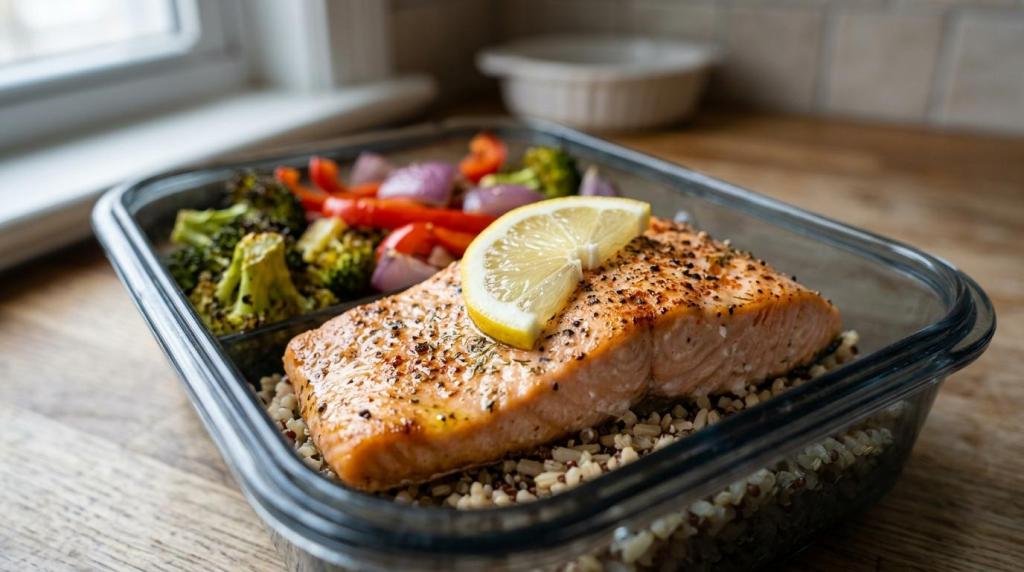

A smart weekly food routine does not have to feel repetitive or complicated. With the right salmon meal prep plan, you can cook once, eat well for days, and keep flavor, texture, and nutrition working in your favor.
Why Salmon Meal Prep Works for Busy Weeks
Can one hour of salmon meal prep really set up four satisfying lunches with more than 25 grams of protein each, while still tasting fresh on day three? Yes, and that is exactly why this approach keeps showing up in healthy eating plans. Salmon is rich in protein and omega-3 fats, and a 4-ounce cooked portion can deliver roughly 23 to 25 grams of protein, depending on the cut and cooking method.
That combination matters. Protein supports fullness, while fatty fish adds a level of richness that makes meal prep feel less like a compromise. When paired with grains, roasted vegetables, or a crisp salad base, salmon becomes one of the most practical options for make-ahead lunches and dinners.
It also looks and tastes like real food, not just fuel.
Ingredients for a Balanced Salmon Meal Prep
The best salmon meal prep starts with a short ingredient list that creates contrast: flaky fish, tender grains, crisp-tender vegetables, and a sauce with acid and depth. This version makes 4 meal prep containers and leans on ingredients that are easy to find in most grocery stores.
- Salmon fillets: 4 fillets, about 4 to 6 ounces each; use Atlantic, sockeye, or coho salmon
- Olive oil: 2 tablespoons; avocado oil works well too
- Lemon: 1 large, half for juice and half sliced for baking
- Garlic: 3 cloves, minced; garlic powder works in a pinch
- Paprika: 1 teaspoon; smoked paprika adds a deeper flavor
- Salt and black pepper: to taste
- Cooked grain base: 3 cups cooked brown rice, quinoa, or farro
- Broccoli florets: 4 cups; swap with green beans, asparagus, or zucchini
- Bell peppers: 2, sliced; any color works
- Red onion: 1 medium, sliced
- Sauce option: 4 tablespoons tahini-lemon sauce, yogurt-dill sauce, or a simple vinaigrette
- Fresh herbs: chopped parsley or dill for finishing
A small ingredient shift can change the whole mood of the prep. Quinoa keeps it light, brown rice makes it comforting, and farro gives it a pleasantly chewy texture. If you like stronger flavor, add Dijon mustard, chili flakes, or a touch of maple syrup to the salmon marinade.
Salmon Meal Prep Timing and Prep Schedule
One reason salmon meal prep is so practical is speed. Salmon cooks quickly, especially in the oven or air fryer, and the vegetables can roast at the same time. If your grain is already cooked, the full process can take about 35 minutes. If you start from dry rice or quinoa, expect closer to 50 minutes.
| Task | Time | Notes |
|---|---|---|
| Prep vegetables and salmon | 15 minutes | Chop vegetables, mix seasoning, preheat oven |
| Cook grains | 20 to 30 minutes | Use pre-cooked grains to save time |
| Roast vegetables | 20 minutes | Stir once halfway through |
| Bake salmon | 12 to 15 minutes | Cook to 145°F internal temperature |
| Cool and portion | 10 minutes | Essential for food safety and texture |
That total is often shorter than cooking four separate lunches across the week, and cleanup stays manageable when everything is cooked on one sheet pan plus one pot.
Step-by-Step Salmon Meal Prep Instructions
This method keeps the salmon moist, the vegetables caramelized, and the meal boxes easy to reheat.
Step 1: Season the salmon and prep the base ingredients
Pat the salmon dry with paper towels. This helps the seasoning stick and encourages better browning. Place the fillets on a lined sheet pan or baking dish. Drizzle with 1 tablespoon olive oil, lemon juice, garlic, paprika, salt, and black pepper. Add lemon slices on top if you want a brighter finish.
At the same time, cook your grain if needed. Brown rice and quinoa are both reliable meal prep choices because they hold texture well in the fridge.
Step 2: Roast the vegetables until they are tender and slightly charred
Toss broccoli, peppers, and red onion with the remaining olive oil, a pinch of salt, and black pepper. Spread them out on a sheet pan in a single layer. Crowding traps steam, so use two pans if needed.
Roast at 400°F for about 20 minutes. Stir once halfway through. You want browned edges, not limp vegetables. That little bit of color brings a sweeter, fuller flavor that balances the richness of the fish.
Step 3: Cook the salmon just until flaky
Bake the salmon at 400°F for 12 to 15 minutes, depending on thickness. A thinner fillet may be ready at 10 minutes, while a thick center-cut piece may need a bit longer. The fish should flake easily with a fork and reach 145°F in the thickest part.
Do not overcook it. That is the line between moist, buttery salmon and a dry lunch you are forcing yourself to finish. If you prefer a slightly softer center and plan to eat the meal within a day or two, pull it the moment it reaches doneness.
Step 4: Cool, portion, and build the meal prep containers
Let the salmon and vegetables cool for 10 to 15 minutes before sealing them in containers. This step helps prevent condensation, which can soften vegetables and shorten freshness.
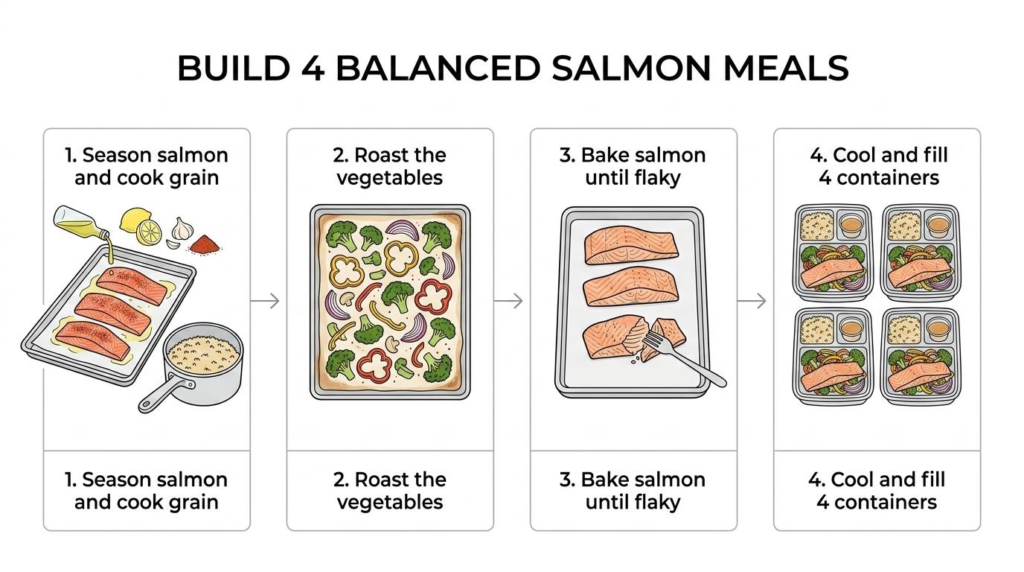
Build each container with about 3/4 cup cooked grain, one salmon fillet, and a generous portion of vegetables. Keep sauce in a small side cup if possible. A separate sauce container keeps the meal brighter and gives you more control when reheating.
Salmon Meal Prep Nutrition Information
Nutrition will vary based on the size of the fillets, the grain you choose, and the sauce. The estimates below assume a 5-ounce salmon fillet, 3/4 cup cooked brown rice, roasted vegetables, and a light sauce.
| Per serving | Amount |
|---|---|
| Calories | 480 to 540 |
| Protein | 30 to 35 g |
| Carbohydrates | 28 to 35 g |
| Fiber | 5 to 7 g |
| Fat | 22 to 28 g |
| Omega-3 fats | about 1.5 to 2.5 g |
| Sodium | 350 to 550 mg |
That profile works well for many people who want a balanced lunch with enough staying power to get through the afternoon. If you are aiming for higher protein, use a larger salmon portion or add edamame on the side. If you want fewer carbs, swap the grain for cauliflower rice or extra roasted vegetables.
Healthier Salmon Meal Prep Alternatives
A good salmon meal prep recipe should bend without breaking. You can make it lighter, higher in fiber, lower in sodium, or more filling with a few targeted changes.
Choose a lower-sodium route by using more lemon, herbs, garlic, and black pepper, then cutting back on bottled sauces. Many store-bought teriyaki and marinades are the biggest sodium source in the container, not the fish itself.
If you want a lower-carb version, replace rice with cauliflower rice, shredded cabbage, or a warm broccoli slaw. If you want more fiber and steadier energy, use quinoa, lentils, or a half-and-half mix of grains and vegetables.
For a heart-health angle, keep the salmon but go light on added fats. Salmon already brings natural richness, so you usually need less oil than you think. A citrus-herb finish can make the whole dish taste vivid without a heavy glaze.
Serving Suggestions for Salmon Meal Prep Bowls and Boxes
Variety is what keeps weekly prep from feeling repetitive. The same cooked salmon can move across several flavor directions with small changes to the base and sauce.
- Mediterranean bowl with quinoa, cucumber, tomato, and lemon-herb dressing
- Teriyaki-style lunch box with rice, edamame, and sesame broccoli
- Salmon taco plate with cabbage slaw and roasted sweet potatoes
- High-protein grain bowl with farro, spinach, and white beans
- Light salad plate with mixed greens, avocado, and citrus vinaigrette
If you like interactive meals, pack toppings separately. A tiny container of pickled onions, toasted seeds, or fresh dill can make day-four lunch feel newly assembled instead of reheated.
Common Salmon Meal Prep Mistakes to Avoid
Most salmon meal prep problems come down to texture, not flavor. The seasoning can be perfect, but dry fish or soggy vegetables will still make the meal feel flat.
- Overcooking the salmon: Pull it as soon as it flakes and reaches 145°F
- Packing food while steaming hot: Cool it first so moisture does not collect in the container
- Using watery vegetables: Cucumbers and tomatoes are better added fresh on eating day
- Skipping acid: Lemon juice, vinegar, or a bright sauce keeps rich salmon from tasting heavy
- Crowding the sheet pan: Spread vegetables out so they roast instead of steam
A reliable rule helps here: keep cooked elements sturdy and add fragile ingredients later. That one habit improves both texture and shelf life.
Storing Salmon Meal Prep for Freshness and Food Safety
Cooked salmon meal prep should be refrigerated within 2 hours of cooking. Store it in airtight meal prep containers and plan to eat it within 3 to 4 days. That timeline fits most food safety guidance for cooked fish and also protects flavor and texture.
If you want to prep further ahead, freeze the cooked salmon separately from the vegetables and grain. Frozen cooked salmon is best used within 2 to 3 months. Thaw it overnight in the fridge before reheating.
Reheat gently. Microwave at 50 percent power in short intervals, or warm it in a covered skillet with a splash of water. High heat can push salmon from flaky to dry very quickly. Cold salmon also works beautifully in grain bowls and salads, so reheating is optional.
Make This Salmon Prep Part of Your Weekly Routine
This salmon meal prep gives you protein, color, and flexibility in one practical routine. Try it this week, adjust the grains and vegetables to fit your taste, and share your results in the review section or comments. If you want more meal prep ideas and recipe updates, subscribe for future posts.
Salmon Meal Prep FAQs
Can salmon meal prep last 5 days in the fridge?
Four days is the safer and better-tasting target for most cooked salmon meal prep. Day five can be pushing both quality and food safety, especially if the fish sat out too long before refrigeration. If you need meals for a full workweek, freeze one or two portions.
Is baked or air-fried salmon better for meal prep?
Both work well. Baked salmon is easier when you are cooking several fillets at once, while air-fried salmon can give you a firmer exterior in less time. For batch cooking, the oven usually wins on convenience.
What is the best salmon for meal prep containers?
Center-cut fillets hold up especially well because they cook more evenly. Atlantic salmon is rich and forgiving, while sockeye is leaner and has a stronger flavor. If you are new to salmon meal prep, start with a thicker fillet that is less likely to dry out.
Can I use frozen salmon for meal prep?
Yes, as long as it is fully thawed before cooking. Thaw it overnight in the refrigerator, then pat it dry very well. Excess surface moisture can dilute seasoning and interfere with roasting.
How do I keep salmon from smelling too strong in lunch containers?
Use lemon, fresh herbs, and a clean, bright sauce. Cool the salmon before sealing, and store it in tightly closed containers. Many people also find that eating salmon cold in a salad or grain bowl keeps the aroma milder than reheating it in a microwave.
What sides go best with salmon meal prep?
The most dependable pairings are roasted vegetables, rice, quinoa, farro, sweet potatoes, and crunchy slaws. If you want to build out your prep routine, pair this recipe with a simple sauce guide or a make-ahead vegetable roasting template for even more mix-and-match options.
