





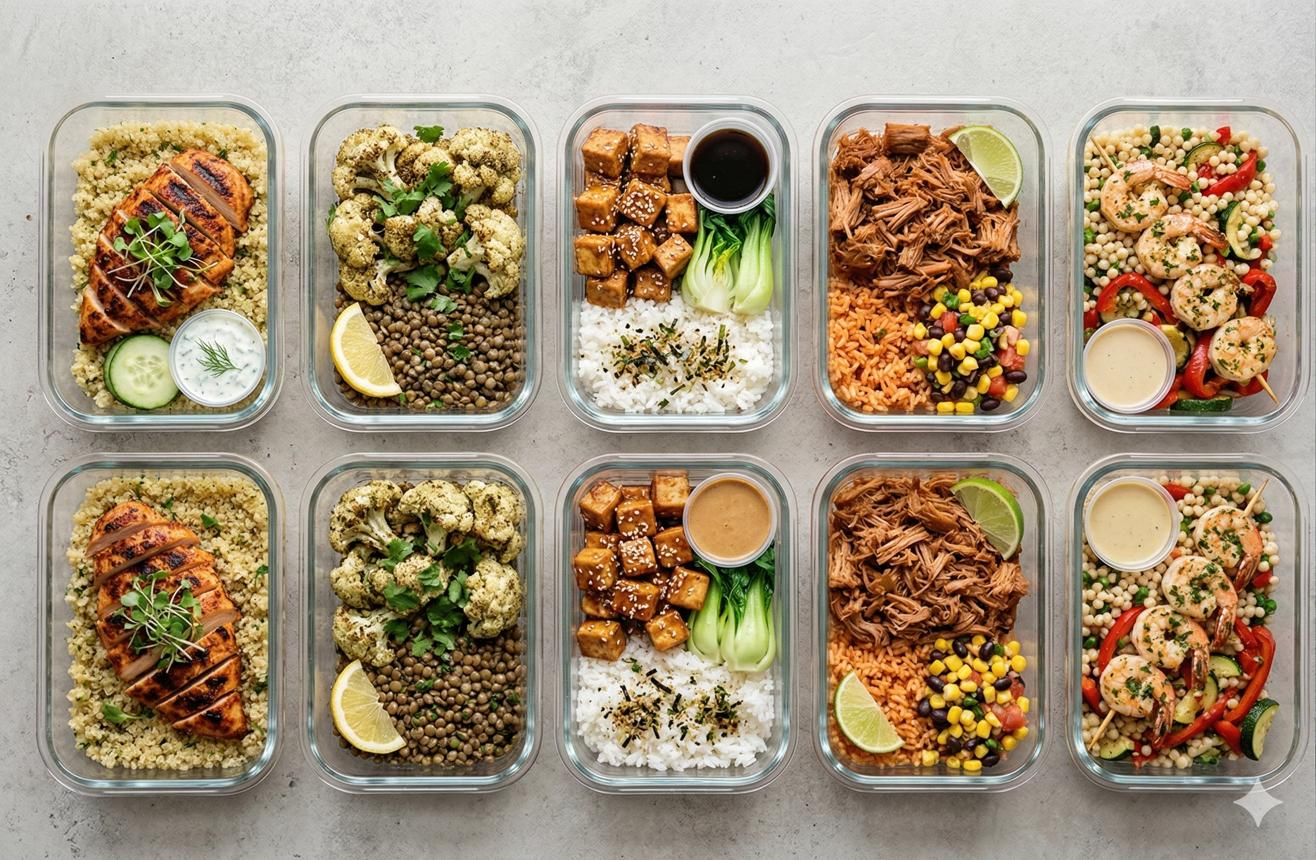
Meal prep for the week involves cooking balanced vegan meals with whole grains, tofu, and veggies, saving time and ensuring healthy eating.
A strong weekly meal prep routine does more than fill containers. It creates margin in your schedule, reduces food waste, and makes healthy plant-based eating feel practical on busy days.
Introduction to Weekly Meal Prep
What if one 90-minute cooking session could cover five balanced lunches and several flexible dinners while still fitting USDA food safety guidance for leftovers within 3 to 4 refrigerated days?
That is the real appeal of weekly meal prep. It is not about eating the exact same thing all week. It is about batch cooking a few high-value components you can mix, match, reheat, and refresh with very little weekday effort. For home cooks who want plant-based meals without daily kitchen time, this method works especially well.
This guide uses a simple vegan bowl formula built around whole grains, tofu, chickpeas, roasted vegetables, greens, and a bright lemon-tahini sauce. Along the way, you will see natural variations on key ideas like batch cooking, make-ahead lunches, meal planning, portion control, food storage, and freezer-friendly prep.
Ingredients for a Vegan Weekly Meal Prep Plan
This ingredient list makes 5 generous lunch bowls plus extra components for quick dinners. The flavors are savory, lemony, lightly smoky, and easy to adjust.
- Base grains: 1 cup dry quinoa, 1 cup dry brown rice
- Protein: 2 blocks extra-firm tofu, 2 cans chickpeas
- 2 medium sweet potatoes
- 2 broccoli crowns
- 2 bell peppers
- 1 large red onion
- 1 pint cherry tomatoes
- 1 cucumber
- 5 packed cups spinach or spring greens
- Sauce: 1/2 cup tahini, 2 lemons, 2 garlic cloves, warm water
- Smoked paprika, cumin, dried oregano, black pepper, sea salt
- Olive oil
- Optional toppings: pumpkin seeds, parsley, avocado, chili flakes
If you want substitutions, they are easy to work in. Tempeh can replace tofu for a firmer bite. Farro or barley can replace quinoa if gluten is not a concern. Edamame or lentils can stand in for chickpeas. For a lower-carb version, use half cauliflower rice and half brown rice.

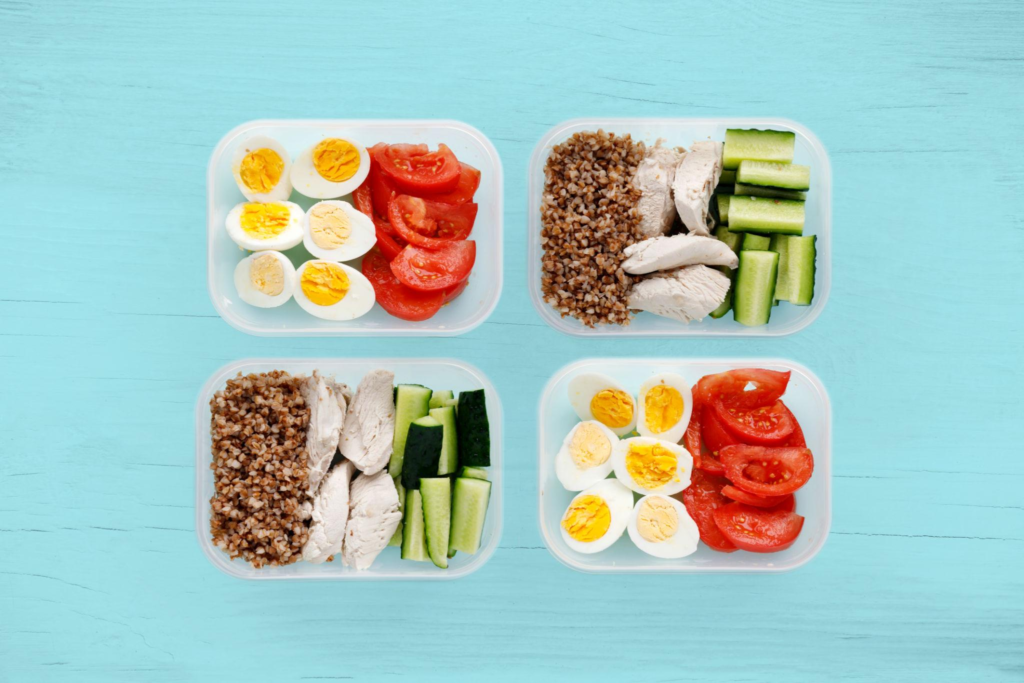
Timing for Weekly Meal Prep
The beauty of this system is efficiency. Because grains cook while vegetables roast and sauce comes together in a few minutes, the total time feels lighter than the ingredient list suggests. Compared with cooking a separate dinner every night, a single prep session can cut weekday kitchen time dramatically.
Here is a realistic timing breakdown for this meal prep for the week plan.
| Task | Time |
|---|---|
| Planning and setup | 10 minutes |
| Washing and chopping | 20 minutes |
| Cooking quinoa and brown rice | 25 minutes |
| Roasting tofu, chickpeas, and vegetables | 30 minutes |
| Mixing sauce | 5 minutes |
| Cooling and assembling | 10 minutes |
| Total time | 90 minutes |
For many households, 90 minutes on a weekend is far less than the 20 to 30 minutes a night often spent deciding what to cook, prepping ingredients, and cleaning up after a single meal.
Step-by-Step Instructions for Weekly Meal Prep
Step 1: Set up your cooking flow
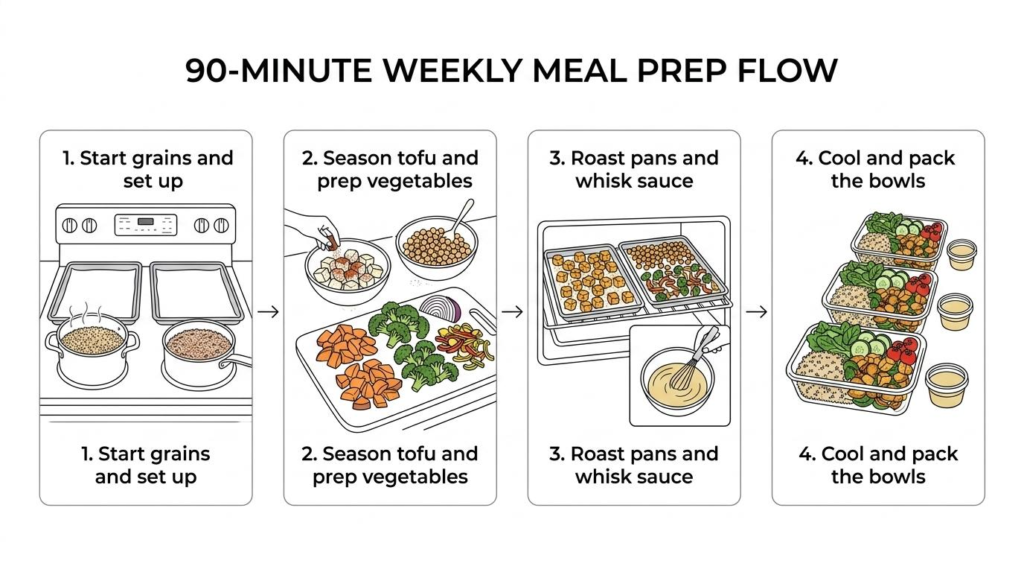
Start by heating the oven to 425°F and lining two sheet pans. Rinse the quinoa and brown rice, then get them cooking first. This is the anchor move in efficient batch cooking because grains can simmer quietly while you handle everything else.

If your week is especially busy, decide now which meals are for Monday through Wednesday and which components might be frozen or refreshed later. That one choice improves freshness and reduces waste.
Step 2: Season the tofu and chickpeas
Press the tofu well, then cut it into cubes. Drain and dry the chickpeas. Toss both with olive oil, smoked paprika, cumin, oregano, salt, and pepper. The goal is bold seasoning now, because chilled make-ahead meals need a little more flavor than food served straight from the pan.
A helpful tip: leave a bit of space between tofu cubes so the edges roast instead of steam. Texture is one of the biggest reasons meal prep succeeds or fails.
Step 3: Roast the vegetables
Cut the sweet potatoes, broccoli, bell peppers, and red onion into bite-size pieces. Spread them across the sheet pans with a light coating of oil and seasoning. Roast for about 25 to 30 minutes, turning once halfway through.
Roasted vegetables are ideal for meal planning because they keep their flavor well and can be used warm, chilled, or reheated. Slight caramelization also gives the bowls depth, which matters when you are eating them over several days.
Step 4: Make the lemon-tahini sauce
Whisk tahini, lemon juice, grated garlic, a pinch of salt, and enough warm water to create a pourable sauce. It should taste bright, creamy, and a little sharp. That acidity wakes up the grains and greens after refrigeration.
If you like variety, split the sauce in two jars. Leave one plain and stir chili flakes or herbs into the second. One small change can make Thursday’s lunch feel very different from Monday’s.
Step 5: Cool, portion, and build your bowls
Let the cooked ingredients cool slightly before packing. This supports food safety and helps limit condensation in the containers. Build each bowl with grains on the bottom, then tofu, chickpeas, roasted vegetables, raw cucumber and tomatoes, and a handful of greens.
Keep the sauce in a separate container if you want the vegetables to stay firmer. If you prefer grab-and-go simplicity, pack it directly into two or three bowls you plan to eat first.
Step 6: Refresh midweek
Weekly meal prep for the week works best when it leaves room for a small refresh. On Wednesday, add fresh herbs, slice more cucumber, or warm the remaining grains with a splash of water. That five-minute reset can make the second half of the week feel much fresher.
If you are building dinner from the same components, turn the bowl into a wrap, pile it over greens, or serve it with hummus and toasted pita.
Nutritional Information for This Weekly Meal Prep Recipe
These values are estimates for 1 of 5 bowls, including quinoa, brown rice, tofu, chickpeas, vegetables, greens, and about 2 tablespoons of lemon-tahini sauce. Exact numbers vary by brand and portion size, though the pattern is clear: this is a high-fiber, moderate-protein, nutrient-dense plant-based meal.
| Nutrient | Per bowl |
|---|---|
| Calories | 470 |
| Protein | 22 g |
| Carbohydrates | 51 g |
| Fiber | 13 g |
| Fat | 19 g |
| Saturated fat | 2.5 g |
| Sodium | 380 mg |
| Iron | 5 mg |
| Potassium | 760 mg |
This balance works well for many people because it combines protein for satiety, complex carbohydrates for steady energy, and healthy fats for flavor and staying power. It also follows the broad structure promoted by healthy eating guidance: plenty of vegetables, a quality protein source, and whole-food carbohydrates.
Healthier Alternatives for Weekly Meal Prep
If you want to shift the nutrition profile, keep the structure and swap the components. For higher protein, add shelled edamame or use tempeh in place of half the chickpeas. For lower sodium, use no-salt-added beans and season with extra lemon, garlic, and herbs.
For a lighter bowl, reduce the grain portion slightly and increase the greens and broccoli. For a more filling version, add avocado or a scoop of hummus. If you are feeding athletes, students, or anyone with higher energy needs, this is often the better move.
This recipe is naturally dairy-free and can be gluten-free if you stick with quinoa and rice. If sesame is an issue, replace tahini with a white bean dressing or a cashew-lemon sauce.
Serving Suggestions for Weekly Meal Prep Bowls
One of the smartest ways to avoid boredom is to change format, not ingredients. The same prep can become a warm grain bowl one day and a crisp lunch wrap the next. That keeps your plant-based meal plan interesting without adding more cooking.
Try these pairings across the week. Monday can be a classic bowl with extra lemon. Tuesday works well as a wrap with spinach and hummus. Wednesday is great for a loaded salad with pumpkin seeds. Thursday can become a stuffed sweet potato. Friday can be a quick skillet hash with the leftover grains and vegetables.
A fresh finishing touch helps every version. Chopped parsley, chili flakes, toasted seeds, or a squeeze of citrus can make stored food taste newly made.
Common Mistakes to Avoid With Weekly Meal Prep
Even well-designed meal planning can fall short if a few small details are missed. Most problems come down to texture, storage, or unrealistic expectations.
- Cooking too many meals: start with 3 to 5 portions if you are new to meal prep
- Overcrowded sheet pans
- Saucing everything on day one: store dressings separately when possible
- Forgetting a midweek refresh
- Skipping safe cooling: transfer food to shallow containers and refrigerate within 2 hours
- Using delicate produce too late in the week
A good rule is to prep sturdy ingredients in bulk and treat fragile toppings like herbs, avocado, and tender greens as finishing items.
Storing Tips for Weekly Meal Prep
Storage is where a great prep session protects its value. USDA guidance recommends keeping the refrigerator at 40°F or below and using most cooked leftovers within 3 to 4 days. That window fits this plan well.
- Container choice: use airtight, shallow containers for faster cooling and better freshness
- Keep sauce separate for the best texture
- Fridge plan: place Monday and Tuesday meals in front so the most perishable items get eaten first
- Freeze extra grains, tofu, or chickpeas on day one if you will not use them within 4 days
- Label each container with the prep date
When reheating, bring hot meals up to 165°F. A spoonful of water added to grains before microwaving helps restore moisture.
Your Weekly Meal Prep Plan in 50 Words
Prep grains, roast vegetables, season tofu, pack sauce separately, and use fresh items first. In about 90 minutes, you can build balanced vegan meals for busy days this week, making meal prep for the week a straightforward task. Try the plan, share feedback in the comments or review section, and subscribe for more plant-based meal prep updates and ideas.
FAQs About Weekly Meal Prep
Can I prep seven full days of meals at once?
You can prep components for seven days, though fully assembled refrigerated meals are best kept for 3 to 4 days in many cases. A smart approach is to refrigerate the first half of the week and freeze extra grains, beans, or cooked proteins.
How do I keep tofu flavorful after refrigeration?
Season it more assertively than you would for a same-day dinner. Acid, spice, and salt matter. Roasting until the edges are firm also helps the texture stay appealing after storage.
Is this weekly meal prep good for weight management?
It can be. Pre-portioned meals often support more consistent eating habits and fewer last-minute takeout decisions. If weight management is your goal, adjust the grain, sauce, and topping portions rather than stripping out flavor.
What if I do not want the same lunch every day?
Use the component method. Keep grains, proteins, vegetables, and sauce separate, then assemble them differently across the week. The ingredients stay the same, though the meals feel different.
Can I make this recipe soy-free?
Yes. Replace tofu with lentils, extra chickpeas, or roasted lupini beans if available. The bowl still works beautifully because the structure is flexible.
What else should I prep with this?
A breakfast jar and one snack box go a long way. Overnight oats, chia pudding, cut fruit, roasted nuts, or hummus with vegetables make the whole week feel easier, not just lunch.


