


If classic pizza dough is already vegan and a well-preheated home oven can hit 500 to 550°F, why does vegan pizza still get labeled second-best?
The short answer is technique, not limitation. A great vegan pizza can deliver a blistered crust, rich tomato sauce, real melt, and deep savory flavor when moisture, heat, and topping balance are handled with care. With the right dough, a smart dairy-free cheese choice, and a few restaurant-level habits, this plant-based pizza can easily earn a regular place in your meal prep rotation.
Vegan Pizza Introduction: Why Do So Many Dairy-Free Pies Fall Short?
Many people assume the cheese is the problem. In practice, the bigger issue is usually water. Too much sauce, raw vegetables that release steam, and a baking surface that never gets hot enough can flatten any pizza, vegan or not.
Home baking data supports that point. Pizza baked on a fully preheated steel or stone at 500 to 550°F tends to brown faster and crisp better than pizza baked on a cool sheet pan. Classic pizza dough is also naturally dairy-free in many cases, which means vegan pizza already starts with a strong foundation. The gap between average and excellent comes from method.
This recipe uses a same-day dough for convenience, a quick uncooked sauce for brightness, and a balanced topping strategy that keeps the crust crisp.
Vegan Pizza Ingredients List with Substitutions
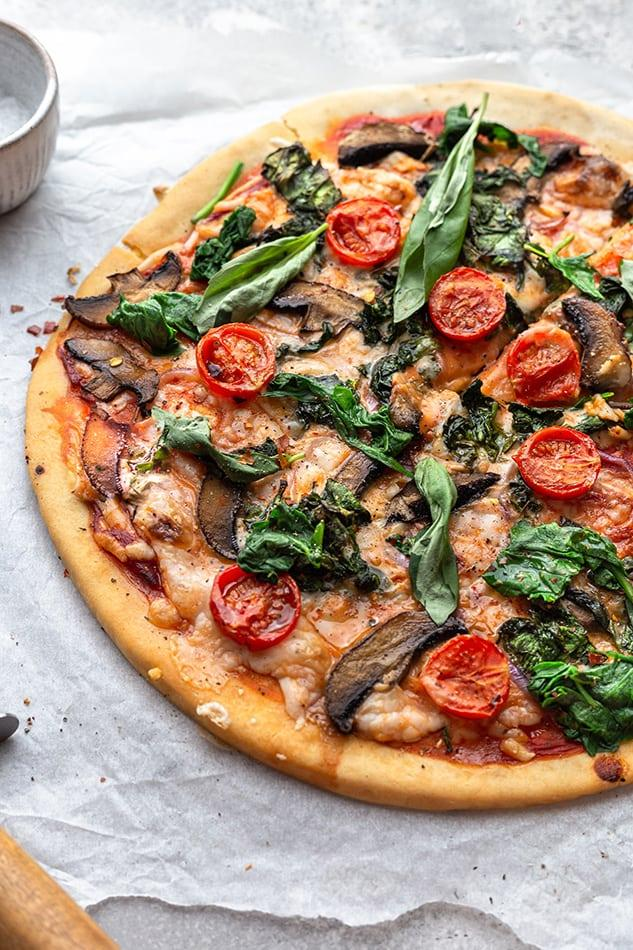
This version makes one 12-inch vegan pizza, enough for 3 to 4 servings. The flavor profile is classic and crowd-friendly: chewy crust, vivid tomato sauce, melty vegan mozzarella, mushrooms, onion, and basil.
| Ingredient | Amount | Why it matters | Easy substitution |
|---|---|---|---|
| Bread flour | 2 cups (250 g) | Strong gluten for chew and structure | All-purpose flour |
| Warm water | 3/4 cup plus 1 tbsp (190 g) | Hydrates dough | Same amount, room-temp water |
| Instant yeast | 1 tsp | Reliable rise | Active dry yeast, same amount |
| Fine sea salt | 1 tsp | Flavor and dough strength | Kosher salt, slightly more by volume |
| Olive oil | 1 tbsp | Better browning and tenderness | Avocado oil |
| Crushed tomatoes | 1/2 cup | Bright, concentrated sauce | Passata or thick pizza sauce |
| Garlic, grated | 1 small clove | Sharp savory note | Garlic powder, 1/4 tsp |
| Dried oregano | 1/2 tsp | Classic pizza aroma | Italian seasoning |
| Vegan mozzarella | 1 to 1 1/4 cups | Melt and creamy finish | Pourable cashew mozzarella, tofu ricotta plus a few shreds |
| Mushrooms, sliced | 1 cup | Meaty umami | Roasted zucchini, artichokes, olives |
| Red onion, thinly sliced | 1/4 cup | Sweet bite | Shallots or caramelized onions |
| Fresh basil | Small handful | Fresh finish | Arugula or parsley |
| Red pepper flakes | Optional | Gentle heat | Chili oil after baking |
A quick sensory tip: if your vegan cheese tastes mild straight from the bag, that is normal. The sauce, herbs, garlic, and roasted toppings build the character.
Vegan Pizza Timing: Prep, Bake, and Total Time
Same-day vegan pizza is faster than many people expect. This version takes about 25 minutes of active work, 90 minutes of rising, and 12 to 15 minutes of baking, for a total of roughly 2 hours 10 minutes. That is much shorter than artisan overnight dough methods, while still giving you excellent flavor and texture.
| Task | Time |
|---|---|
| Mix dough | 10 minutes |
| Dough rise | 90 minutes |
| Prep sauce and toppings | 15 minutes |
| Oven preheat | 30 to 45 minutes |
| Bake | 12 to 15 minutes |
| Total | About 2 hours 10 minutes |
If you want a true weeknight version, use store-bought dough. That cuts total time to about 35 to 45 minutes.
Equipment for Vegan Pizza at Home
You do not need a specialty oven to make a strong plant-based pizza. A few practical tools make the process easier and more consistent.
- Digital scale
- Heavy sheet pan
- Pizza steel or pizza stone
- Parchment paper
- Cast-iron skillet
- Bench scraper
- High-speed blender for homemade sauces or cheese
A steel gives the biggest texture upgrade, though a well-preheated sheet pan still works well for beginners.
Vegan Pizza Step-by-Step Instructions
Step 1: Mix the vegan pizza dough
Stir the flour, yeast, and salt together in a bowl. Add warm water and olive oil, then mix until a shaggy dough forms. Knead for 6 to 8 minutes until smooth and slightly tacky.
If the dough feels sticky, resist the urge to bury it in flour. A lightly tacky dough bakes into a better crust. Too much extra flour can make it dense.
Step 2: Let the dough rise until puffy
Place the dough in a lightly oiled bowl, cover it, and let it rise for about 90 minutes at room temperature. It should look fuller and softer, not dry or tight.
If your kitchen runs cool, give it a little more time. If you like deeper flavor, refrigerate the dough overnight instead and bring it back toward room temperature before shaping.
Step 3: Make the sauce and prep the toppings
Mix crushed tomatoes with grated garlic, oregano, and a pinch of salt. Keep it thick. A watery sauce is one of the fastest ways to lose a crisp bottom.
Cook the mushrooms in a dry skillet for 4 to 5 minutes before they go on the pizza. This small step drives off moisture and concentrates flavor, which matters a lot on vegan pizza.
Step 4: Preheat the oven and shape the crust
Set your oven to 500°F, or the hottest safe setting available. Place the steel, stone, or inverted sheet pan inside and preheat for at least 30 minutes.
Stretch the dough gently into a 12-inch round on parchment or a lightly floured surface. If it springs back, let it rest for 10 minutes and try again. That rest relaxes the gluten and makes shaping easier.
Step 5: Add toppings with restraint
Spread a thin layer of sauce over the dough, leaving a small border. Add vegan mozzarella lightly rather than piling it on. Then scatter the mushrooms and onion over the top.
This is where many pizzas go wrong. More toppings rarely mean more flavor. A lighter layer lets the crust bake, the cheese melt, and the tomato sauce stay bright.
Step 6: Bake until blistered, then finish fresh
Bake for 12 to 15 minutes, until the crust is golden and the edges look puffed and lively. If your cheese browns too fast, rotate the pizza and lower the rack slightly.
Finish with torn basil and red pepper flakes after baking. A final drizzle of chili oil or parsley oil can make the pie taste sharper, fresher, and more layered.
Nutritional Information for Vegan Pizza
Nutritional values vary with crust thickness, cheese brand, and topping load. Based on USDA references and common product labels, a two-slice serving of this vegan pizza lands in a moderate range for calories and offers a good balance of carbohydrates, fat, and fiber.
| Nutrition per 2 slices | Estimated amount |
|---|---|
| Calories | 380 to 460 |
| Protein | 10 to 15 g |
| Carbohydrates | 48 to 58 g |
| Fat | 14 to 20 g |
| Fiber | 4 to 7 g |
| Sodium | 650 to 950 mg |
Commercial vegan mozzarella often melts well but may be lower in protein than dairy cheese. If you want more staying power, add tofu ricotta, seitan crumbles, or a higher-protein plant-based sausage.
Healthier Alternatives for Vegan Pizza
A lighter vegan pizza does not need to feel austere. The best approach is to keep the crust and sauce satisfying, then make strategic swaps where they matter most.
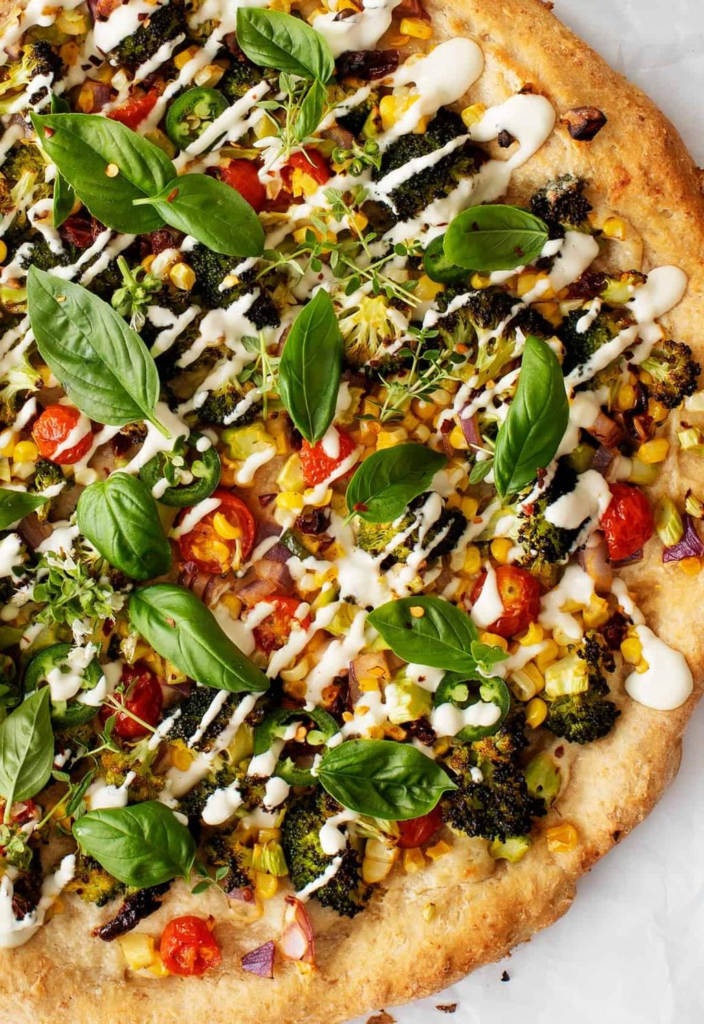
Use part whole-wheat flour for extra fiber and a nuttier flavor. Replace some of the vegan mozzarella with dollops of tofu ricotta or white bean puree if you want less saturated fat and more protein. Roasted vegetables, spinach, bell peppers, artichokes, and broccoli all add texture and color without weighing the crust down.
This recipe is easy to adapt for dietary needs, too. Gluten-free pizza dough works well when built from a proper baking blend. For a nut-free version, choose a coconut-oil or oat-based dairy-free cheese. For soy-free, skip tofu ricotta and use mushrooms, olives, onions, and a melt-focused commercial cheese instead.
Vegan Pizza Serving Suggestions
A good pizza becomes a great meal when the sides bring contrast. Think crisp, bitter, acidic, or chilled.
- Arugula salad with lemon vinaigrette
- Marinated white beans
- Roasted broccolini
- Garlic dipping oil
- Vegan ranch
- Sparkling water with citrus
If you are serving a crowd, cut the pizza into small squares and put out chili oil, fresh basil, and vegan Parmesan so everyone can finish their slice their own way.
Common Mistakes to Avoid with Vegan Pizza
Even strong ingredients can disappoint if a few details get missed. These are the issues that show up most often in home kitchens.
- Cold baking surface: A steel, stone, or sheet pan that is not fully preheated leads to pale bottoms and soft centers.
- Too much sauce: Extra sauce sounds generous, but it often traps steam and weakens the crust.
- Wet vegetables: Raw mushrooms, tomatoes, and zucchini can flood the pizza unless they are cooked or dried first.
- Heavy cheese layer: More dairy-free cheese can mean less melt and more oil separation.
- Overloaded toppings: A crowded pizza struggles to brown evenly and slice cleanly.
One simple rule helps with all five: keep the pie balanced. A crisp crust needs space to do its work.
Storing Tips for Vegan Pizza and Make-Ahead Prep
Leftover vegan pizza should be refrigerated within 2 hours. Store slices in an airtight container, ideally with parchment between layers. For best quality, eat within 3 to 4 days. If you want longer storage, freeze slices for up to 1 to 2 months.
Reheating matters. A skillet over medium-low heat gives the best texture because it crisps the bottom while gently warming the top. An air fryer also works well. Microwaving is fast, though the crust will soften.
For meal prep, the dough can stay in the refrigerator for 1 to 3 days, and the sauce keeps well for about 4 to 5 days. Pre-cooked vegetables can be stored separately and assembled when you are ready to bake.
Why This Vegan Pizza Works Every Time
Build it with a crisp crust, restrained sauce, smart topping balance, and a dairy-free cheese that melts well, then finish with herbs or chili oil. Try this recipe this week, share your results in the review section or comments, and subscribe for more plant-based recipes and meal-prep updates from us.
Vegan Pizza FAQs
Can I make vegan pizza without vegan cheese?
Yes. A cheese-free pizza can be excellent when the sauce is strong and the toppings bring richness. Try olive oil, roasted garlic, mushrooms, olives, caramelized onions, and fresh basil. Tofu ricotta also gives creamy contrast without relying on melt.
What is the best vegan cheese for pizza?
For most home cooks, a mozzarella-style shred made for melting is the easiest choice. Pourable cashew mozzarella gives great coverage on artisan-style pies, while tofu ricotta works best in dollops rather than as a full top layer.
How do I get a crisp crust on vegan pizza?
Preheat your baking surface well, keep the sauce thick, and cook wet vegetables first. High heat matters. So does restraint. Lighter topping coverage almost always means better browning and a cleaner slice.
Can I freeze the dough?
Yes. After the first rise, portion the dough, wrap it tightly, and freeze. Thaw it overnight in the refrigerator, then let it sit at room temperature for 30 to 45 minutes before shaping.
Is vegan pizza healthier than regular pizza?
Sometimes, but not always. Vegan pizza can be lower in cholesterol and easier to build around vegetables and legumes. Some dairy-free cheeses are still high in saturated fat and sodium, so the healthiest version usually uses moderate cheese, plenty of vegetables, and a balanced crust.
