

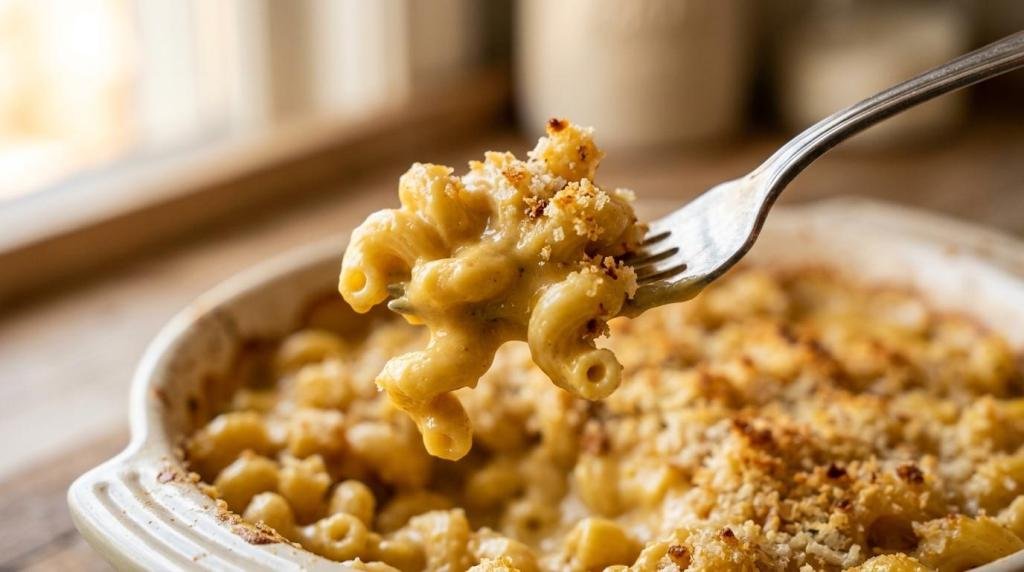

Creamy vegan mac and cheese has moved far beyond backup dinner status. When the sauce is built well, it tastes rich, savory, and deeply comforting, with the glossy finish people usually expect from cheddar and cream.
Can vegan mac and cheese really taste rich when many classic versions top 600 calories per serving?
Yes, and that is exactly why this recipe keeps earning repeat spots in weekly meal prep. Many traditional mac and cheese recipes rely on heavy cream, butter, and large amounts of cheese for body. Vegan mac and cheese takes a different route. It builds creaminess from soaked cashews, oat or soy milk, nutritional yeast, and a few high-impact seasonings that create depth without dairy.
The result is plant-based comfort food that feels familiar, satisfying, and practical. You get a silky dairy-free cheese sauce, gentle tang, savory notes, and a texture that clings to every curve of the pasta. This version is also easy to adapt, whether you want a gluten-free option, a baked finish, or a lighter weekday bowl.
If you have ever tried a bland vegan pasta bake and felt disappointed, the issue was probably not the idea of vegan mac and cheese. It was the sauce balance. Salt, acid, starch, and fat all matter here.
Ingredients for creamy vegan mac and cheese
A great vegan mac and cheese starts with ingredients that each do a clear job. Cashews create the body, nutritional yeast adds cheesy depth, mustard sharpens the flavor, and pasta water helps the sauce hug the noodles instead of sitting on top.
- Elbow macaroni: 12 ounces, or use shells, cavatappi, or gluten-free pasta
- Raw cashews: 1 cup, soaked in hot water for 20 to 30 minutes; swap with sunflower seeds for a nut-free version
- Unsweetened plant milk: 2 cups; oat milk makes it mellow, soy milk adds more protein
- Nutritional yeast: 1/2 cup for that signature savory, cheesy flavor
- Lemon juice: 2 tablespoons for brightness and balance
- Yellow or Dijon mustard: 1 tablespoon to sharpen the sauce
- Garlic: 2 cloves, or 1 teaspoon garlic powder
- Onion powder: 1 teaspoon
- Smoked paprika: 1/2 teaspoon for warmth and color
- Turmeric: 1/4 teaspoon, optional, for a classic golden tone
- Salt and black pepper: to taste
- Olive oil or vegan butter: 1 tablespoon for extra gloss
- Panko breadcrumbs: 1/2 cup, optional, if you want a crisp baked topping
- Reserved pasta water: about 1 cup, used as needed to loosen the sauce
For extra depth, a spoonful of white miso or a few pickled jalapeño slices blended into the sauce can work beautifully. If you prefer a sharper finish, add a small amount of apple cider vinegar instead of more lemon juice.
Equipment that simplifies vegan mac and cheese
The recipe is simple, though a few tools make it much easier to get a smooth sauce and the right pasta texture.
- High-speed blender
- Large pot
- Colander
- Deep skillet or saucepan
- Baking dish, if using a crumb topping
- Measuring cups and spoons
A standard blender still works, though the sauce may need a little more blending time. If your blender struggles with cashews, soak them longer or simmer them for 10 minutes first.
Timing for this vegan mac and cheese recipe
Speed matters on busy nights, and this version is faster than many baked recipes that stretch close to an hour. If you skip the breadcrumb topping, it is fully weeknight-ready.
| Task | Time |
|---|---|
| Cashew soak | 20 to 30 minutes |
| Prep time | 10 minutes |
| Cook time | 15 minutes |
| Optional bake/broil | 5 to 8 minutes |
| Total active cooking time | About 25 minutes |
| Total time including soak | 40 to 50 minutes |
That timing is often 15 to 20 minutes less than traditional oven-heavy versions, with fewer dishes to manage.
Step-by-step vegan mac and cheese instructions
This method gives you a sauce that tastes layered rather than flat. Keep the pasta slightly firm, save some starchy water, and adjust the sauce at the end instead of overthickening it early.
Step 1: Soak and blend the vegan cheese sauce
Drain the soaked cashews and add them to a blender with plant milk, nutritional yeast, lemon juice, mustard, garlic, onion powder, smoked paprika, turmeric, salt, pepper, and olive oil or vegan butter. Blend until completely smooth. If the mixture looks thick, add a few tablespoons of water or plant milk and blend again. A smooth base is what creates that creamy, glossy finish later.
Step 2: Boil the pasta until just shy of done
Cook the macaroni in well-salted water until it is one minute under al dente according to the package directions. Before draining, reserve about 1 cup of pasta water. That starchy water is one of the easiest ways to make dairy-free cheese sauce feel more natural and clingy.
Step 3: Warm the sauce gently and build texture
Pour the blended sauce into a deep skillet or saucepan over medium-low heat. Stir for 3 to 5 minutes until it thickens slightly and smells savory. Do not let it boil hard. High heat can dull the flavor and tighten the texture. If the sauce gets too thick, loosen it with reserved pasta water, a few tablespoons at a time.
Step 4: Coat the pasta and adjust seasoning
Add the drained pasta to the sauce and fold until every piece is coated. Taste and adjust. Most vegan mac and cheese improves with one extra pinch of salt and a small hit of acid. If you want a bolder cheese note, stir in another spoonful of nutritional yeast. If you want more richness, add a little vegan butter.
Step 5: Add a baked topping if you want contrast
For stovetop vegan mac and cheese, serve right away. For a baked finish, transfer the pasta to a lightly oiled baking dish, top with panko breadcrumbs, and broil or bake until golden. This step adds texture and makes the dish feel closer to a classic baked casserole without much extra time.
Nutritional information for vegan mac and cheese
Nutrition varies based on the pasta, milk, and optional topping you use. The estimates below are for six servings of the stovetop version made with cashews and unsweetened oat milk.
| Nutrient | Approximate amount per serving |
|---|---|
| Calories | 430 |
| Protein | 13 g |
| Carbohydrates | 52 g |
| Fiber | 4 g |
| Total fat | 19 g |
| Saturated fat | 3 g |
| Sodium | 420 mg |
| Iron | 3 mg |
Compared with many dairy-based versions, this recipe often comes in lower in saturated fat while still offering a satisfying texture. Using soy milk can raise the protein a bit, and whole wheat or legume pasta can add fiber.
Healthier alternatives for vegan mac and cheese
If you want a lighter bowl, reduce the cashews to 3/4 cup and replace the rest of the body with steamed cauliflower. The sauce becomes a little less rich, though still creamy if you blend it well. This is a strong option for anyone who wants a lower-fat plant-based pasta dish.
To raise protein, use soy milk and chickpea or lentil pasta. If you need a nut-free version, sunflower seeds can replace cashews, though the flavor is slightly more earthy. For a gluten-free vegan mac and cheese, choose a sturdy gluten-free pasta and rinse it briefly only if the starch turns overly gummy. A vegetable boost also works well here. Stir in peas, roasted broccoli, spinach, or sautéed mushrooms after the pasta is coated.
Serving suggestions for vegan mac and cheese
Vegan mac and cheese can be the main event or part of a bigger meal. A crisp green salad with lemony dressing helps balance the richness. Roasted broccoli, blistered tomatoes, or garlicky green beans bring contrast in both texture and color.
If you are serving a crowd, place the mac and cheese in a warm dish and offer toppings at the table. Toasted breadcrumbs, chopped chives, hot sauce, black pepper, or smoky tempeh bacon let everyone tailor their bowl. For meal prep, pair it with roasted vegetables and a simple bean salad so lunch feels complete instead of heavy.
Common mistakes to avoid with vegan mac and cheese
Most recipe issues come down to texture and seasoning, not the ingredient list itself. Vegan cheese sauce needs enough salt, enough acid, and enough blending time to taste rounded and full.
- Undersalting the pasta water
- Using unsoaked cashews
- Boiling the sauce too hard
- Overcooking the pasta
- Skipping the acid balance
- Forgetting to save pasta water
- Adding too much turmeric
A sauce that tastes flat usually needs salt or lemon, not more nutritional yeast. A sauce that feels heavy often needs a splash of pasta water and a better stir rather than more milk.
Storing tips for vegan mac and cheese
This recipe keeps well, which makes it useful for meal prep. Store cooled leftovers in an airtight container in the refrigerator for up to 4 days. The sauce will thicken as it sits, and that is normal. Reheat gently on the stove or in the microwave with a splash of plant milk or water to bring back the creaminess.
You can also prep the sauce ahead. Blend it, refrigerate it for up to 3 days, then cook fresh pasta when you are ready to serve. If freezing, freeze only the sauce when possible. Cooked pasta can soften too much after thawing. Frozen sauce keeps best for about 2 months.
Make vegan mac and cheese part of your meal prep
Creamy sauce, balanced seasoning, the right pasta timing, and smart storage turn vegan mac and cheese into an easy weeknight win. Try this recipe, leave a review, share your favorite add-ins in the comments, and subscribe for more plant-based meal-prep recipes, cooking guides, and kitchen ideas every week with confidence.
FAQs about vegan mac and cheese
Can I make vegan mac and cheese without cashews?
Yes. Sunflower seeds, silken tofu, or steamed cauliflower can replace cashews. Sunflower seeds are the closest in richness. Silken tofu gives a lighter, high-protein sauce. Cauliflower works best when blended with a little olive oil or vegan butter for body.
Why does nutritional yeast matter in vegan mac and cheese?
Nutritional yeast adds savory depth, mild nuttiness, and the cheesy note people expect from a dairy-free mac and cheese sauce. It does not taste exactly like cheddar on its own, though it helps create that familiar profile when paired with mustard, salt, and acid.
Can I make this recipe ahead for a party?
Yes. Prepare the sauce and pasta separately, then combine them shortly before serving. If you bake it too far ahead, the pasta can absorb too much sauce. Save extra plant milk or pasta water for reheating and stirring just before it hits the table.
What is the best pasta shape for vegan mac and cheese?
Elbows are classic, though shells and cavatappi are excellent because they trap more sauce. If you are meal prepping, slightly thicker shapes often hold up better over a couple of days.
How do I make the sauce taste more like sharp cheese?
Use a little more mustard, a touch of miso, and an extra squeeze of lemon juice. A small amount of apple cider vinegar can help too. Sharpness in vegan mac and cheese usually comes from acidity and savory depth working together.
Is this recipe good for kids?
Usually, yes. Keep the smoked paprika low, skip spicy add-ins, and blend the sauce until very smooth. Many kids like the familiar texture, especially when served with shells or elbows and a crisp breadcrumb topping.
