

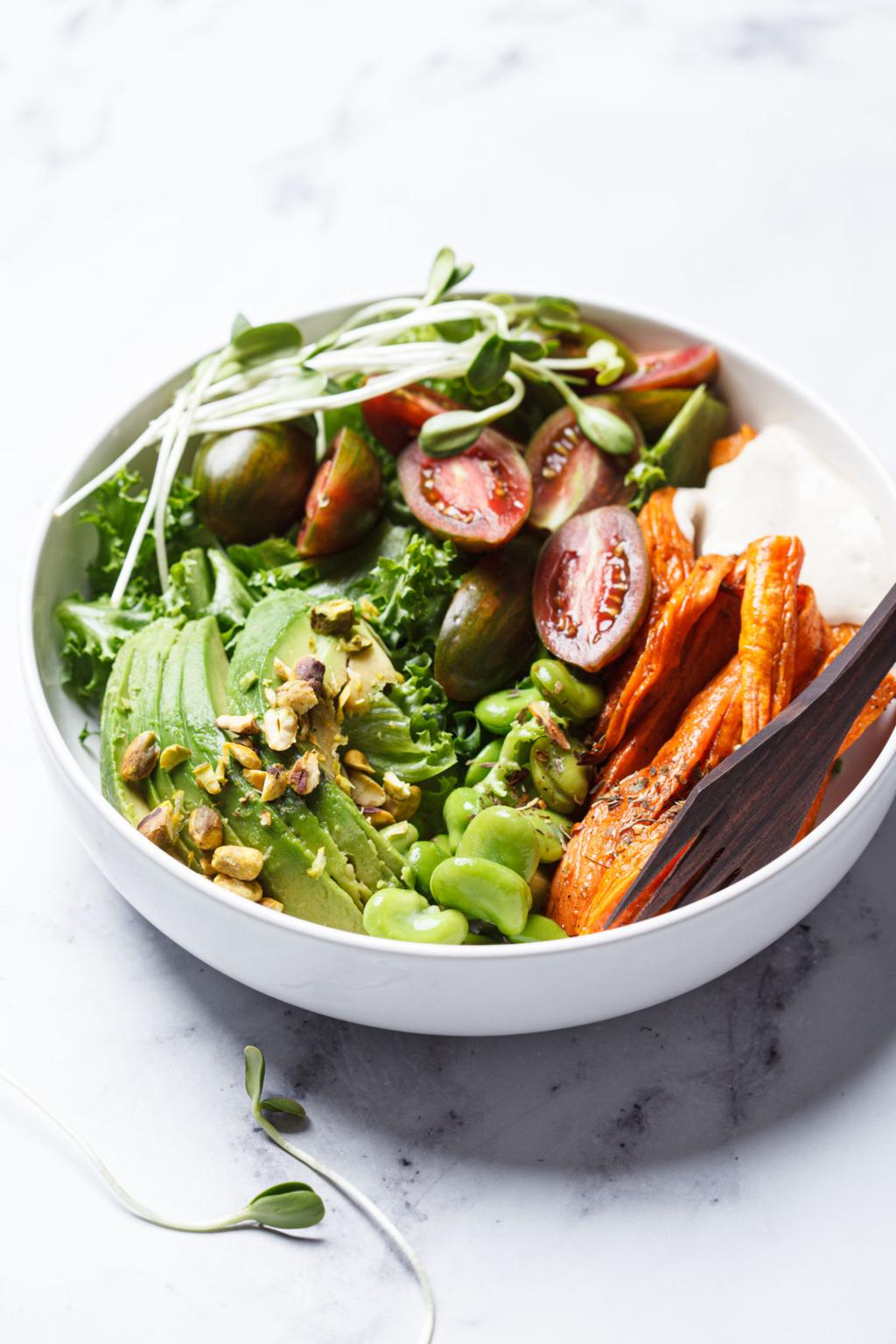

Can a vegan salad really feel like a full meal, or does salad still carry that unfair reputation as “just a side”? The answer is in the build. When a plant-based salad includes fiber, protein, healthy fats, acid, crunch, and enough seasoning, it stops feeling light in the disappointing sense and starts feeling balanced, energizing, and genuinely satisfying. This version is designed for lunch, dinner, or meal prep, with texture and flavor doing as much work as nutrition.
Introduction to a Filling Vegan Salad
A strong vegan salad does more than check a healthy-eating box. It can support satiety, steady energy, and variety in a way that many quick lunches do not. U.S. dietary data consistently shows that most adults still miss daily vegetable targets, which makes recipes like this useful beyond aesthetics. A bowl that combines leafy greens, legumes, grains, and a bold dressing can close that gap without feeling restrictive.
This recipe takes a meal-prep approach. You get crisp vegetables, creamy avocado, protein-rich chickpeas, fluffy quinoa, herbs, and a tahini lemon dressing with enough sharpness to wake up every ingredient. It is simple, adaptable, and reliable, which matters when you want a vegan lunch that tastes good on day one and still feels appealing later in the week.
Vegan Salad Ingredients List
The best vegan salad ingredients create contrast. Crisp cucumber, juicy tomatoes, earthy chickpeas, nutty quinoa, and a creamy dressing each bring a distinct role, and that balance is what keeps the bowl interesting from the first bite to the last.
- Mixed greens
- Protein base: chickpeas, or use white beans for a softer texture
- Grain: cooked quinoa, or brown rice if that is already in your fridge
- Cucumber
- Cherry tomatoes
- Red cabbage
- Creamy element: avocado, or a spoonful of hummus
- Crunch: pumpkin seeds, sunflower seeds, or toasted almonds
- Fresh parsley or dill
- Dressing: tahini, lemon juice, Dijon mustard, maple syrup, garlic, salt, black pepper, and water to thin
A few pieces of equipment make the process easier: a salad spinner for dry greens, a sharp chef’s knife, a cutting board, a large mixing bowl, and a jar with a lid for shaking the dressing. If you meal prep often, glass containers with tight-fitting lids are worth having.
Vegan Salad Timing and Prep Time
This is a fast recipe by meal standards, especially if your quinoa is already cooked.
| Task | Time |
|---|---|
| Wash and dry produce | 6 minutes |
| Chop vegetables and herbs | 7 minutes |
| Mix dressing | 3 minutes |
| Assemble salad | 4 minutes |
| Total time | 20 minutes |
If you need to cook quinoa from scratch, add about 15 minutes of active and resting time. Even then, this vegan salad is still quicker than many hot lunch recipes that run 35 minutes or more. For busy weekdays, that difference matters.
Step-by-Step Vegan Salad Instructions
Step 1: Wash and dry the greens thoroughly
Rinse the greens, herbs, cucumber, and tomatoes well, then dry everything fully. This step looks small, but it changes the result. Water clinging to lettuce dilutes dressing and dulls flavor. A salad spinner helps, though clean kitchen towels work too.
If you want restaurant-style texture, chill the greens for a few minutes after drying. Cold greens stay firmer and make the whole bowl feel brighter.
Step 2: Make the tahini lemon dressing
In a jar or small bowl, combine tahini, lemon juice, Dijon mustard, maple syrup, grated or minced garlic, salt, and black pepper. Add water one tablespoon at a time until the dressing becomes pourable but still creamy.
Taste as you go. If the dressing feels too rich, add more lemon. If it tastes too sharp, add a touch more maple syrup. A good salad dressing should feel balanced, not sweet, not flat, and not aggressively acidic.
Step 3: Build the vegetable base
In a large bowl, add the greens, sliced cucumber, halved cherry tomatoes, and thinly sliced red cabbage. Toss lightly before adding heavier ingredients so the vegetables distribute evenly.
This is also the moment to think about texture. If you prefer a softer salad, chop the vegetables smaller. If you want something more substantial and dinner-like, keep the cuts larger and more defined.
Step 4: Add protein, grains, and creamy elements
Fold in the chickpeas and cooked quinoa, then add diced avocado, fresh herbs, and your chosen crunch element. The chickpeas bring protein and fiber, the quinoa adds chew, and the avocado keeps the bowl from feeling austere.
If you want an even heartier plant-based salad, this is where baked tofu or shelled edamame can join the bowl. The structure stays the same, but the protein climbs fast.
Step 5: Dress, toss, and adjust before serving
Pour over part of the dressing first, toss well, then decide if the salad needs more. This protects the greens from becoming heavy and lets you control the final texture.
Finish with extra herbs, seeds, and black pepper. If the salad tastes good but not vivid, it usually needs one of three things: a pinch of salt, another squeeze of lemon, or a little more crunch.
Vegan Salad Nutritional Information
The nutritional value of a vegan salad depends on what goes into it, which is one reason this style of meal works so well. You can adjust calories, protein, fiber, and fats without sacrificing flavor.
Below is an approximate nutrition estimate per serving when the recipe makes 4 servings and includes chickpeas, quinoa, avocado, pumpkin seeds, and tahini dressing.
| Nutrient | Approximate amount per serving |
|---|---|
| Calories | 380 |
| Protein | 14 g |
| Carbohydrates | 31 g |
| Fiber | 11 g |
| Total fat | 22 g |
| Saturated fat | 3 g |
| Sodium | 320 mg |
| Potassium | 640 mg |
That fiber-protein pairing is part of why this vegan salad feels satisfying. Meals with legumes, whole grains, and vegetables tend to keep hunger more stable than low-protein salads built mostly from lettuce and bottled dressing.
Healthier Alternatives for Vegan Salad
This recipe is already nutrient-dense, though a few changes can push it toward specific goals like higher protein, lower sodium, or fewer calories.
- Higher protein option: add baked tofu, tempeh, or edamame
- Lower sodium version: use no-salt-added chickpeas and season with more lemon, herbs, and garlic
- Baby kale instead of mixed greens
- Lower calorie swap: replace avocado with extra cucumber and a smaller amount of dressing
- Grain-free version: skip quinoa and add more cabbage, greens, and seeds
- Sunflower seeds for a nut-free crunch
If you eat the same lunch often, rotating one element each week keeps the recipe interesting. Change the bean, the grain, the herb, or the dressing acid, lemon one week, red wine vinegar the next.
Vegan Salad Serving Suggestions
This vegan salad works as a main dish, though it also fits naturally into a wider meal. Serve it with lentil soup for a hearty lunch, spoon it into a whole grain wrap, or pair it with roasted sweet potatoes for dinner. If you want more contrast, add warm components to cold greens right before serving.
For entertaining, layer the ingredients on a platter instead of tossing everything together. That presentation feels more generous, and guests can dress their own portions.
It also makes an excellent desk lunch.
Common Vegan Salad Mistakes to Avoid
Many disappointing salads are not caused by bad ingredients. They usually fail because of moisture, imbalance, or weak seasoning.
- Wet greens: water prevents dressing from clinging and softens texture quickly
- Too little protein
- Dressing everything too early: keep dressing separate if you are meal prepping
- Not enough acid
- Only using soft ingredients: include something crunchy for contrast
- Overseasoning with sweet dressing
A quick fix for a flat-tasting bowl is to adjust in this order: salt, acid, then herbs. That sequence sharpens flavor without making the salad heavy or sugary.
Storing Tips for Vegan Salad
For meal prep, store the components separately when possible. Greens, Chopped vegetables, cooked quinoa, chickpeas, and dressing each hold best in their own containers. This method keeps texture crisp and lets you assemble portions as needed.
If you prefer grab-and-go containers, layer smartly. Put dressing on the bottom, then firm items like chickpeas, quinoa, and cabbage, followed by cucumber and tomatoes, with greens on top. Shake only when you are ready to eat.
The dressing keeps well in the refrigerator for about 4 to 5 days. Chopped vegetables are usually best within 3 days. Assembled salad stays fresher when avocado is added just before serving, since avocado browns and softens faster than the other ingredients.
Make This Vegan Salad This Week
This vegan salad pairs crisp greens, hearty chickpeas, quinoa, creamy avocado, bright herbs, and tahini lemon dressing for a fast, satisfying meal. It is colorful, protein-rich, meal-prep friendly, and easy to customize. Try it this week, leave a comment or review, and subscribe for more plant-based recipes.
Vegan Salad FAQs
Can I make this vegan salad ahead of time?
Yes. For the best texture, prep the components ahead and combine them shortly before eating. If you need fully packed lunches, keep the dressing separate or place it at the bottom of a jar with sturdier ingredients above it.
How do I make a vegan salad more filling?
Add a protein source, a grain or starchy vegetable, and a healthy fat. Chickpeas, tofu, quinoa, sweet potato, avocado, nuts, and seeds all help. A filling salad is built, not guessed.
What is the best protein for a vegan salad?
Chickpeas are one of the easiest options because they require no cooking if canned and rinsed. Tofu, tempeh, lentils, edamame, and white beans also work well. The best choice depends on whether you want firmer texture, higher protein, or faster prep.
Can I use a different dressing?
Absolutely. This bowl also works with balsamic vinaigrette, lemon olive oil dressing, green goddess-style herb dressing, or a peanut-lime dressing. The salad is flexible, though a strong dressing matters because beans and grains need seasoning.
How long does vegan salad last in the fridge?
A fully dressed salad is best within 24 hours if it contains delicate greens. Undressed components usually last 3 to 4 days, with dressing lasting a little longer. Avocado should be added as late as possible for the best texture and color.
Is this vegan salad good for weight management?
It can be, especially because it is rich in fiber and made from whole plant foods. Portion size still matters, particularly with calorie-dense ingredients like tahini, seeds, and avocado. If that is your goal, reduce those slightly and increase the non-starchy vegetables.
