


A strong weekly cooking routine does not need to feel rigid or repetitive. With the right veggie meal prep formula, one session in the kitchen can set up lunches, quick dinners, and better food choices for days.
Introduction to Veggie Meal Prep
What if 90 minutes of veggie meal prep could cover four to five satisfying meals and cut your weekday cooking time by more than half? Many home cooks spend 20 to 40 minutes making dinner on a busy night. A planned batch-cooking session shifts that effort forward, which means less stress, fewer last-minute takeout decisions, and more control over flavor and nutrition.
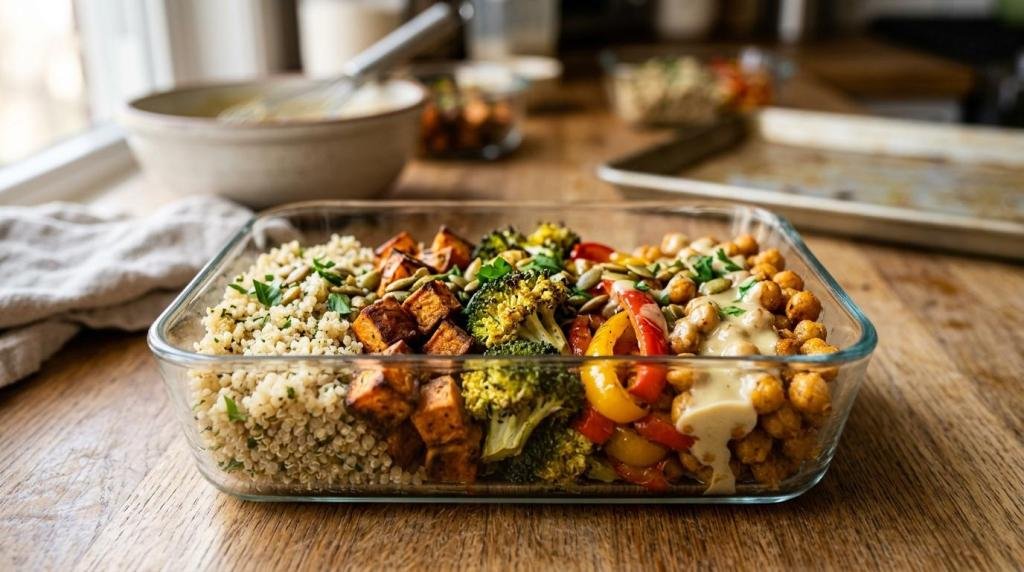
This version focuses on roasted vegetables, quinoa, chickpeas, and a creamy lemon-tahini sauce. It is colorful, filling, and easy to adapt. You get fiber, plant protein, complex carbs, and plenty of texture in one practical meal prep bowl. It also fits what people often want from plant-based meal prep: simple ingredients, a clear method, and meals that still taste fresh on day three.
If you are building a better routine around make-ahead lunches, healthy dinner prep, or plant-based batch cooking, this is a smart place to start.
Ingredients for Veggie Meal Prep Bowls
This recipe makes 4 generous bowls. Expect tender roasted sweet potatoes, caramelized broccoli, juicy peppers, fluffy quinoa, and chickpeas with warm spices. The sauce ties everything together with brightness and richness.
- Quinoa: 1 1/2 cups dry, or use brown rice, farro, or couscous
- Chickpeas: 2 cans, drained and rinsed, or swap in baked tofu or lentils
- Sweet potatoes: 2 medium, diced, or use butternut squash
- Broccoli florets: 4 cups, or use cauliflower or green beans
- Bell peppers: 2 large, sliced, any color
- Red onion: 1 medium, sliced, or use shallots
- Olive oil: 3 tablespoons, divided
- Smoked paprika: 2 teaspoons
- Ground cumin: 1 1/2 teaspoons
- Garlic powder: 1 teaspoon
- Tahini: 1/3 cup, or use hummus for a lighter sauce
- Lemon juice: 3 tablespoons, plus more to taste
- Maple syrup: 1 teaspoon, optional
- Salt and black pepper: to taste
- Pumpkin seeds or sunflower seeds: 1/4 cup for crunch
- Fresh parsley: a small handful, chopped
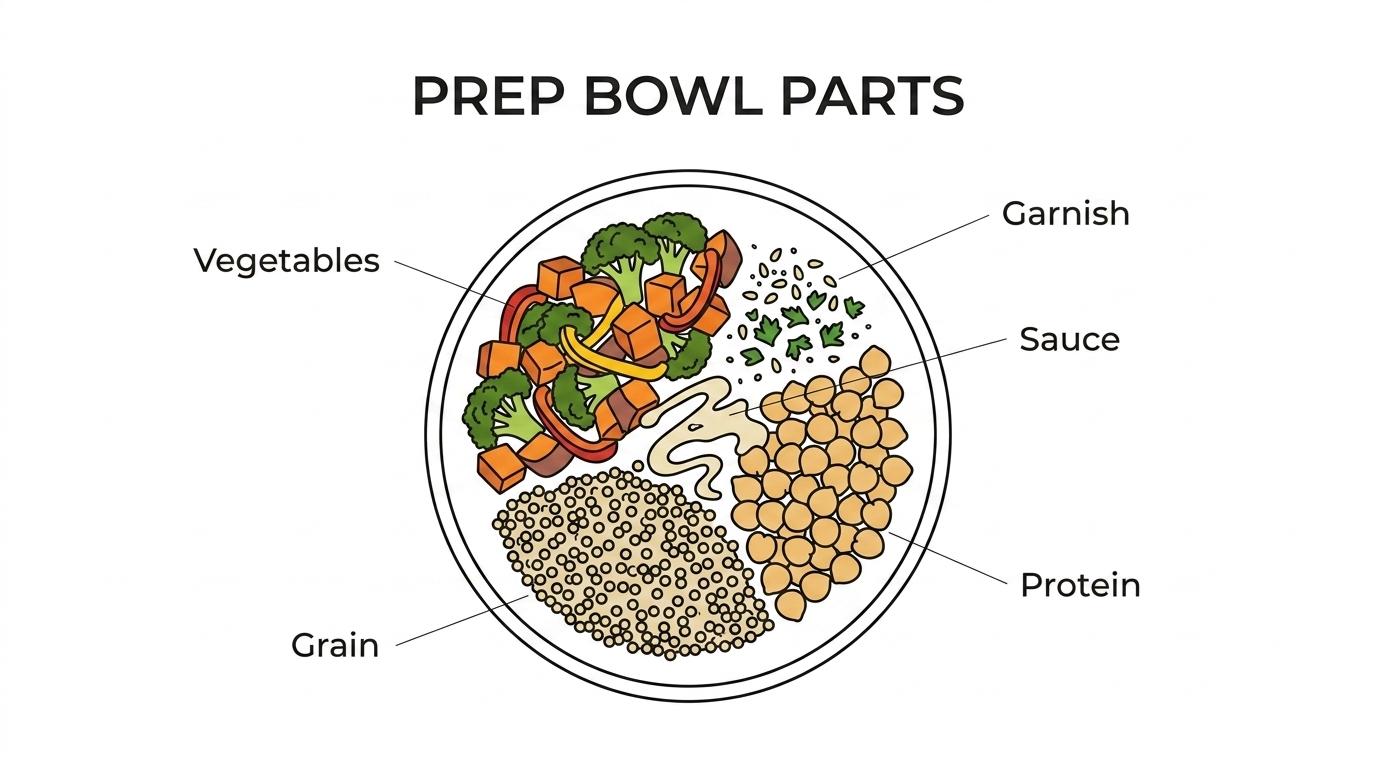
This ingredient mix gives you a strong meal prep base: grain, protein, vegetables, sauce, and garnish. That structure matters. Meals built this way tend to feel complete, and they are easier to repeat week after week without boredom.
 If you like more heat, add chili flakes or harissa. If you want more greens, tuck in spinach after reheating.
Timing for Veggie Meal Prep
A recipe only works for real life if the timing does too. This plan keeps things efficient by roasting the vegetables while the quinoa cooks and the sauce comes together.
| Task | Time |
|---|---|
| Prep vegetables and seasonings | 20 minutes |
| Roast vegetables and chickpeas | 30 minutes |
| Cook quinoa | 20 minutes |
| Mix sauce and assemble containers | 15 to 20 minutes |
| Total time | 85 to 90 minutes |
That total is often less time than cooking separate lunches across a workweek. If this veggie meal prep replaces four 25-minute cooking sessions, you save roughly 10 minutes overall and gain far more consistency. The bigger win is mental energy. Once the containers are ready, healthy eating becomes the easy option.
Step-by-Step Veggie Meal Prep Instructions
Good meal prep works because the order is efficient. Start with the oven, then stack the rest of the tasks while it does the heavy lifting.
Step 1: Prep and roast the vegetables
Heat the oven to 425°F. Line two sheet pans with parchment for easier cleanup. Toss the sweet potatoes, broccoli, peppers, and red onion with 2 tablespoons olive oil, smoked paprika, cumin, garlic powder, salt, and pepper.
Spread the vegetables in a single layer. Give them room. Crowding traps steam, which leads to soft vegetables instead of browned edges. Roast for 25 to 30 minutes, flipping once halfway through. If your oven has hot spots, rotate the pans at the same time.
Step 2: Crisp the chickpeas
Pat the chickpeas dry with a towel, then toss them with the remaining olive oil, a pinch of salt, and a little extra smoked paprika. Add them to one corner of a sheet pan or roast them on a separate pan if space allows.
Roast for 20 to 25 minutes. They do not need to be hard and crunchy like a snack. For meal prep bowls, the sweet spot is lightly crisp outside and tender inside. That texture reheats better and keeps the chickpeas pleasant to eat through the week.
Step 3: Cook the quinoa
While the vegetables roast, rinse the quinoa well. Cook it according to package directions, usually 1 cup quinoa to 2 cups water. For 1 1/2 cups dry quinoa, use 3 cups water. Bring to a boil, reduce to a low simmer, cover, and cook for about 15 minutes. Let it rest for 5 minutes, then fluff with a fork.
If you want extra flavor, cook the quinoa in vegetable broth. A small move like that changes the whole bowl. Plain grains can make meal prep feel flat, while seasoned grains help every bite taste intentional.
Step 4: Make the lemon-tahini sauce
In a bowl or jar, whisk tahini, lemon juice, maple syrup, a pinch of salt, and 3 to 5 tablespoons water until smooth. Tahini thickens fast, so add water gradually until the texture is pourable but still creamy.
Taste before you stop. If the sauce seems too sharp, add a little more maple syrup. If it feels heavy, add more lemon. This is one of the easiest places to personalize your veggie meal prep, and it matters more than many people think. A good sauce keeps repeated meals appealing.
Step 5: Assemble the meal prep bowls
Let the roasted vegetables and quinoa cool slightly before portioning. Fill each container with about 1 cup cooked quinoa, a quarter of the vegetables, and a quarter of the chickpeas. Add pumpkin seeds and parsley just before serving if you want maximum crunch and freshness.
You can either drizzle sauce over each bowl now or store it separately. Separate sauce keeps textures firmer and helps with reheating. If your meals are mostly for cold lunches, adding sauce ahead can save time.
Step 6: Build variety into the week
This step is small, but it changes the experience. Use the same base and switch the finish on each bowl. Add avocado to one, sliced cucumbers to another, hot sauce to a third, and extra herbs or pickled onions to the fourth.
That approach keeps veggie meal prep from feeling repetitive. One batch can still feel different across the week without creating extra work.
Nutritional Information for Veggie Meal Prep
Nutritional values vary with portion size and ingredient swaps, yet this recipe lands in a strong range for a balanced plant-based meal. The numbers below are an estimate per bowl, assuming four servings and sauce included.
| Nutrition per serving | Approximate amount |
|---|---|
| Calories | 470 |
| Protein | 16 g |
| Carbohydrates | 58 g |
| Fiber | 13 g |
| Fat | 19 g |
| Saturated fat | 2.5 g |
| Sodium | 430 mg |
| Potassium | 850 mg |
This profile works well for many goals. It is filling without being heavy, high in fiber, and built around minimally processed ingredients. If you want more protein, add tofu, edamame, or hemp seeds. If you want fewer carbs, reduce the grain portion and increase non-starchy vegetables.
Healthier Alternatives for Veggie Meal Prep
A good prep recipe should flex with your needs. This one can shift toward higher protein, lower sodium, gluten-free, or lighter calorie targets without losing its core appeal.
- Higher protein: add baked tofu, shelled edamame, or extra chickpeas
- Lower carb: replace half the quinoa with cauliflower rice
- Lower fat: use a yogurt-style dairy-free dressing instead of tahini sauce
- Lower sodium: cook beans from dry or rinse canned chickpeas well
- Gluten-free: stick with quinoa or brown rice and check sauce ingredients
- Nut-free and seed-aware: use a lemon-herb dressing if tahini is not a fit
You can also shift the vegetables with the season. Zucchini, Brussels sprouts, carrots, mushrooms, and cabbage all work well for veggie meal prep. The key is using vegetables that roast reliably and hold their texture after chilling and reheating.
Serving Suggestions for Veggie Meal Prep
These bowls are flexible enough for lunch, dinner, or a post-workout meal. Serve them warm for the coziest texture, or enjoy them cold with extra lemon for a more salad-like feel. If you want a bigger dinner, add a side of soup or warm pita.
For households with mixed preferences, set this up as a meal prep bar. Keep the quinoa, vegetables, chickpeas, sauce, and toppings in separate containers so each person can build their own bowl. That works well for families and also for anyone who likes variety without cooking twice.
You can also turn the same prep into wraps, stuffed sweet potatoes, or grain salads. One batch, several formats, less waste.
Common Mistakes in Veggie Meal Prep
A few small missteps can make make-ahead meals taste tired before the week is over. Paying attention to texture is usually the difference between a meal prep you look forward to and one you ignore in the fridge.
- Overcrowding the sheet pans
- Under-seasoning the grain
- Packing containers while food is still steaming hot
- Adding all crunchy toppings too early
- Using one texture in every component
- Forgetting acid, herbs, or sauce
When people say meal prep is boring, the issue is often not the concept. It is bland grains, soft vegetables, or too little contrast. Roast boldly, season in layers, and keep one fresh element for serving day.
Storing Tips for Veggie Meal Prep
Stored properly, these bowls hold well for 4 days in the refrigerator. Use airtight containers and cool the cooked ingredients before sealing them. That helps protect texture and reduces condensation inside the container.
Keep sauce in a small separate jar if possible. Store seeds, herbs, and any watery vegetables like cucumber separately too. Reheat the grain, vegetables, and chickpeas first, then add the fresh toppings and sauce after. That keeps the bowl from turning soggy.
If you want to prep farther ahead, freeze the quinoa and chickpeas, then roast fresh vegetables later in the week. Sweet potatoes and peppers freeze reasonably well, though broccoli is usually better from the fridge than the freezer.
Start Your Veggie Meal Prep This Week
This veggie meal prep gives you colorful roasted vegetables, hearty grains, satisfying plant protein, and a bright sauce in one practical system. Try it this week, adjust it to your taste, then share your results in the comments or subscribe for more plant-based meal prep ideas and weekly inspiration online.
Veggie Meal Prep FAQs
Can I make veggie meal prep without quinoa?
Yes. Brown rice, farro, barley, couscous, and even roasted potatoes can replace quinoa. Choose a base that matches your schedule and taste. Quinoa cooks quickly, though, which is one reason it works so well for weekly batch cooking.
How long does veggie meal prep stay fresh?
Most bowls stay fresh for 4 days in the refrigerator when stored in airtight containers. If your recipe includes delicate greens, avocado, or cut cucumbers, add those closer to serving time.
Is veggie meal prep good for weight management?
It can be. Pre-portioned meals built around vegetables, fiber-rich carbs, and plant protein often help people stay satisfied and more consistent with eating habits. Portion size still matters, especially with calorie-dense sauces, oils, and toppings.
Can I eat these bowls cold?
Absolutely. Cold veggie meal prep works especially well with quinoa, roasted peppers, chickpeas, and tahini dressing. If you plan to eat them cold all week, roast the vegetables until just tender so they keep a better bite after chilling.
What is the best container for meal prep bowls?
Glass containers are durable, easy to reheat, and less likely to hold odors. BPA-free plastic works too if you want something lighter. Look for containers with tight-fitting lids and enough width to keep ingredients from getting packed too tightly.
How can I keep veggie meal prep from getting boring?
Change one or two elements each week. Swap the grain, rotate the vegetables, or use a different sauce like pesto, peanut-lime, chimichurri, or a simple mustard vinaigrette. Small changes keep the routine fresh without making meal prep harder.
