


Beef meal prep earns its popularity for a practical reason: one focused cooking session can produce several satisfying, high-protein meals that stay flavorful for days. When it is built around smart timing, balanced portions, and good storage, it stops feeling repetitive and starts feeling like a real weekly advantage.
Introduction to Beef Meal Prep
Did you know batch cooking can cut weekday kitchen time by 30 to 50 percent, yet many home cooks still assume beef meal prep means dry meat and bland leftovers? That belief usually comes from poor cut selection, rushed seasoning, or storing hot food the wrong way.
A strong beef meal prep strategy solves all three problems. Lean beef gives you protein, iron, zinc, and a savory base that pairs well with grains, potatoes, and sturdy vegetables. It also reheats better than many people expect when it is cooked to the right temperature and paired with a simple sauce.
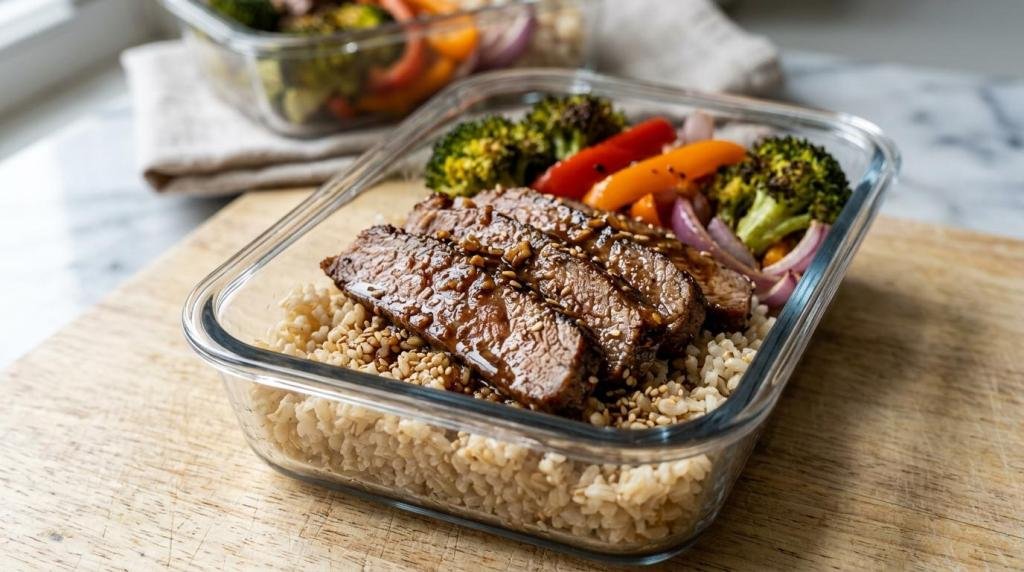
This guide uses a versatile beef meal prep bowl built with lean sirloin, brown rice, broccoli, peppers, and a garlic-soy pan sauce. It is designed for four generous servings, making it a strong fit for work lunches, post-workout meals, or easy dinners when the week gets busy.
Ingredients for Beef Meal Prep Bowls
The best beef meal prep recipes use ingredients that keep their texture after chilling and reheating. That means sturdy vegetables, a grain that does not turn mushy, and a cut of beef that stays tender when sliced against the grain.
You can keep the base recipe as written or adjust it to fit your budget, macro goals, or what is already in your kitchen.
- 1 1/2 pounds lean sirloin steak, flank steak, or 90% lean ground beef
- 2 cups uncooked brown rice, or quinoa if you want a lighter grain
- 1 pound broccoli florets
- 2 bell peppers, sliced
- 1 medium red onion, sliced
- 2 tablespoons olive oil
- 3 tablespoons low-sodium soy sauce or tamari
- 1 tablespoon rice vinegar
- 1 tablespoon honey
- 3 garlic cloves, minced
- 1 teaspoon grated fresh ginger
- 1 teaspoon smoked paprika
- 1/2 teaspoon black pepper
- 1/2 teaspoon kosher salt
- 2 green onions, sliced
- 1 teaspoon sesame seeds, optional
If you want deeper flavor, add a spoonful of tomato paste or a pinch of chili flakes to the sauce. If you want a more budget-friendly version, lean ground beef works very well and is often easier to portion. For extra fiber, swap half the rice with cauliflower rice or add roasted carrots, cabbage, or green beans.
Beef Meal Prep Timing
A realistic timeline matters because meal prep succeeds when the process feels efficient. This version keeps multiple components moving at once, so the oven, stovetop, and cooling time all work together.
| Task | Time |
|---|---|
| Prep ingredients | 20 minutes |
| Cook rice | 30 minutes |
| Roast vegetables | 25 minutes |
| Sear beef and finish sauce | 10 minutes |
| Cool and portion | 10 minutes |
| Total time | 65 minutes |
At 65 minutes total for four meals, you are spending a little over 16 minutes per serving, including prep and cleanup rhythm. Compared with cooking lunch fresh on four separate days, that is a strong trade.
Step-by-Step Beef Meal Prep Instructions
A little structure makes beef meal prep easier and gives each component better texture.
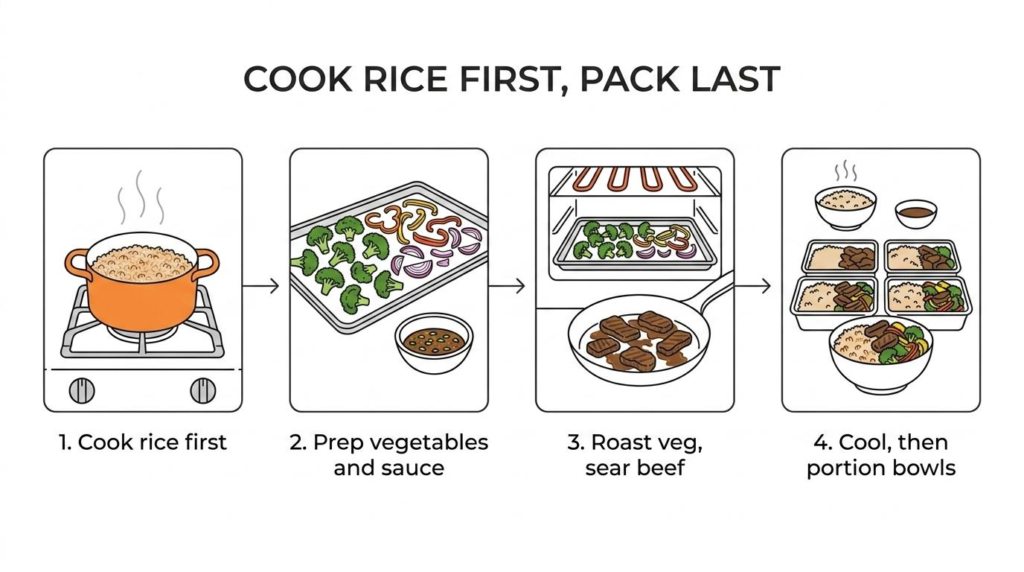
Step 1: Cook the rice first
Start the brown rice according to package directions. Most varieties take about 30 to 35 minutes, which makes it the ideal first move.
If you prefer fluffier grains, rinse the rice until the water runs mostly clear. Once it is cooked, spread it briefly on a sheet pan or large plate before portioning. That quick steam release helps prevent clumping in the containers.
Step 2: Prep the vegetables and heat the oven
Heat the oven to 425°F. Toss broccoli, bell peppers, and red onion with 1 tablespoon olive oil, a small pinch of salt, and black pepper.
Spread the vegetables in a single layer. If they are piled too tightly, they will steam rather than roast. Give them room and you will get browned edges, sweeter flavor, and better texture after reheating.
Step 3: Mix the sauce for the beef meal prep bowls
In a small bowl, stir together soy sauce, rice vinegar, honey, garlic, ginger, and smoked paprika. This creates a quick finishing sauce that gives the beef a glossy, savory coating without making the meal heavy.
Keep the sauce nearby before you start cooking the beef. Once the skillet is hot, the process moves quickly.
Step 4: Roast the vegetables until crisp-tender
Roast the vegetables for 20 to 25 minutes, stirring once halfway through. You want the broccoli bright and lightly charred, the peppers soft but still structured, and the onion sweet around the edges.
That structure matters in meal prep. Vegetables that are roasted too hard can collapse and turn watery in the fridge. Pull them when they still have a little bite.
Step 5: Sear the beef in a hot skillet
While the vegetables roast, pat the beef dry and slice it thinly if using steak. Heat the remaining olive oil in a large skillet over medium-high heat. Add the beef in a single layer and let it brown before stirring.
For sirloin or flank steak, cook just until medium or medium-well, then add the sauce and toss for 30 to 60 seconds. For ground beef, brown it fully, drain excess fat if needed, then stir in the sauce and cook until glossy. The pan should smell savory, garlicky, and slightly sweet.
Step 6: Cool the components before packing
Let the rice, beef, and vegetables cool for about 10 minutes. This short pause helps limit condensation in the containers, which protects texture and food safety.
Portion the rice into four containers, top with beef and roasted vegetables, then finish with green onions and sesame seeds if using. If you want the freshest look and flavor, keep the garnish separate until serving.
Beef Meal Prep Nutrition Information
Nutrition will vary based on the cut of beef, grain choice, and sauce volume, though this estimate gives a useful baseline for planning macros and portion size.
| Nutrition per serving | Estimated amount |
|---|---|
| Calories | 520 |
| Protein | 36 g |
| Carbohydrates | 43 g |
| Fat | 22 g |
| Fiber | 6 g |
| Sodium | 520 mg |
| Iron | About 20% of daily needs |
| Zinc | About 35% of daily needs |
This profile makes beef meal prep especially appealing for people who want a filling lunch with steady protein and moderate carbs. If your goal is higher protein, increase the beef portion slightly and trim the rice. If your goal is lighter calories, reduce the oil and use a bigger vegetable portion.
Healthier Beef Meal Prep Alternatives
If you want a leaner version, use top sirloin, eye of round, or 93% lean ground beef. Those choices keep the protein high while lowering saturated fat. A reduced-sodium soy sauce also helps if you are watching salt intake.
The grain base can shift the nutrition profile in a meaningful way. Brown rice gives steady carbs and fiber, quinoa raises protein a bit, and cauliflower rice cuts total calories sharply while letting the beef and vegetables stay the star. A half-and-half mix often gives the best balance between satisfaction and lighter macros.
Vegetables are the easiest upgrade. More volume from broccoli, zucchini, mushrooms, shredded cabbage, or Brussels sprouts makes the meal feel larger without much extra calorie load. If you like bold flavor, finish with lime juice, fresh herbs, or a spoonful of plain Greek yogurt mixed with garlic and lemon on the side.
Serving Suggestions for Beef Meal Prep
These bowls are strong on their own, though they can shift into several styles with just a few changes. Add avocado and salsa for a Tex-Mex feel. Swap rice for roasted potatoes and use parsley with lemon for a more classic dinner plate. Spoon the beef into lettuce cups if you want a lighter lunch that still feels substantial.
If you are meal planning for a household with different preferences, keep the core components separate and let each person build their own bowl. That small change makes beef meal prep feel less repetitive across the week. One person can go with rice and broccoli, another with quinoa and peppers, and someone else can turn the beef into wraps.
Common Beef Meal Prep Mistakes to Avoid
Most beef meal prep problems come from heat management, moisture, or portioning. A few simple fixes make a visible difference.
- Crowded skillet: Beef needs direct contact with a hot surface to brown well. If the pan is overloaded, the meat releases water and turns gray.
- Overcooked steak: Lean cuts keep their best texture when cooked quickly. Pull them from the pan a touch early because reheating adds more cooking.
- Watery containers: Packing hot food traps steam, which softens rice and vegetables. Let the food cool briefly before sealing.
- Underseasoned grains: Rice absorbs flavor. A pinch of salt while cooking or a spoonful of pan juices mixed in after cooking keeps the meal lively.
- Oversized portions: Meal prep works best when servings are planned. Weigh or measure the rice and beef if you are tracking intake.
Storing Beef Meal Prep Safely
Good storage keeps flavor intact and lowers food waste. Beef meal prep is usually at its best within four days when refrigerated properly.
- Refrigerate cooked food within 2 hours
- Use airtight containers with secure lids
- Store in the refrigerator for up to 4 days
- Freeze fully cooled portions for up to 3 months
- Reheat to 165°F before serving
- Keep fresh garnishes and sauces separate
If you plan to freeze part of the batch, cool the meals completely first. Rice and beef freeze well, while broccoli and peppers may soften slightly after thawing. To improve reheating, add a teaspoon of water before microwaving and cover loosely so the steam refreshes the grain instead of drying the meat.
Beef meal prep works best when you pair well-seasoned protein with sturdy grains, roasted vegetables, and smart storage. Try this method this week, adjust the bowls to fit your goals, then share your results in the comments or subscribe for more meal-prep ideas, practical cooking tips, and weekly recipe updates.
Beef Meal Prep FAQs
A few questions come up again and again with batch-cooked beef, especially around texture, safety, and flexibility.
Can I use ground beef instead of steak for beef meal prep?
Yes. Lean ground beef is one of the easiest options for beef meal prep because it cooks quickly, portions cleanly, and takes on sauce well. Choose 90% to 93% lean if you want a lighter result with less grease in the container.
How long does beef meal prep last in the fridge?
For best quality, eat refrigerated portions within four days. Some cooked beef may remain safe a bit longer when stored well, though texture and flavor start to decline. If you will not eat all four portions in that window, freeze one or two right away.
What containers are best for meal prep bowls?
Glass containers are excellent for reheating and resist staining. BPA-free plastic containers are lighter and often easier for work lunches. The key is a tight seal, enough room for the meal to sit without compression, and separate space for sauces if possible.
How do I keep beef tender after reheating?
Cook lean steak only to medium or medium-well, slice it thinly against the grain, and avoid long microwave times. Reheat in short bursts, stir once, and add a spoonful of water or extra sauce before warming. Those small steps help preserve moisture.
Can I make this beef meal prep recipe lower carb?
Yes. Replace some or all of the brown rice with cauliflower rice, shredded cabbage, or extra roasted vegetables. You still get the same savory beef base and satisfying volume, with a lower carbohydrate load and fewer calories per container.
What other meal prep variations work with this method?
The same structure works with taco bowls, Korean-inspired beef and rice, Mediterranean beef with potatoes, or simple steak-and-vegetable boxes. Once you have the timing down, the flavor profile can change week to week without changing the core process.
