





High protein vegan recipes matter because they make plant-based eating more practical, filling, and easier to repeat during a busy week. They solve a common problem: many vegan meals are rich in fiber and micronutrients but fall short on protein density, reheating quality, or staying power. When recipes are built around tofu, tempeh, lentils, beans, edamame, or protein-rich pasta, meal prep gets simpler and hunger becomes more predictable. That is why the best options are not just healthy, but structured for storage, satiety, and consistent protein intake.
Why do high protein vegan recipes work so well for meal prep?
Yes. Tofu and lentils make meal prep efficient because they hold texture, reheat well, and deliver meaningful protein in a single portion. Compared with delicate greens or pasta-heavy dishes, soy foods and legumes usually survive 3 to 5 days in the fridge with less quality loss.
Protein does more than support muscle repair. It also slows digestion, which can reduce the cycle of snacking and underpowered lunches. In a meal-prep context, that matters because consistency often beats novelty.
The strongest vegan meal-prep recipes usually combine three elements: a concentrated protein, a stable carb, and vegetables that hold up after cooking. If one of those is missing, the meal may still taste good, but it often stops being satisfying by day two. A common mistake is building the container around rice or noodles first and treating protein as an afterthought.
How much protein should a high protein vegan meal prep recipe actually have?
A useful target is 18 to 30 grams per serving. Recipes built with tofu, tempeh, chickpea pasta, or lentils usually land there without extreme portion sizes. That range matches many practical meal-prep standards better than vague labels like “protein-packed.”
In the verified recipe set from Vegan Meal Prep, servings ranged from about 18 grams for spinach tofu breakfast muffins to about 26 grams for sheet pan tofu with potatoes and broccoli. That spread is realistic for home cooking.
If your goal is general satiety, 20 grams per meal is a strong baseline. If you are highly active, larger, or intentionally trying to support muscle gain, then 25 to 35 grams at major meals may make more sense. The trade-off is volume and cost. Getting 30 grams from black beans alone often means a large serving; getting it from tofu or tempeh takes less space in the container.
What are the best high protein vegan recipes for meal prep?
The best choices are recipes that hit at least about 20 grams of protein, keep well for several days, and use ingredients with repeatable texture. Tofu, tempeh, lentils, edamame, and chickpea pasta lead this category because they balance protein density with practical storage.
A smart shortlist should also cover breakfast, lunch, dinner, and one freezer-friendly option. That keeps the week from becoming repetitive and lowers the chance of defaulting to low-protein convenience food.
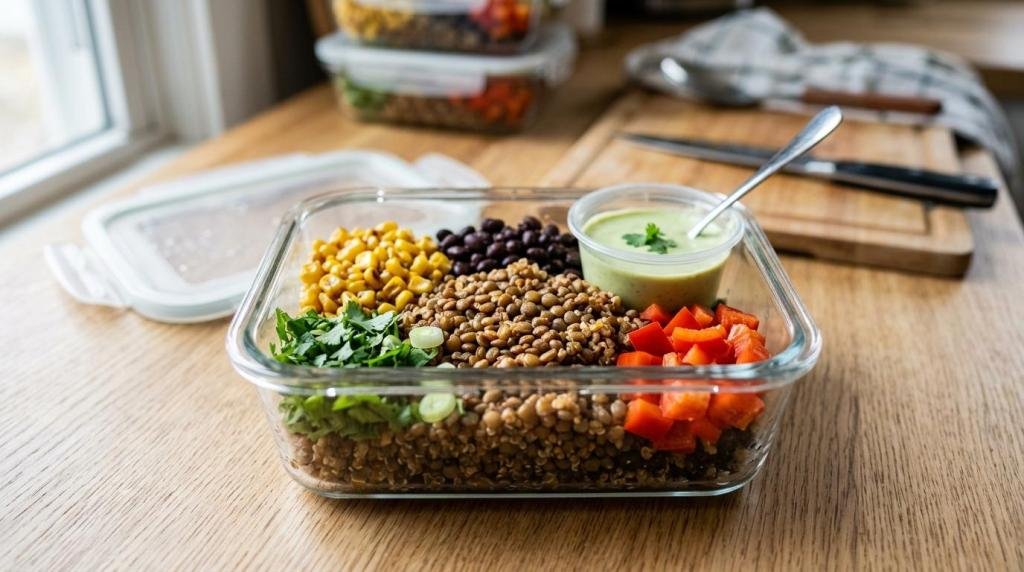
- Vegan Meal Prep Lentil Quinoa Taco Bowls: about 22 g protein, strong fiber, good for 4 days when avocado and sauce stay separate.
- Sheet Pan Tofu, Potatoes, and Broccoli: about 26 g protein, very stable texture, easy beginner option.
- Ginger Sesame Tempeh Rice Boxes: about 24 g protein, deeper flavor, best for people who want a firmer bite than tofu.
- Greek Chickpea Pasta Salad: about 21 g protein, works cold, useful for office lunches.
- Creamy Red Lentil Pasta Bake: about 23 g protein, comfort-food profile, portion after cooling.
- Peanut Edamame Soba Noodle Jars: about 22 g protein, good layered lunch, best within 3 to 4 days.
- Chocolate Peanut Butter Overnight Oats: about 20 g protein, easy breakfast prep, balanced carbs and fats.
- Smoky Black Bean Chili: about 20 g protein, excellent freezer option, strong value per serving.
- Split Pea Vegetable Soup: about 19 g protein, budget-friendly, ideal if you want lower fat and high fiber.
How do you build a high protein vegan breakfast recipe step by step?
Start with soy milk or tofu. Soy milk and extra-firm tofu provide more protein per serving than almond milk or bananas, and they create breakfast recipes that stay filling past midmorning.
Step 1 is choosing the protein anchor. For sweet breakfasts, soy yogurt, soy milk, chia, and peanut butter work well in overnight oats. For savory breakfasts, tofu plus nutritional yeast works better in muffins or scrambles.
Step 2 is controlling texture over time. Oats, chia, and cooked vegetables all absorb moisture, so the liquid ratio matters. If the jar looks perfect on day one, it may be too thick by day three. Pro tip: keep a small splash of soy milk for reheating or stirring in later.
Step 3 is matching breakfast to your day. If you train early, oats and fruit can help with energy. If you sit at a desk for hours, tofu muffins or a savory wrap may feel steadier. A common misconception is that breakfast must be sweet to be convenient; savory vegan breakfasts often reheat better.
How do you meal prep tofu and tempeh recipes step by step without ruining texture?
Pressing and seasoning matter more than complicated marinades. Extra-firm tofu and tempeh can both stay excellent for 4 days if moisture, heat, and sauce are handled correctly.
Step 1 is preparing the protein for its role. Tofu benefits from pressing, cubing, and either roasting or pan-searing. Tempeh often improves after a short steam or simmer because it softens bitterness and absorbs sauce more evenly.
Step 2 is using heat strategically. High oven heat, around 400 to 425°F, helps tofu brown and keeps the outside from turning wet after refrigeration. Tempeh can handle sticky glazes, but too much sugar in the sauce may turn tacky in storage.
Step 3 is packaging for texture. Store sauce separately when possible. If then logic helps here: if the meal relies on crisp edges, keep dressing out of the box; if the dish is meant to be braised or coated, sauce can go in early. A common mistake is blaming tofu when the real issue is trapped steam from sealing the container too soon.
How do you portion high protein vegan lunches step by step for 4 days?
Use a repeatable formula. Lentils, quinoa, and roasted vegetables make portioning easier because each component can be measured, swapped, and reheated without much quality loss.
Step 1 is picking the protein anchor first, not the side dish. Aim for a serving that contributes at least 15 to 20 grams on its own, then layer in grains, vegetables, and fats.
Step 2 is balancing appetite and energy. A common setup is one-third protein, one-third grain or starch, and one-third vegetables. That is not a medical rule, but it is a useful SOP for lunches that need to satisfy without feeling heavy.
Step 3 is building in flexibility. If one lunch includes tempeh and rice, make another with chickpea pasta or beans so you do not rely on a single protein source all week. Pro tip: pack crunchy toppings, herbs, or avocado separately. Fresh contrast is often what keeps day-four meal prep from feeling stale.
Are tofu and tempeh better than beans and lentils for high protein vegan recipes?
Yes for protein density, no for every goal. Tofu and tempeh usually deliver more protein per bite, while beans and lentils bring more fiber, lower cost, and strong freezer performance. The better choice depends on whether you value compact protein, budget, or texture.
Tofu and tempeh are especially useful when you want a higher-protein meal without a large volume of food. Tempeh also tends to feel more substantial because it is firmer and more concentrated. Beans and lentils, though, often create better one-pot meals and stretch farther per dollar.
There is also a digestion trade-off. Some people tolerate soy foods better than large servings of legumes, while others feel the opposite. If beans leave you too full before you hit your calorie target, tofu may solve that. If soy feels monotonous, lentil bowls and chili can diversify the week. Common misconception: “complete protein” means soy must replace all other plant proteins. In practice, variety across the day is what matters.
Is chickpea pasta or quinoa better for high protein vegan meal prep?
Chickpea pasta usually wins on protein per serving, while quinoa wins on versatility and texture stability. Barilla-style legume pasta and plain quinoa solve different problems, so the right answer depends on whether you want a cold salad, a hot bowl, or a freezer meal.
A typical serving of chickpea pasta can provide around 11 to 14 grams of protein before you even add tofu, beans, or sauce. Quinoa is lower, often around 8 grams per cooked cup, but it combines well with lentils, black beans, and vegetables without becoming dense.
The trade-off is reheating behavior. Chickpea pasta can dry out or firm up if overcooked, especially by day three or four. Quinoa is more forgiving and easier to portion. If you need cold lunches, chickpea pasta salad can be excellent. If you need mix-and-match base grains for multiple meals, quinoa is usually more reliable.
Why do some high protein vegan recipes still feel unsatisfying?
They usually miss either energy density or texture contrast. A bowl with lentils and kale may check the protein box, but if it lacks fat, acid, or a satisfying carb, hunger can return fast. Edamame and peanut sauce often fix that better than adding more vegetables.
Protein is only one part of satiety. Meals that work best through a workday usually combine protein with fiber, some fat, and enough calories. This is where many “healthy” bowls fail.
Watch for these common issues:
- Too little fat: tahini, peanut butter, or avocado can slow digestion and improve satisfaction.
- Too little starch: potatoes, brown rice, or oats help active people feel fed.
- Too much water content: soups and steamed vegetables may need a denser side.
- No acid or crunch: lemon, pickled onions, cabbage, or seeds can make leftovers taste fresh again.
How long do high protein vegan meal prep recipes last in the fridge or freezer?
Most fridge-safe recipes last 3 to 5 days, and chili or soup often freezes well for 2 to 3 months. Tofu bowls, overnight oats, and tempeh rice boxes fit the fridge window well when cooled and sealed properly.
Storage quality depends less on whether a recipe is vegan and more on moisture control and ingredient choice. In the verified recipe set, tofu muffins, taco bowls, tempeh boxes, and tofu sheet-pan meals were generally good for about 4 days. Black bean chili and split pea soup were better freezer candidates.
A few rules keep quality high:
- Cool before sealing: warm containers trap steam and soften texture.
- Use shallow containers: faster cooling is safer and better for consistency.
- Keep sauces separate: this matters most for roasted tofu, noodles, and fresh herbs.
- Freeze single portions: easier thawing prevents waste.
If a meal includes avocado, cucumber, or delicate greens, then prep those fresh or add them on serving day.
Can high protein vegan recipes cover amino acids, iron, and B12 needs?
Yes, with planning. The Academy of Nutrition and Dietetics and the NHS both support well-planned vegan diets, but vitamin B12 needs deliberate attention. Lentils, tofu, beans, and whole grains can support protein and iron, yet B12 usually requires fortified foods or supplements.
A common misconception is that every meal must combine precise amino acid pairs. That is outdated for most healthy adults eating enough total calories. If your day includes soy foods, legumes, grains, nuts, and seeds, amino acid adequacy is usually achievable across the day.
Iron needs a bit more strategy because plant iron is absorbed less efficiently. Pair iron-rich foods with vitamin C rich foods if iron status matters. That means lentils with tomatoes, tofu with broccoli, or beans with bell peppers. Tea and coffee taken right with iron-rich meals may reduce absorption.
For B12, rely on systems, not guesswork:
- Fortified foods: soy milk, nutritional yeast, breakfast cereal
- Protein-rich iron sources: lentils, black beans, tofu, tempeh, split peas
- Vitamin C partners: citrus, peppers, tomatoes, broccoli
That is the real strength of high protein vegan meal prep: it turns nutrient planning into a repeatable routine instead of a daily scramble.


